
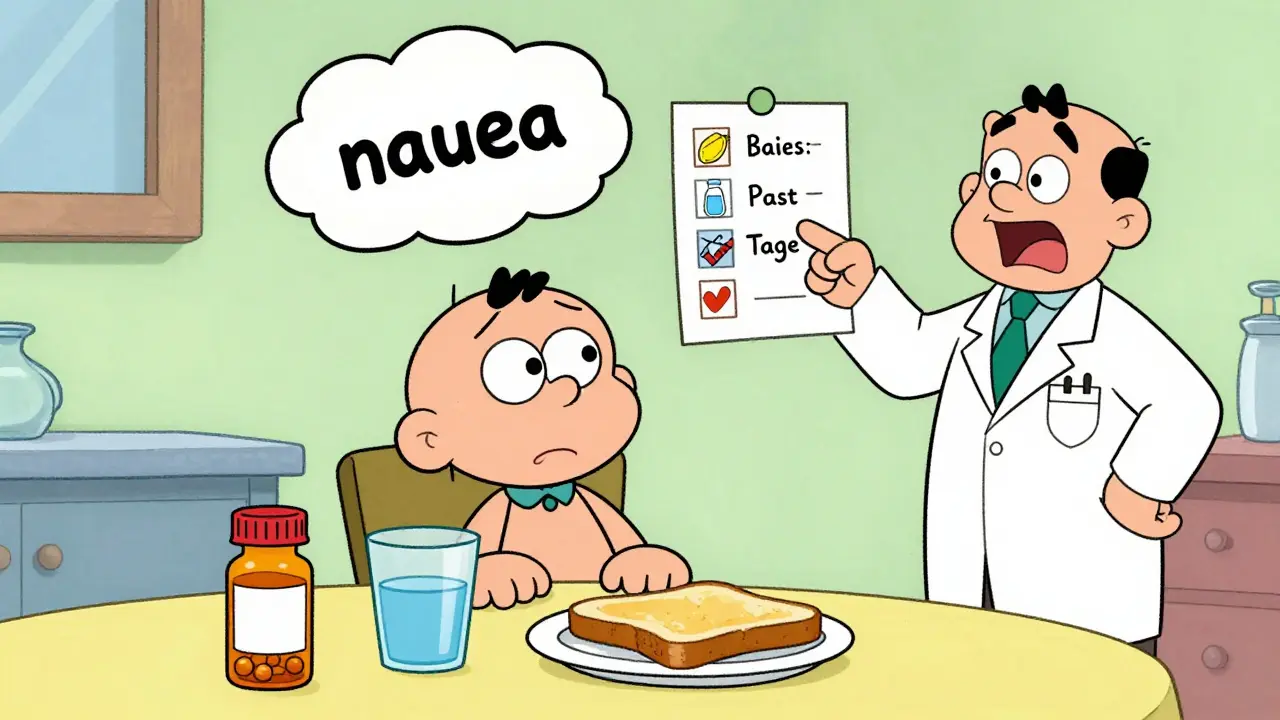
Starting a new medication can feel like stepping into the unknown. You take it because your doctor said so, but then-boom-your stomach feels off, you’re tired all day, or your mouth feels like cotton. It’s tempting to just stop taking it. But here’s the truth: mild side effects are normal. And you don’t have to quit your medicine to feel better.
According to a 2023 review in the Journal of Clinical Pharmacy and Therapeutics, 50 to 70% of people experience mild side effects when starting a new drug. These aren’t emergencies. They’re your body adjusting. Nausea, dry mouth, fatigue, loose stools, or mild dizziness often fade within days to weeks. The real risk isn’t the side effect-it’s quitting the medication too soon. Studies show that 30 to 50% of people stop their meds because of side effects that could’ve been managed.
Know What’s Normal vs. What’s Not
Not all reactions are created equal. Mild side effects are usually temporary, low-intensity, and don’t interfere with basic function. For example:
- Nausea after taking a pill, but you can still eat later
- Feeling a little sluggish in the morning, but energy returns by afternoon
- Dry mouth that improves after sipping water
- Mild diarrhea that lasts less than 3 days
But if you’re having chest pain, trouble breathing, swelling in your face or throat, or sudden confusion-stop the medication and call your doctor immediately. These aren’t mild. They’re serious. Don’t confuse them with normal adjustments.
Most people don’t know the difference. A 2023 Kaiser Permanente study found that 34% of patients didn’t know which side effects were harmless and which needed help. That’s why clear guidance matters.
Manage Nausea and Upset Stomach
Nausea is one of the most common complaints. But it doesn’t mean you need to quit.
Take your pill with food-especially something mild like toast, rice, or yogurt. A 2022 Mayo Clinic study showed this helped 62% of patients within 72 hours. Avoid spicy, greasy, or acidic foods while your stomach adjusts. Drink 8 to 10 ounces of water with each dose. Don’t lie down right after taking it. Wait at least 30 minutes.
Some meds are harder on the stomach than others. Antibiotics, painkillers like ibuprofen, and certain antidepressants often cause this. But even if your pill says “take on an empty stomach,” check with your pharmacist. Sometimes, taking it with a small amount of milk or a banana can make a big difference without reducing effectiveness.
Handle Dry Mouth
That gritty, sticky feeling? It’s not just discomfort-it can lead to cavities and trouble swallowing. Dry mouth is common with blood pressure meds, antidepressants, and antihistamines.
The fix is simple: sip water every 15 to 20 minutes. Don’t wait until you’re thirsty. Suck on sugar-free sour candies-citric acid triggers saliva. Look for products with xylitol, like XyliMelts or sugar-free gum. A 2022 study in the Journal of the American Dental Association found this improved saliva flow by 79% within 48 hours.
Avoid alcohol, caffeine, and tobacco-they make dry mouth worse. Keep a water bottle by your bed. Use a humidifier at night. These small habits add up.
Fix Constipation
Many medications slow digestion. Opioids, iron pills, and some antidepressants are big culprits.
Drink 2.5 to 3 liters of water daily. That’s about 10 to 12 cups. Eat 30 to 35 grams of fiber-think apples, pears, beans, oats, and broccoli. Move your body. A 2021 trial with over 1,200 patients showed that 30 minutes of walking or light exercise every day resolved constipation in 68% of cases.
If that’s not enough, ask your pharmacist about a gentle stool softener like docusate. Avoid harsh laxatives unless advised. Don’t wait until you’re in pain to act. Start these habits early.
Deal with Diarrhea
Diarrhea can be frustrating, especially if it’s happening after antibiotics or certain diabetes meds.
First, cut out caffeine, alcohol, spicy foods, and anything overly sweet or acidic. Avoid high-fiber foods like bran cereal or raw veggies for a few days. Stick to the BRAT diet: bananas, rice, applesauce, toast.
If it lasts more than 2 days, talk to your pharmacist about loperamide (Imodium). A 2020 New England Journal of Medicine trial found it reduced diarrhea in 73% of patients when used correctly. Don’t use it if you have a fever or bloody stools-that’s a sign of infection, not a side effect.
Beat Fatigue Without Caffeine
Feeling wiped out? It’s not laziness. Many meds-especially blood pressure drugs, antidepressants, and antihistamines-cause drowsiness.
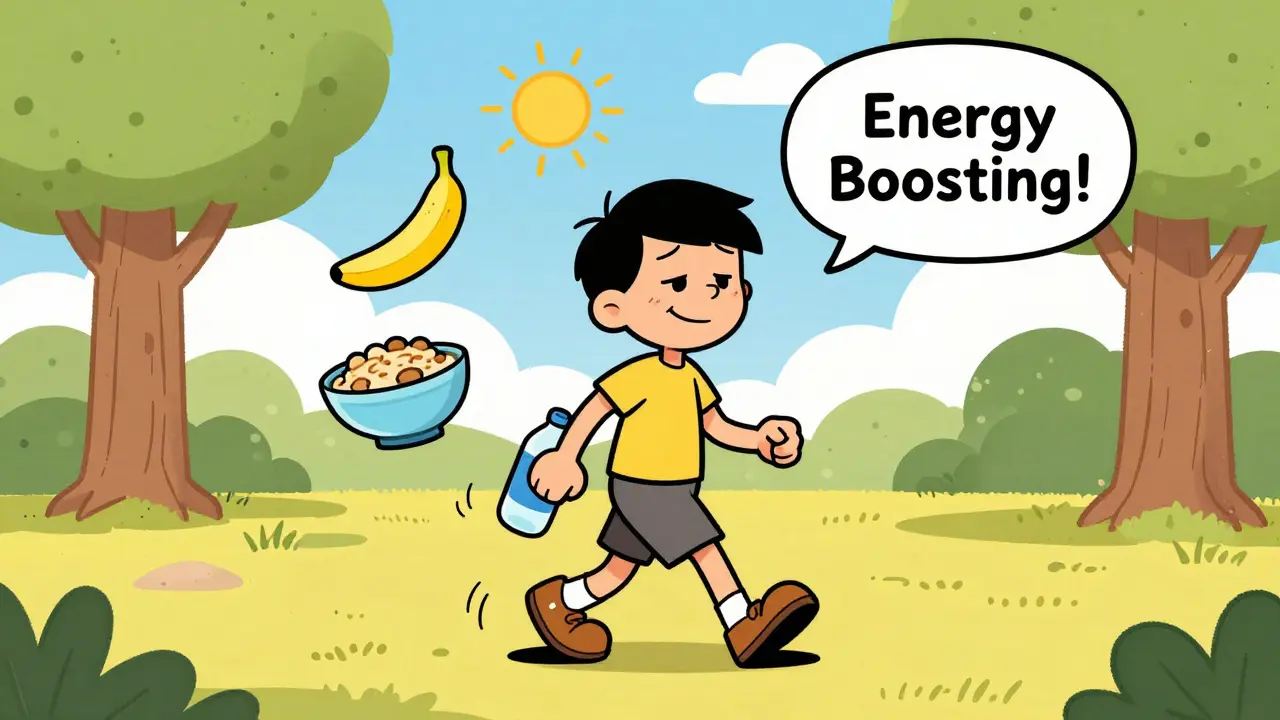
Don’t reach for energy drinks. They make your body crash harder later. Instead, focus on sleep, food, and movement.
Get 7 to 9 hours of sleep. Eat balanced meals: 45 to 65% carbs, 20 to 35% healthy fats, 10 to 35% protein. Move for 150 minutes a week-brisk walking counts. A 2021 NIH trial showed this improved energy levels in 63% of people within two weeks.
Try taking your medication at night if it causes drowsiness. Many blood pressure pills work better when taken before bed anyway. Talk to your doctor about timing.
The Mindset Trick That Changes Everything
Here’s something most people don’t tell you: how you think about side effects can change how you feel them.
Harvard researchers led by Dr. Alia Crum ran three studies showing that when patients were told, “These mild sensations mean your treatment is working,” they reported 40% less discomfort and 35% fewer doctor visits about side effects.
This isn’t placebo. It’s psychology meeting pharmacology. People taking antidepressants (which often have high placebo response rates) saw the biggest benefit. But even those on blood pressure meds felt better when they stopped seeing side effects as “bad” and started seeing them as “signs it’s doing its job.”
It doesn’t work for everything. Antibiotics or blood thinners? Stick to the facts. But for meds that take weeks to build up-like SSRIs, thyroid pills, or mood stabilizers-this mindset shift can be powerful.
Track It. Wait It Out. Talk Later
Don’t call your doctor the second you feel weird. Give it time.
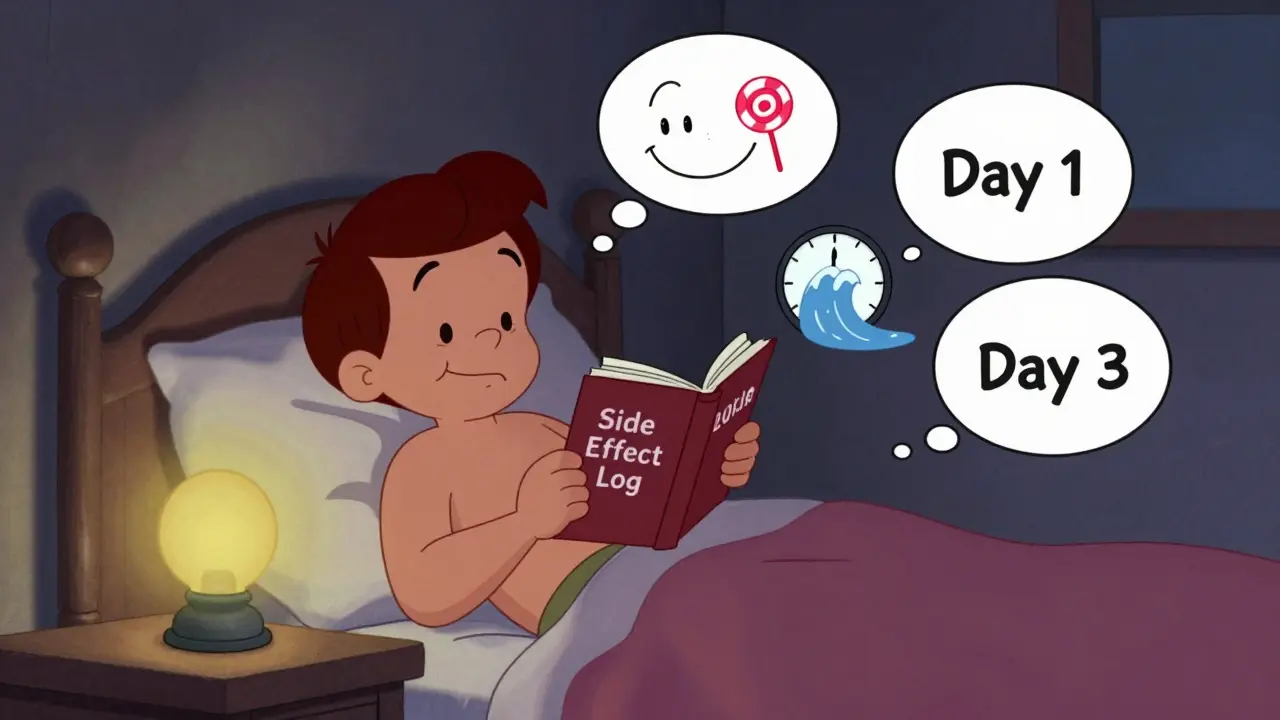
Keep a simple log for 72 hours: write down what you took, when, and what you felt. Did the nausea happen only in the morning? Did the fatigue fade after lunch? This helps your provider spot patterns.
A 2022 program by Rx Outreach found that patients who waited 3 days before calling reduced unnecessary visits by 45%. Most mild side effects fade on their own.
But if after a week you’re still struggling, reach out. Don’t suffer silently. Your pharmacist is trained for this. They can suggest timing changes, OTC aids, or even talk to your doctor about a small dose adjustment.
Timing Matters More Than You Think
When you take your pill can be just as important as what’s in it.
Reddit users on r/Pharmacy shared that taking blood pressure meds at bedtime cut dizziness for 57% of people. Taking thyroid pills first thing in the morning, 30 minutes before food, helps absorption. Taking antibiotics with food reduces stomach upset-but not all of them. Some need an empty stomach.
Ask your pharmacist: “What’s the best time of day to take this?” Don’t assume it doesn’t matter. A 2023 study found patients given exact timing instructions (“Take with 8 oz milk at 8 a.m.”) were 73% more likely to follow through than those told just to “take with food.”
Cost and Access Aren’t Excuses
Some fixes cost money: xylitol lozenges, fiber supplements, stool softeners. But you don’t need the fancy stuff.
For dry mouth: chew sugar-free gum. For constipation: eat prunes or drink prune juice. For nausea: ginger tea or peppermint tea. For fatigue: walk around the block. These are low-cost, proven tools.
If cost is a barrier, ask your pharmacist about generic options or patient assistance programs. Many pharmacies offer free samples of OTC remedies for side effects. You’d be surprised what’s available.
Why This Matters More Than You Realize
Stopping a medication because of a mild side effect isn’t just inconvenient-it’s expensive. And dangerous.
The U.S. spends $5.1 billion a year on healthcare costs from people not taking their meds. That’s going up to $7.3 billion by 2027. Every time someone quits their blood pressure pill because of a dry mouth, they risk a stroke. Every time someone stops their antidepressant because of nausea, they risk a relapse.
Big health systems like UnitedHealthcare saw a 22% drop in medication discontinuations after launching side effect management programs. The FDA is now requiring drug makers to include clear management tips in new drug labels. This isn’t just advice-it’s becoming standard care.
You’re not weak for feeling side effects. You’re human. And you’re not alone. Millions of people are managing the same thing right now. The goal isn’t to feel perfect. It’s to feel well enough to stay on track.
What to Do Next
Here’s your simple action plan:
- Identify your top one or two side effects.
- Match them to the strategies above.
- Try one change for 3 days-like taking your pill with food or sipping water every 20 minutes.
- Write down what happens.
- If it doesn’t help after 5 days, call your pharmacist. Not your doctor. Not your friend. The pharmacist.
You don’t have to suffer. You don’t have to quit. You just need the right tools-and the right mindset.
Are mild side effects a sign the medication isn’t working?
No. Mild side effects like nausea, dry mouth, or fatigue are usually signs your body is adjusting-not that the medication isn’t working. In fact, for drugs like antidepressants or blood pressure pills, these reactions often happen because the drug is starting to affect your system. Studies show patients who interpret mild side effects as a sign of effectiveness report less discomfort and higher adherence.
How long do mild side effects usually last?
Most mild side effects fade within 1 to 2 weeks as your body gets used to the medication. Nausea often improves in 72 hours with food or water. Fatigue may take up to 10 days to lift. Constipation and dry mouth can take a bit longer, but consistent habits like drinking water, moving more, and eating fiber help speed things up. If symptoms worsen or last beyond 2 weeks, contact your provider.
Can I take over-the-counter meds to help with side effects?
Yes, but check with your pharmacist first. Loperamide (Imodium) can help with diarrhea, docusate can ease constipation, and sugar-free gum or lozenges can relieve dry mouth. But some OTC drugs interact with prescriptions. For example, antacids can interfere with antibiotics or thyroid meds. A pharmacist can tell you what’s safe and what’s not.
Should I lower my dose to reduce side effects?
Only under medical supervision. Reducing your dose by 25 to 50% can help with side effects in 70 to 75% of cases, but it also carries a 15 to 20% risk of making the medication less effective. Never adjust your dose on your own. Talk to your doctor or pharmacist first. Sometimes, a small change in timing or how you take it (with food, at night) works better than lowering the dose.
What if I still can’t tolerate the side effects?
If you’ve tried all the strategies for 10 to 14 days and still can’t manage the side effects, talk to your doctor about alternatives. There are often multiple medications in the same class that cause different side effects. For example, if one antidepressant gives you nausea, another might cause weight gain instead. Your provider can switch you to something better suited for your body.
Can side effects come back after they’ve gone away?
Rarely, but it can happen. If you start a new medication, change your dose, or begin taking another drug, old side effects might return or new ones can appear. Always monitor how you feel after any change. Keep your medication list updated with your pharmacist-it helps them spot potential interactions or patterns.
Final Thought
You didn’t start this medication to feel worse. You started it to feel better. Mild side effects are part of the journey, not the destination. With the right tools, timing, and mindset, you can stay on track without giving up. Your body is adapting. So are you. Keep going.


Christina Widodo
January 11, 2026I was terrified to start my SSRI because of the nausea rumors-but I followed the food tip and sipped water like it was my job. Within 48 hours, it was gone. This post saved my mental health journey. Thank you.
Alice Elanora Shepherd
January 12, 2026Thank you for emphasizing the difference between 'mild' and 'dangerous'-so many people panic at the first twitch or burp. I've worked in pharmacy for 17 years, and I've seen more people quit meds unnecessarily than I've seen true adverse reactions. The mindset shift you mentioned? It's real. I tell patients daily: 'Your body isn't rejecting the drug-it's learning it.' Slow down. Breathe. Track it. You've got this.
Sona Chandra
January 14, 2026THIS IS WHY PEOPLE DIE FROM DEPRESSION. You just sit there and tell people to 'wait it out' like it's a cold? My cousin took sertraline and threw up blood for 10 days and they told her to 'drink more water.' She ended up in the ER. This isn't advice-it's negligence. Stop gaslighting people who are suffering!
Katherine Carlock
January 15, 2026Prachi, I hear you. I’ve been there too. But please don’t throw out the whole thread because one person had a bad experience. The post isn’t saying 'ignore all pain'-it’s saying 'don’t panic at the first sign of discomfort.' My sister had the same thing with her blood pressure med-dry mouth, dizziness-but she followed the water + bedtime timing and now she’s off the lowest dose. It’s not magic. It’s management. We’re all trying to survive this system.
Jennifer Phelps
January 17, 2026I took my antidepressant with coffee because I thought it would help the fatigue and now I feel like a shaken soda can. Never again. Water only from now on.
beth cordell
January 17, 2026OMG YES to the xylitol gum!! 🍬 I was dying of dry mouth on my anxiety med and now I keep a pack in my purse and one under my pillow. Life changed. Also-ginger tea for nausea is a 10/10. 🌿🍵
Lauren Warner
January 19, 2026Let’s be honest-this post is corporate fluff dressed up as medical advice. 'Just sip water' and 'wait 3 days'? What about the people who can’t afford to wait? Who don’t have 10 hours a week to walk? Who are working two jobs and can’t afford sugar-free gum? This reads like a pharma ad. Real people don’t live in this bubble. You’re telling the poor to be patient while the system profits from their suffering.
Prachi Chauhan
January 19, 2026Isn’t it strange how we treat the body like a machine that just needs the right code? We take a pill and expect it to fix everything without asking why the body resists. Maybe the side effects aren’t bugs-they’re signals. Maybe we’re not broken, but our lives are. I’m not saying stop the meds. I’m saying: what if the real medicine isn’t the tablet, but the sleep, the quiet, the food, the walk? We’re so focused on fixing the symptom that we forget to heal the context.
Lelia Battle
January 21, 2026As someone who’s been on long-term thyroid medication for over a decade, I can confirm: timing is everything. Taking it at 6 a.m. on an empty stomach, waiting 45 minutes before coffee-it made all the difference. I used to feel foggy all day. Now? I’m sharp. I wish more doctors explained this. Thank you for highlighting the pharmacist’s role. They’re the unsung heroes of medication safety.
Craig Wright
January 21, 2026While I appreciate the intent, this article lacks the gravitas expected of medical guidance. The casual tone, the reliance on Reddit anecdotes, the overuse of percentages without source citations-these undermine credibility. In the United Kingdom, we maintain standards. This reads like a blog post, not clinical advice. I urge readers to consult their GP before making any changes to prescribed regimens. Do not be swayed by informal forums.