
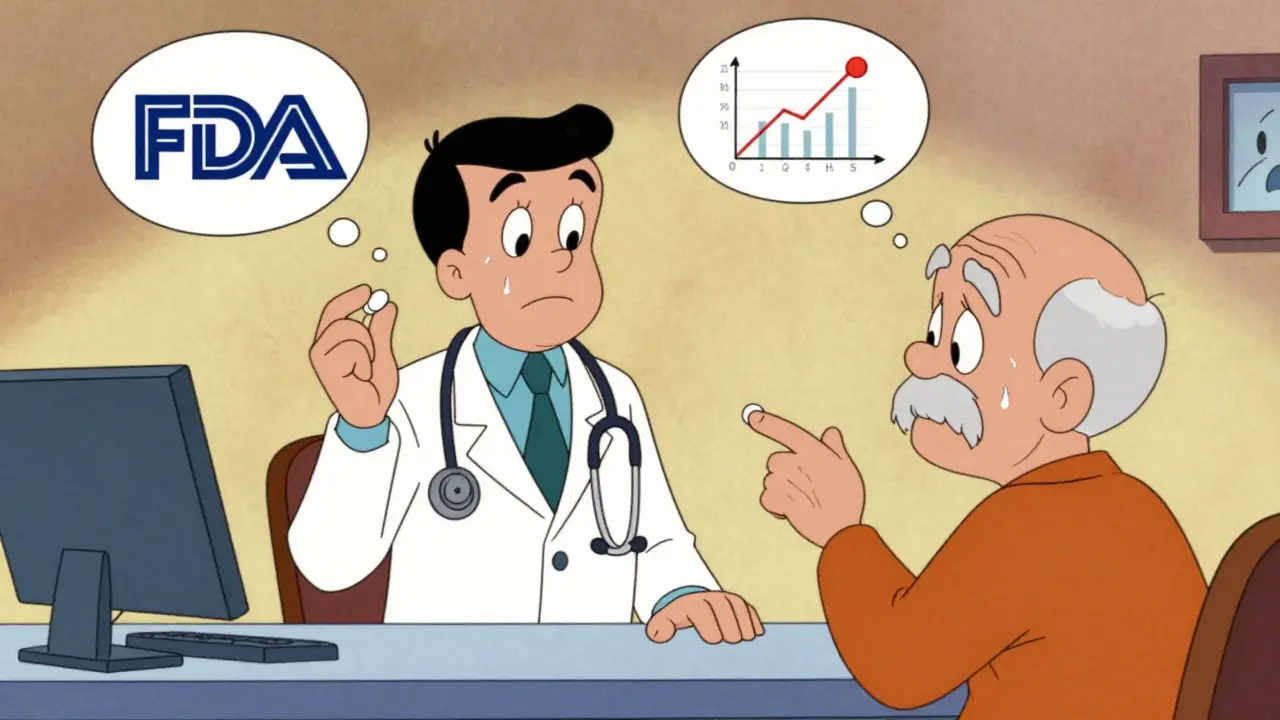
When a pharmacist hands you a pill in a plain white bottle instead of the branded box you expected, it’s not just a cost-saving move-it’s a decision loaded with professional, emotional, and clinical weight. For pharmacists, generic substitution isn’t a simple swap. It’s a balancing act between saving money, managing patient trust, and navigating a system that doesn’t always make their job easier.
Why Pharmacists Are the Frontline in Generic Substitution
Generic drugs are approved by the FDA as bioequivalent to brand-name versions. That means they contain the same active ingredient, strength, dosage form, and route of administration. The FDA requires that generics be absorbed into the bloodstream within 80% to 125% of the brand’s rate-a range that translates to an average difference of just 3.5% in absorption across over 2,000 studies. Sounds solid, right? But in practice, pharmacists face resistance from patients, confusion from prescribers, and systemic gaps that turn a simple regulatory task into a daily challenge. In Australia, where the Pharmaceutical Benefits Scheme (PBS) encourages substitution, pharmacists report that nearly half of patients ask to speak with their doctor before accepting a generic. In the U.S., where state laws vary, pharmacists are often left alone to explain why a blue capsule today is different from the red one last month. And here’s the kicker: 64% of patients say their doctor never mentioned substitution was even an option. That means pharmacists aren’t just dispensing pills-they’re filling information gaps created elsewhere in the healthcare system.Patients Don’t Trust the Generic-And It’s Not Just About Price
The biggest barrier isn’t cost. It’s perception. Many patients equate lower price with lower quality. A 70-year-old woman on blood pressure medication might refuse a generic because the pill looks different. She remembers the brand name from TV ads. She trusts that. The generic? It’s got no logo, no marketing, no familiarity. She thinks, “If it’s cheaper, maybe it doesn’t work as well.” Studies show that patients with chronic conditions like epilepsy, thyroid disease, or depression are especially reluctant. Why? Because the stakes feel higher. A small change in absorption-within the legal 3.5% average-can feel risky when someone’s stability depends on precise dosing. Pharmacists hear things like: “I was fine on the brand. Why change it?” Packaging changes make it worse. A patient who’s been on the same generic for years might panic when the pill shape, color, or imprint changes. They think they’ve been given the wrong medication. Pharmacists spend extra minutes each day reassuring patients, often while juggling 10 other prescriptions. One pharmacist in Melbourne told me: “I’ve had people cry because they thought their medicine changed. I had to pull out the FDA bioequivalence data and show them side-by-side comparisons.”Doctors Don’t Talk About It-So Pharmacists Do
Prescribers are often unaware of substitution rules or avoid the topic entirely. Why? Because they’re busy. Or they assume patients know. Or they’re unsure themselves. A 2015 survey found that 55% of patients never discussed medication costs with their doctor. That leaves pharmacists holding the bag. They’re expected to explain bioequivalence, answer questions about foreign manufacturing, and handle objections-all in the 3 to 5 minutes between filling a script and the next customer. And here’s the irony: when doctors do mention substitution, patient acceptance jumps. One study showed that when physicians explicitly said, “This generic is just as safe and effective,” patients were far more likely to agree. But how many doctors actually say that? Not enough. So pharmacists become educators, counselors, and advocates-without extra pay, training, or time.
The NTI Medication Dilemma
Not all drugs are created equal. Some medications have a narrow therapeutic index (NTI). That means the difference between an effective dose and a toxic one is tiny. Think warfarin, levothyroxine, phenytoin, and some anti-seizure drugs. While the FDA says generics of NTI drugs are bioequivalent, pharmacists remain cautious. Why? Because even a 3% difference in absorption can matter. A patient stabilized on one brand of levothyroxine might have a slight fluctuation in TSH levels after switching to a generic. It’s rare. But when it happens, it’s serious. Pharmacists in Australia and the U.S. report being asked to avoid substitution for these drugs-sometimes by patients, sometimes by prescribers. But pharmacy laws don’t always allow it. In some states, substitution is automatic unless the prescriber writes “dispense as written.” So pharmacists are caught between regulation and clinical judgment. They’re not supposed to override a prescription, but they’re also expected to ensure safety. This creates a gray zone. One pharmacist in Sydney said: “I’ve called doctors at 7 p.m. because a patient’s INR went up after a switch. I didn’t want to be the reason they ended up in the ER.”Education Is the Missing Link
The data is clear: patients who understand generics are more likely to accept them. But here’s what’s broken: only 38% of patients are told they can refuse substitution. Only 52% are told about the cost difference. And just 38.5% are told they have a choice. That’s not informed consent. That’s passive compliance. Pharmacists want to do better. They want to hand out one-page guides. They want to use visual aids. They want to spend five minutes explaining how generics are made, tested, and approved. But they’re running out of time. Pharmacy workflows are built around speed, not education. Some pharmacies have started using QR codes on prescription labels that link to simple videos explaining bioequivalence. Others train staff to use phrases like: “This is the same medicine, just made by a different company. It’s been tested to work just like the brand.” Simple. Clear. Reassuring.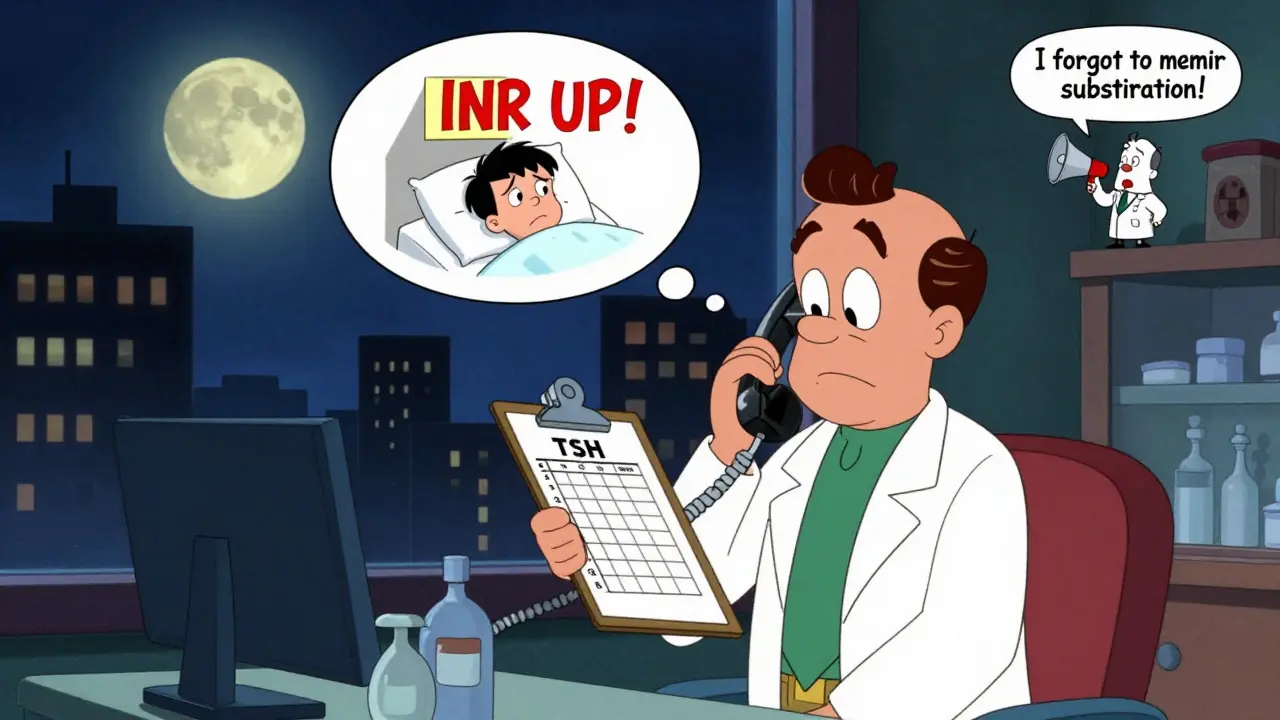
What Needs to Change?
Pharmacists aren’t against generic substitution. They support it. They know it saves patients money-on average, 21% per prescription. They know it reduces system-wide spending. But they need support. First, prescribers need to talk about substitution during consultations. A quick sentence: “I’m prescribing a generic because it’s just as effective and will save you money” can make all the difference. Second, pharmacy laws should allow pharmacists to decline substitution for NTI drugs when clinically warranted-without fear of legal backlash. Third, patients need better education-not just from pharmacists, but from public health campaigns. Imagine a national ad: “Generic drugs are not second-rate. They’re science-tested, FDA-approved, and identical in effect.” Fourth, pharmacists need protected time. Not 30 seconds between prescriptions. Real time. Five minutes per patient who needs explanation. That’s not a luxury-it’s a safety measure.Bottom Line: Pharmacists Are Doing More Than Dispensing
Generic substitution is supposed to be simple: same drug, lower cost. But it’s anything but simple in practice. Pharmacists are caught between policy, profit, patient fear, and professional responsibility. They’re the ones who have to explain why a pill looks different. They’re the ones who have to convince someone their life-saving medication hasn’t changed. They’re the ones who have to call doctors in the middle of the night because a patient’s numbers went off. The system relies on them to make it work. But it doesn’t give them the tools, time, or backing to do it well. If we want generic substitution to succeed, we need to stop putting the burden on pharmacists alone. We need doctors to speak up. We need regulators to clarify boundaries. And we need patients to understand: a cheaper pill isn’t a weaker one. It’s the same medicine-just without the brand name.Are generic drugs really as effective as brand-name drugs?
Yes. The FDA requires generics to have the same active ingredient, strength, dosage form, and route of administration as the brand. They must also prove bioequivalence-meaning they deliver the same amount of medicine into the bloodstream at the same rate, within a 3.5% average difference across thousands of studies. For most people, generics work just as well. However, for medications with a narrow therapeutic index (like warfarin or levothyroxine), some clinicians and patients prefer to stick with one version to avoid even small fluctuations.
Why do generic pills look different from brand-name ones?
The shape, color, and imprint of a pill are determined by inactive ingredients and manufacturing choices, not the active drug. Brand-name companies often use unique designs to build brand recognition. Generic manufacturers use different inactive ingredients and molds, so their pills look different-even though the medicine inside is identical. This change in appearance is one of the biggest reasons patients worry they’ve been given the wrong medication.
Can pharmacists refuse to substitute a brand-name drug with a generic?
It depends on the law. In most U.S. states and countries like Australia, pharmacists are allowed to substitute unless the prescriber writes “dispense as written” or “do not substitute.” In some cases, pharmacists can refuse substitution for clinical reasons-for example, if a patient has had a bad reaction to a previous generic. But they can’t refuse if the law requires substitution and the prescriber hasn’t blocked it. Patient refusal, however, always overrides substitution.
Why do some patients react poorly after switching to a generic?
In most cases, there’s no real difference in how the drug works. But patients may experience side effects due to inactive ingredients (like fillers or dyes), which can vary between brands and generics. Some people are sensitive to these additives. Others feel worse because they believe the generic is inferior-a psychological effect called the “nocebo effect.” Rarely, a bioequivalence gap in NTI drugs might cause a measurable change in blood levels. Pharmacists monitor for these cases and may recommend switching back if symptoms arise.
What can I do if I’m worried about switching to a generic?
Ask questions. You have the right to refuse substitution. Ask your pharmacist: “Is this a generic? What’s the difference?” Ask your doctor: “Can I stay on the brand?” You can also request the original brand if cost is a barrier-many pharmacies offer discount programs or coupons. Keep track of how you feel after switching. If you notice new side effects or worsening symptoms, contact your pharmacist or doctor right away. You’re not alone-many patients feel the same way, and your concerns are valid.
Tom Sanders
March 8, 2026Look, I get that generics save money, but my grandma took one and started hallucinating. Not kidding. She swore the pill was ‘acting weird’-turned out it was just the dye. Now she won’t touch anything that isn’t in the original blue box. Pharmacies need to stop treating us like dumb robots who just want the cheapest option.
And don’t even get me started on how they switch the shape every six months. I had to call my doctor three times last year because I thought I was getting counterfeit drugs. This isn’t healthcare-it’s a Russian roulette game with pills.
Jazminn Jones
March 8, 2026It is regrettably evident that the systemic dissonance between regulatory assurances and patient perception stems not from pharmacological inadequacy, but from a profound epistemological deficit in public health literacy. The FDA’s bioequivalence thresholds, while statistically robust, are rendered meaningless when communicated through the lens of emotional heuristics rather than evidence-based reasoning.
Furthermore, the conflation of aesthetic variance with functional inferiority reflects a deeply ingrained consumerist fallacy-that visual familiarity equates to efficacy. This is not a pharmacological issue; it is a sociocultural pathology requiring institutional intervention, not anecdotal accommodation.
Stephen Rudd
March 9, 2026You people are all missing the point. Australia doesn’t have this problem because we don’t let pharma corporations dictate our system. The PBS isn’t some corporate loophole-it’s public policy. But in the US, you’ve got pharmacists acting as unpaid therapists because the system is designed to fail.
And don’t even start with ‘NTI drugs are safe’-I’ve seen patients on warfarin get sent home with a generic that changed their INR by 18%. Eighteen percent. That’s not bioequivalence. That’s negligence wrapped in a lab coat. The FDA should be ashamed.
And yeah, I know what you’re gonna say-‘It’s rare!’-so was the Titanic. You don’t wait for disaster to fix the iceberg.
Erica Santos
March 9, 2026Oh wow. A whole article about how pharmacists are tired and we should feel bad? Groundbreaking.
Let me guess-you’re also gonna cry about how nurses are overworked and teachers are underpaid? Newsflash: every job in this country is a thankless grind. The fact that you think pharmacists are uniquely burdened is either delusional or deeply privileged.
Maybe instead of whining about ‘protected time,’ we should fix the whole broken system instead of putting Band-Aids on a hemorrhage.
Samantha Fierro
March 9, 2026I want to say thank you to every pharmacist out there who takes the extra five minutes to explain why the pill looks different. I’ve been on levothyroxine for 12 years, and I’ve switched generics four times. Each time, I panicked. Each time, my pharmacist sat down with me, showed me the FDA charts, and reminded me I wasn’t alone.
They didn’t have to do that. But they did. And that’s why I’ll never stop telling people: pharmacists aren’t just dispensers. They’re healers in scrubs.
If we can’t give them more time, we owe them more respect. And maybe, just maybe, we should all stop assuming that ‘cheap’ means ‘bad.’
Robert Bliss
March 10, 2026My mom switched to a generic for her blood pressure med and didn’t even notice. She said it was the same, just cheaper. I think a lot of people are scared because they don’t understand how drugs work.
Maybe instead of blaming pharmacists, we should just teach people in high school how meds work? Like, real science-not just ‘take this pill.’
Also, if you’re worried, just ask. Pharmacists are there to help. They’re not trying to trick you.
Peter Kovac
March 11, 2026The assertion that pharmacists are ‘filling information gaps’ ignores the fundamental failure of prescribers to fulfill their duty of informed consent. The onus of patient education cannot be shifted to pharmacy technicians working under 14-hour shifts with no compensation for cognitive labor.
Moreover, the statistical normalization of bioequivalence thresholds fails to account for interindividual pharmacokinetic variability, particularly among geriatric populations with altered CYP450 metabolism. To suggest that a 3.5% average difference is clinically inert is not only scientifically naive-it is ethically irresponsible.
APRIL HARRINGTON
March 12, 2026OMG I just had the WORST experience yesterday!! I went to get my antidepressant refill and the pill was a different color and I thought I was gonna die!! I screamed at the pharmacist and he was like ‘it’s the same medicine’ and I was like NO IT’S NOT BECAUSE I SLEPT FOR 16 HOURS AFTER I TOOK IT!!
Turns out I was just tired from life but now I’m never switching again. I need my red pill. It’s my red pill. It’s my therapy. It’s my peace. It’s my everything.
Someone please make a meme about this. I need to feel seen.
Leon Hallal
March 13, 2026Same. I took a generic for my anxiety and felt like I was gonna pass out. My heart was racing. I called the pharmacy and they said ‘it’s the same.’ I said ‘no it’s not because I felt it.’ Now I pay double to stay on the brand. I don’t care how much it costs. I’m not a lab rat.
Judith Manzano
March 14, 2026This is such an important conversation. I’m a nurse and I see this every day. Patients don’t trust generics because they’ve never been told the truth. They’re not told how they’re made. They’re not told they’re tested. They’re just handed a different pill and told to shut up and take it.
What if we had a simple one-pager in every prescription bag? Just: ‘This is the same medicine. Made by a different company. Tested. Approved. Safe.’
Simple. Kind. Real. We could change so much with just a little more care.
rafeq khlo
March 14, 2026USA is a joke. In India we don’t even have brand name drugs anymore. Everyone takes generics. No one cares. No one cries. No one calls the doctor at 7pm. You take what works. If it doesn’t work you go to another pharmacy. Simple.
You people make everything into a drama. It’s a pill. Not a religion. Stop being so emotional about medicine.
Morgan Dodgen
March 15, 2026Let’s be real-this whole generic thing is a Big Pharma scam. The FDA is owned by the same corporations that make the brand-name drugs. The ‘bioequivalence’ studies? Rigged. The 3.5% average? That’s a lie. They’re testing on healthy young men. Not old people. Not people with liver disease. Not people on 12 meds.
And the colors? The shapes? That’s not just inactive ingredients. That’s tracking chips. They want to know who’s taking what. They want to control your health. The real reason they push generics? It’s not about cost. It’s about surveillance.
Don’t believe me? Look up Project Blue Pill. It’s all over the dark web.