

When you think about losing weight, you probably think about calories in, calories out. Eat less, move more. But what if the real story is happening inside your gut? Trillions of bacteria, viruses, and fungi live there-collectively called your gut microbiota. And they’re not just along for the ride. They’re actively shaping how your body stores fat, processes food, and even signals hunger.
What’s Really Going On in Your Gut?
Your gut isn’t empty space. It’s a bustling ecosystem. In a healthy adult, it holds about 1 to 2 kilograms of microbes. These aren’t random bugs-they’re organized, interacting, and influencing your metabolism in ways science is only now beginning to fully understand. Research from the mid-2000s first showed that lean people and obese people have different gut bacteria profiles. Since then, over 1,200 studies a year have dug deeper. One consistent finding? Obese individuals often have a higher ratio of Firmicutes to Bacteroidetes bacteria. In one 2023 study of Brazilian teens, obese adolescents had a 2.3:1 ratio, while lean peers were at 1.7:1. That might sound small, but it matters. Firmicutes are better at pulling extra calories from food-especially fiber-that your body can’t digest on its own. That means, for the same meal, someone with this bacterial profile might absorb 2-10% more energy. Over time, that adds up. Add to that a leaky gut. In obesity, the lining of the intestines becomes more permeable. This lets harmful bacterial byproducts, like lipopolysaccharides (LPS), slip into the bloodstream. That triggers low-grade, chronic inflammation. And inflammation is a known driver of insulin resistance-the first step toward type 2 diabetes and stubborn belly fat.Probiotics: The Fix or Just a Fad?
Enter probiotics. These are live bacteria, usually from strains like Lactobacillus or Bifidobacterium, that you can take as supplements or get from fermented foods. The idea is simple: if bad bacteria are causing problems, maybe good ones can fix them. The data is mixed, but not disappointing. A 2025 meta-analysis of 28 studies involving over 2,300 people found that probiotic supplements led to an average weight loss of 1.78 kg and a waistline reduction of 2.56 cm over 8-12 weeks. That’s not a miracle. But it’s measurable. And it’s consistent across studies-even when BMI didn’t change much. Some strains stand out. Lactobacillus gasseri SBT2055, studied in Japan, reduced visceral fat by nearly 8% in 12 weeks. That’s the dangerous fat around your organs, not just the pinchable kind. Other strains like Lactobacillus rhamnosus GG and Bifidobacterium longum showed benefits too-especially when used in combination. But here’s the catch: not all probiotics work for everyone. About 38% of the strains tested in studies had zero effect on weight. And even the good ones? Their benefits fade fast. In 60-80% of cases, the changes in gut bacteria reversed within 8 to 12 weeks after stopping supplements. That means probiotics aren’t a one-time fix. They’re more like a daily vitamin-consistent use matters.Synbiotics: The Better Option?
What if you could feed the good bacteria while you introduce them? That’s the idea behind synbiotics-combinations of probiotics and prebiotics (fibers that feed good microbes). A 2025 review found synbiotics led to 37% more weight loss than probiotics alone. Why? Because prebiotics like inulin or resistant starch help probiotics survive, multiply, and stick around longer. They also boost production of short-chain fatty acids (SCFAs)-especially butyrate. Butyrate is like fuel for your gut lining. It reduces inflammation, tightens up leaky gut, and even helps regulate appetite. Obese individuals often have 15-20% less butyrate. Synbiotics can bring those levels back up. One 2017 study showed that combining probiotics with omega-3s led to a 24.5% drop in CRP (a key inflammation marker), a 12.3% drop in cholesterol, and a 18.7% improvement in insulin sensitivity-all in just 12 weeks. That’s not just weight loss. That’s metabolic healing.
Why Do Results Vary So Much?
You might have read conflicting reports. One study says probiotics work. Another says they don’t. The reason? Three big factors:- Population differences. Asian populations showed 22% better results than Western ones in one 2024 review. Why? Baseline gut microbiomes differ. Diet, lifestyle, and even genetics shape what bacteria thrive.
- Study design. Most trials last 12 weeks. Too short to see lasting change. Sample sizes are small-often under 100 people. That’s not enough to spot subtle effects.
- Strain specificity. You can’t treat gut health like a one-size-fits-all pill. Lactobacillus gasseri might shrink belly fat. Bifidobacterium infantis might calm inflammation. But if you pick the wrong strain, you get nothing.
How Probiotics Actually Work (The Science Behind It)
It’s not magic. Here’s what’s happening inside your body when you take a good probiotic:- Repairing the gut barrier. Some strains boost proteins like occludin and claudin-1 by 30-40%, sealing leaks and keeping toxins out.
- Reducing inflammation. Probiotics lower TNF-alpha and IL-6-two key inflammation drivers-by 25-35% and 15-25% respectively.
- Improving fat metabolism. They alter bile acid signaling, which changes how your body stores and burns fat.
- Regulating appetite. They stimulate GLP-1, a hormone that makes you feel full. One study saw a 20-30% increase after probiotic use.
What Should You Do?
So where does that leave you? If you’re struggling with weight and suspect your gut might be part of the problem, here’s what actually works:- Choose a probiotic with Lactobacillus gasseri, Bifidobacterium longum, or a multi-strain blend.
- Look for at least 10 billion CFUs per dose. Higher doses (up to 100 billion) are used in most successful studies.
- Pair it with prebiotic fiber-think oats, garlic, onions, asparagus, or a supplement like inulin.
- Take it daily, consistently. Don’t expect results in a week. Give it 8-12 weeks.
- Don’t stop eating vegetables. Probiotics don’t replace diet. They enhance it.
The Future: Personalized Gut Therapy
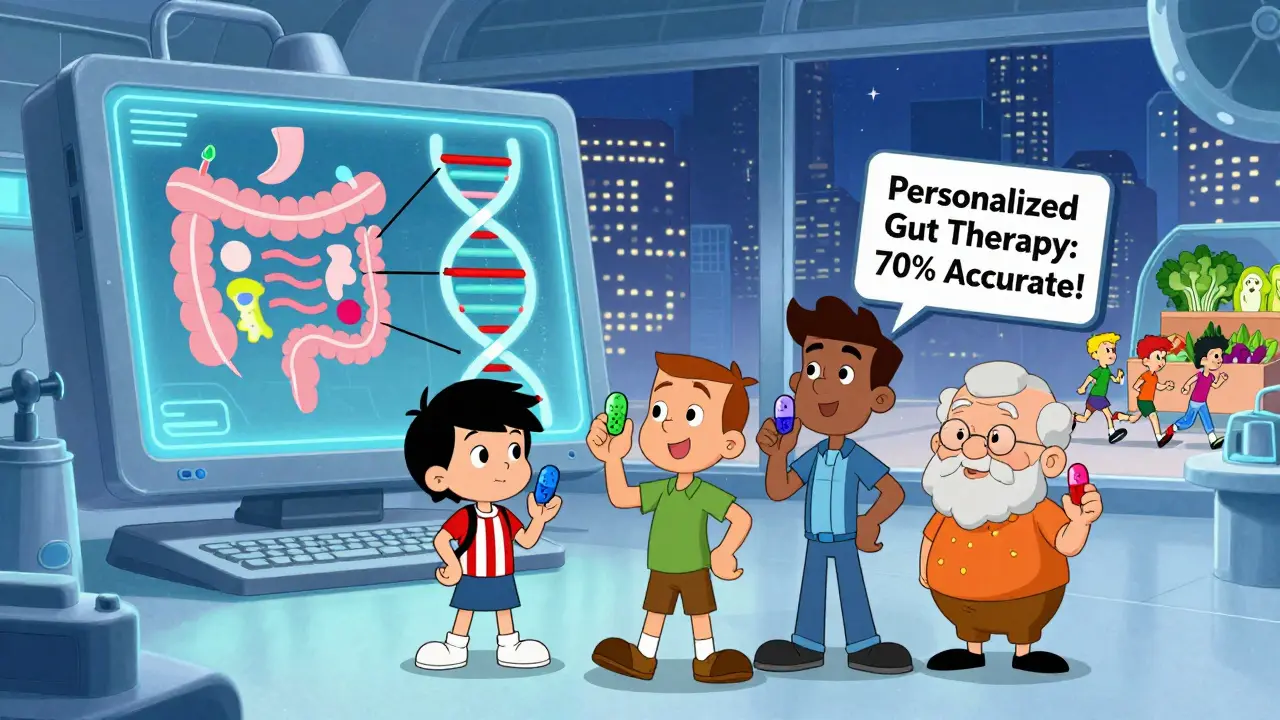
The next big thing? Personalized probiotics. Researchers are now building algorithms that analyze your gut microbiome and predict which strains will help you. Early pilot studies in 2024 got it right 65-75% of the time. Imagine a test kit-like a blood panel-that tells you exactly which probiotic to take. No guessing. No wasted money. Right now, that’s still in labs. But it’s coming. And when it does, weight management won’t be about diets or pills. It’ll be about your unique biology.Bottom Line
Gut microbiota isn’t just a buzzword. It’s a real, measurable factor in obesity. Probiotics aren’t a magic bullet, but they’re not a scam either. They’re a tool-one that works best when used correctly, consistently, and as part of a bigger plan. If you’re serious about metabolic health, start with your gut. Feed it fiber. Take a quality probiotic. Give it time. And don’t expect overnight results. But if you stick with it, you might just find that the key to your weight wasn’t in your kitchen-it was in your colon.Can probiotics help me lose belly fat?
Yes, certain strains like Lactobacillus gasseri SBT2055 have been shown to reduce visceral fat by up to 7.9% in 12 weeks. Most weight loss from probiotics comes from reducing abdominal fat, not just overall scale weight. This is important because belly fat is linked to higher risks of heart disease and diabetes.
How long do I need to take probiotics for weight loss?
Most studies show benefits after 8-12 weeks of daily use. But the effects often reverse within 8-12 weeks after stopping. For lasting results, you’ll likely need to take them long-term, or combine them with dietary changes that support good bacteria-like eating more fiber and less sugar.
Are all probiotics the same for weight loss?
No. Different strains do different things. Lactobacillus gasseri targets belly fat. Bifidobacterium longum reduces inflammation. Lactobacillus rhamnosus GG helps with appetite control. Multi-strain formulas often work better than single strains. Check the label for specific strain names and CFU counts-generic "probiotic blend" labels are not enough.
Can I get enough probiotics from yogurt and fermented foods?
Fermented foods like yogurt, kefir, sauerkraut, and kimchi are great for gut health-but they usually don’t contain enough of the specific strains shown to impact weight. Most yogurts have 1-5 billion CFUs, while studies use 10-100 billion. Supplements give you the dose needed for measurable effects. Still, food sources should be part of your routine-they add fiber and other nutrients too.
Do probiotics work for everyone?
No. About 25-55% of people don’t respond to probiotics for weight loss. This depends on your baseline gut bacteria, diet, genetics, and even where you live. People in Asia tend to respond better than those in Western countries, likely due to diet differences. If you don’t see results after 12 weeks, it might not be the right strain-or your gut may need a different approach, like prebiotics or dietary changes.
Is it safe to take probiotics long-term?
Yes, for most healthy people. Probiotics are generally safe, even for long-term use. Side effects are mild-bloating or gas at first, usually fading within days. People with weakened immune systems, severe illness, or central lines should talk to a doctor first. Always choose reputable brands with third-party testing for purity and potency.
What’s the best time to take probiotics?
Take them with or just before a meal, especially one with some fat. Food buffers stomach acid, helping more bacteria survive to reach your gut. Some experts suggest taking them 30 minutes before breakfast. Avoid taking them with hot drinks or antibiotics unless directed by a doctor-antibiotics kill probiotics.
Do I need to take prebiotics with probiotics?
Not always, but it helps. Prebiotics feed the good bacteria and make probiotics more effective. If you’re not eating enough fiber (fruits, vegetables, whole grains, legumes), adding a prebiotic like inulin or FOS can boost results. Synbiotic supplements combine both and are often more effective than probiotics alone.


Celia McTighe
December 28, 2025I tried probiotics for 3 months after reading this and honestly? My bloating disappeared and my cravings for sugar dropped like a rock. I didn’t even change my diet much. Just added a daily L. gasseri supplement and ate more garlic and onions. My jeans fit better. 🙌
Gran Badshah
December 28, 2025this is why indian gut is stronger than american one. we eat curd daily, fermented foods, no processed crap. probiotics are just a western fix for a lifestyle problem. you dont need pills if you eat real food.
Ellen-Cathryn Nash
December 29, 2025I'm so tired of people treating their gut like a magic box you can just dump supplements into. If you're eating fast food and soda every day and think a $20 bottle of probiotics is going to save you, you're delusional. It's not a bandaid. It's a lifestyle overhaul. And most people aren't willing to do the work.
Samantha Hobbs
December 30, 2025i took probiotics for 2 weeks and got so gassy i thought i was gonna explode. then i stopped. no weight loss. no magic. just gas. so yeah, maybe not for everyone.
Nicole Beasley
December 31, 2025Wait so if I eat kimchi every day do I still need a supplement? Or is that enough? I’m confused now 😅
sonam gupta
January 1, 2026india has been doing gut health for centuries. we dont need american science to tell us curd is good. you people are so behind
Julius Hader
January 3, 2026I’ve been taking probiotics for 6 months. Lost 5 lbs. But honestly? I also cut out soda and started walking daily. I think the probiotics helped, but they weren’t the hero. The real change was me finally taking care of myself.
Vu L
January 3, 2026Probiotics for weight loss? LOL. Next you’ll tell me crystals heal your chakras. Science doesn’t prove this stuff. It’s all funded by supplement companies. Wake up.
James Hilton
January 5, 2026So let me get this straight - you’re telling me the key to losing belly fat is... eating more fiber and not being lazy? Groundbreaking. 🙃
Mimi Bos
January 6, 2026i got the wrong probiotic and now i think i have a tiny alien living in my gut. its been 4 weeks and i still feel weird. maybe i shoulda read the label better 🤦♀️
Payton Daily
January 6, 2026You know what this is really about? Control. We’ve lost touch with our bodies. We’ve outsourced our health to pills and apps and algorithms. But the truth? Your gut is your soul’s first language. When it’s broken, you’re not just fat - you’re disconnected. Probiotics are just the first step back to yourself. The real weight loss? That’s spiritual.
oluwarotimi w alaka
January 7, 2026this is all a big pharma trick to sell pills. the real cause of obesity? GMOs and chemtrails. they put toxins in our food so we get sick and buy their solutions. dont trust the system.
Debra Cagwin
January 8, 2026I love how this post doesn’t just throw out facts - it gives you a real roadmap. If you’re new to this, start small: one probiotic a day, one extra serving of veggies, and give it 60 days. No need to overhaul everything at once. Progress > perfection. You’ve got this 💪