
Sodium Reduction Calculator
The JAMA study showed that reducing daily sodium intake by 2,300 mg lowers systolic blood pressure by 6 mm Hg — the same effect as starting a first-line blood pressure drug. This calculator estimates how much your blood pressure could drop by reducing your sodium intake.
Results
By reducing your sodium intake from mg to the recommended mg, you could potentially lower your systolic blood pressure by mm Hg.
This is comparable to the effect of starting a first-line blood pressure medication.
Practical Tips for Reducing Sodium:
- Read nutrition labels and look for products with less than 140 mg sodium per serving
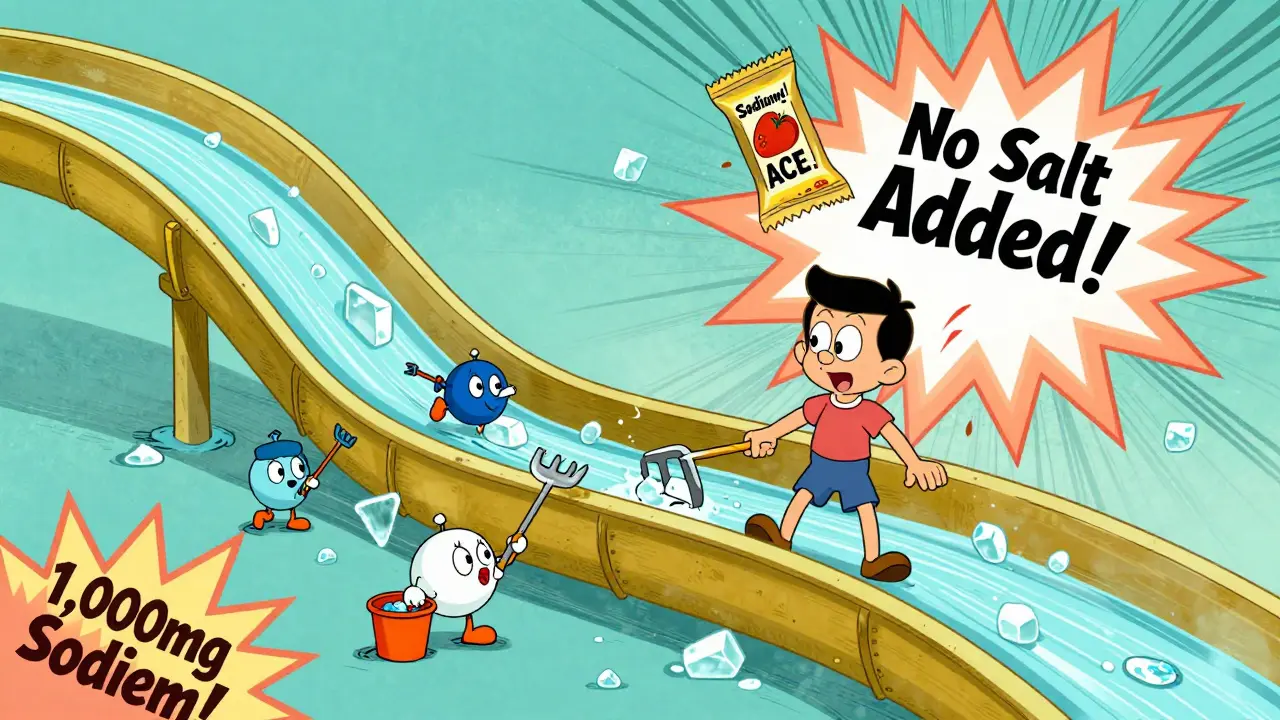
- Choose "no salt added" or "low sodium" versions of your favorite foods
- Rinse canned foods to remove up to 30-40% of sodium
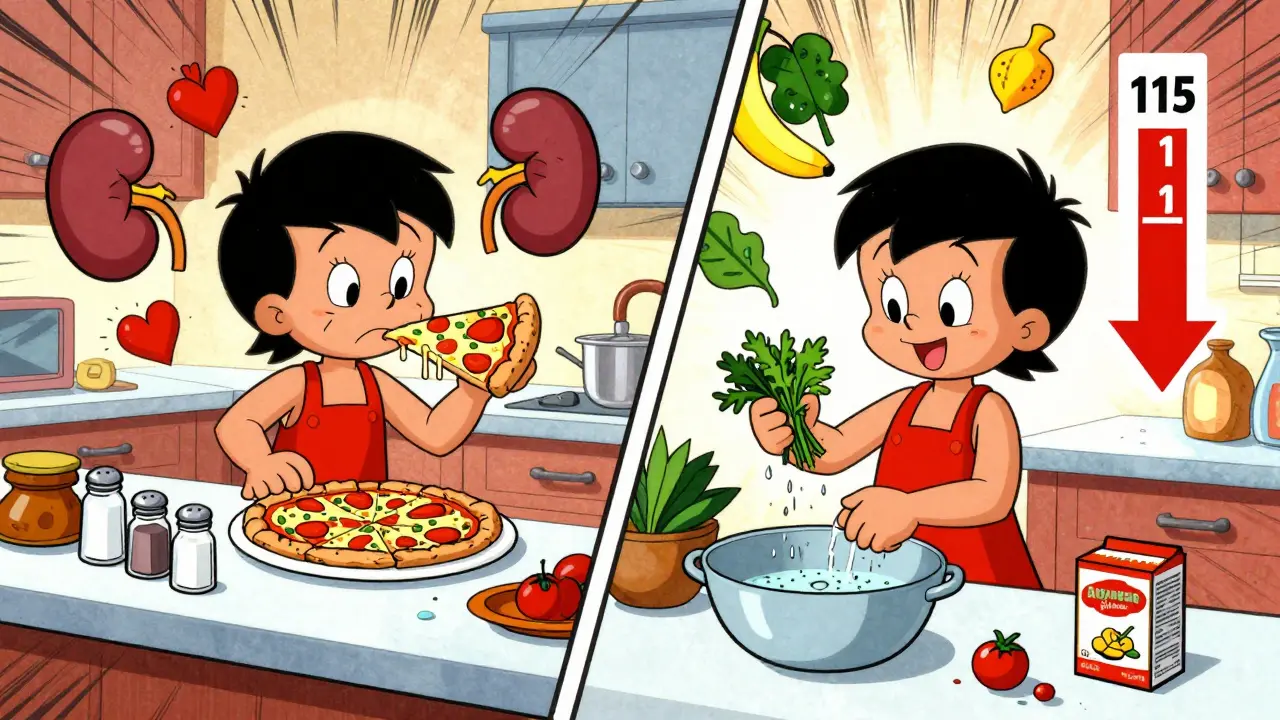
- Use herbs, spices, lemon juice, and vinegar instead of salt for flavor
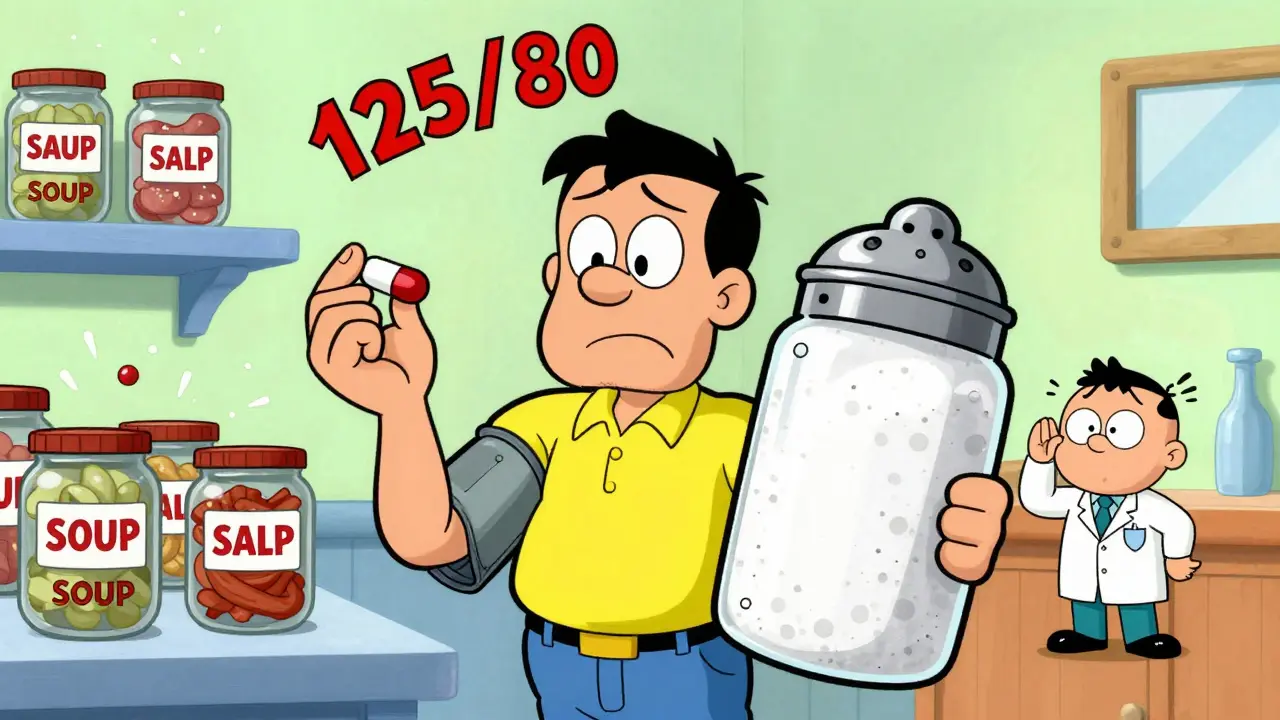
Many people take blood pressure medication and wonder why their numbers won’t drop - even when they’re doing everything right. The answer might be hiding in their pantry, their lunchbox, or the back of their fridge. It’s not always about the pill. It’s about the salt.
Why Salt Undermines Your Blood Pressure Pills
If you’re on ACE inhibitors, ARBs, diuretics, or other common blood pressure medications, eating too much salt can make them work less effectively. It’s not a myth. A major 2023 study published in JAMA showed that reducing daily sodium intake by just one teaspoon (about 2,300 mg) lowered systolic blood pressure by 6 mm Hg - the same drop you’d expect from starting a first-line blood pressure drug. And this wasn’t just in people not on meds. It happened in people already taking prescriptions. Here’s how it works: sodium pulls water into your bloodstream, increasing volume. More volume means more pressure on your arteries. Your meds are designed to relax blood vessels, flush out fluid, or block hormones that raise pressure. But if you’re constantly flooding your system with salt, your body fights back. The drugs lose their edge. Your heart works harder. Your kidneys struggle. And your numbers stay stubbornly high.The Science Behind the Numbers
The 2023 study tracked 213 adults, mostly over 60, including many with existing hypertension and a high proportion of Black participants - a group often more sensitive to salt. Participants followed three diets: their usual diet (average 4,500 mg sodium), a high-sodium version (adding 2,200 mg), and a low-sodium version (just 500 mg total). The results were clear:- Usual diet: 125 mm Hg systolic pressure
- High-sodium diet: 126 mm Hg
- Low-sodium diet: 119 mm Hg
Who Benefits Most?
Not everyone responds the same way. About 25-30% of people are “salt resistant” - their blood pressure barely budges when they cut back. But the other 70-75%? They see real, measurable results. And those who benefit most tend to be:- Over 50 years old
- Already diagnosed with high blood pressure
- Black or of African descent
- Diabetic or have kidney disease
Where the Salt Really Hides
Most people think they’re cutting salt by avoiding the shaker. That’s like trying to lose weight by skipping dessert while eating a whole loaf of white bread. About 70% of the sodium in your diet comes from packaged, processed, and restaurant foods. Not the salt you add at the table. Here’s what’s loaded:- Instant soups and broths (1,000+ mg per cup)
- Delicatessen meats and processed cheeses (300-800 mg per slice)
- Canned beans and vegetables (400-800 mg per half-cup)
- Bread and rolls (150-300 mg per slice - yes, bread is a major source)
- Pizza, frozen meals, and ready-made sauces
How to Cut Back - Without Feeling Deprived
You don’t need to eat bland food. You just need to be smarter. Read labels like a detective. Look at the milligrams (mg) of sodium - not the % Daily Value. Anything under 140 mg per serving is low. Avoid anything over 400 mg. Choose “no salt added” or “low sodium” versions. Canned tomatoes, beans, tuna, and broths all come in low-sodium options. Rinse canned beans and veggies under water - that can cut sodium by 30-40%. Swap salt for flavor. Use garlic, onion, lemon juice, vinegar, black pepper, paprika, cumin, or dried herbs. A pinch of potassium chloride salt substitute can help - but only if your kidneys are healthy. Talk to your doctor first. Cook more at home. When you make your own meals, you control the salt. Even switching from frozen dinners to homemade stir-fries or soups can drop your daily sodium by 1,000 mg or more. Be cautious with restaurant meals. Ask for sauces on the side. Skip the salt on your fries. Order grilled instead of fried. Most chain restaurants now list nutrition info online - check before you order.How Fast Will You See Results?
You don’t have to wait months. In the JAMA study, blood pressure dropped within just seven days of switching to a low-sodium diet. That’s faster than many medications take to kick in. Some people notice less bloating, better sleep, and lower morning headaches within days. And here’s the best part: lowering salt doesn’t just help your meds work better - it might let you take less of them. In some cases, doctors have successfully reduced doses after patients cut sodium. That means fewer side effects - less dizziness, less fatigue, fewer trips to the pharmacy.What About Potassium?
Potassium helps your body get rid of sodium and relaxes blood vessel walls. The ideal ratio is more potassium, less sodium. Foods rich in potassium include:- Spinach, kale, and Swiss chard
- Bananas, oranges, and cantaloupe
- White beans, lentils, and sweet potatoes
- Avocados and yogurt
- Salmon and tuna
The Bigger Picture
This isn’t just about your personal health. The American Heart Association estimates that if everyone in the U.S. cut sodium to 2,000 mg a day, we could prevent 280,000 to 500,000 heart attacks and strokes over ten years. That’s not a prediction. That’s a proven model based on real data. And it’s not just about pills. It’s about control. When you manage your sodium intake, you’re not just taking medication - you’re actively participating in your own healing. You’re turning your diet into a tool, not a barrier.What Your Doctor Wants You to Know
Doctors don’t just recommend cutting salt because it’s trendy. They say it because it works - and because it’s one of the most powerful, low-cost, side-effect-free tools we have. As Dr. Egan from the American Medical Association says: “When they eat more sodium, a lot of their blood pressure medications don’t work as well.” The guidelines are clear now. The Joint National Committee on High Blood Pressure classifies sodium reduction as a Class I recommendation - the strongest possible - for every person with hypertension. That means it’s as essential as taking your pill.Start Today - Here’s Your Simple Plan
You don’t need to overhaul your life overnight. Start with these three steps:- Check your pantry. Toss or donate anything with more than 400 mg sodium per serving.
- Switch to low-sodium versions of your top three go-to foods (bread, soup, deli meat).
- Use herbs and spices instead of salt when cooking. Try one new herb this week.
Can I stop my blood pressure medication if I cut out salt?
No. Never stop or change your medication without talking to your doctor. Cutting salt can improve how well your meds work - and in some cases, may allow your doctor to reduce your dose. But stopping cold turkey can be dangerous. Always work with your healthcare team to adjust treatment safely.
Is sea salt or Himalayan salt better than table salt?
No. All types of salt - table, sea, kosher, Himalayan - are mostly sodium chloride. They contain nearly the same amount of sodium per gram. The trace minerals in fancy salts don’t offset the health risks. If you’re trying to lower blood pressure, the type of salt doesn’t matter - the amount does.
I have kidney disease. Should I still cut salt?
Yes - but carefully. Reducing sodium helps lower blood pressure and reduces fluid buildup, which eases strain on your kidneys. However, if you’re on dialysis or taking certain medications, you may also need to limit potassium. Talk to your nephrologist or dietitian. They can help you find the right balance.
How much sodium is too much?
The American Heart Association recommends no more than 2,300 mg a day - and ideally 1,500 mg for people with high blood pressure. Most people eat 3,000-3,500 mg daily. Even cutting from 3,500 to 2,500 mg can lower blood pressure. Every 500 mg reduction helps.
Can I use salt substitutes?
Potassium-based salt substitutes can help reduce sodium - but they’re not safe for everyone. If you have kidney disease, diabetes, or are on ACE inhibitors, ARBs, or potassium-sparing diuretics, too much potassium can cause dangerous heart rhythms. Always check with your doctor before using them.
Why does my blood pressure still go up even when I take my meds?
Salt is one of the most common reasons. Other factors include missing doses, alcohol use, stress, lack of sleep, or being overweight. But if you’re taking your meds correctly and still struggling, high sodium intake is likely a major contributor. Try cutting back for two weeks and track your numbers. You might be surprised.


Jigar shah
December 16, 2025Interesting study. The 6 mm Hg drop from reducing sodium by 2,300 mg is clinically significant, especially when you consider it’s comparable to first-line pharmacotherapy. The fact that it works even in patients already on meds suggests sodium overload is a systemic amplifier of hypertension, not just a peripheral factor. The racial and age-based sensitivity patterns align with existing literature on salt-responsive hypertension in Black populations and elderly patients with reduced renal sodium excretion.
Marie Mee
December 17, 2025theyre lying about the salt its all the fluoridated water and the gov wants you sick so they can sell more pills i swear i stopped eating salt and my bp went up because they poisoned my tap water
Kent Peterson
December 18, 2025Oh wow, another ‘cut the salt’ lecture from the health police. You know what else lowers blood pressure? Quitting your job, moving to a beach, and stopping taking pills that make you dizzy. The real problem? Overmedicating healthy people because some corporate-funded study says ‘sodium bad.’ Meanwhile, the FDA lets 3,400 mg/day slide because Big Food is lobbying harder than your grandma’s bingo group. I eat salt like it’s going out of style-my BP’s fine. Your numbers don’t define you.
Josh Potter
December 19, 2025YESSSS this is the truth!! I cut out the canned soup and frozen pizza and my bp dropped 10 points in 10 days. No joke. My doctor was like ‘did you change something?’ and i was like ‘nah just stopped eating death in a box.’ now i cook with garlic and lime and feel like a new person. you dont need magic pills if you stop feeding your body highway salt
Meghan O'Shaughnessy
December 21, 2025In India, we’ve been cooking with minimal salt for generations-using asafoetida, tamarind, and roasted cumin for flavor. It’s not about deprivation, it’s about tradition. I grew up eating dal and rice with maybe 200 mg sodium per meal. My grandparents lived into their 90s with normal BP. Maybe we didn’t need the Western processed food revolution after all.
Kaylee Esdale
December 21, 2025you dont have to be perfect just start somewhere. swap one thing. one. maybe your bread. maybe your soup. maybe the canned beans. you dont need to throw out your whole kitchen. small wins build momentum. and your body will thank you with better sleep and less puffiness. you got this
Philippa Skiadopoulou
December 22, 2025The evidence is robust. Sodium reduction is a Class I recommendation for hypertension management. The JAMA study design was rigorous, with controlled dietary interventions and direct BP measurements. The 7-point difference between high and low sodium diets is statistically and clinically significant. For patients on ACE inhibitors, concurrent high sodium intake directly antagonizes therapeutic efficacy by increasing intravascular volume and suppressing renin release. Dietary counseling should be integrated into standard care.
Anna Giakoumakatou
December 23, 2025How quaint. We’ve reduced our sodium intake to 1,200 mg/day and now we’re basically saints of the metabolic priesthood. Meanwhile, the rest of the world is still eating actual food instead of sodium-laced cardboard labeled ‘organic’ and ‘heart-healthy.’ I suppose if you can’t control your taste buds, you outsource your morality to a clinical trial. How very… American. Tell me, does your kale come with a QR code that verifies your virtue?
Linda Caldwell
December 24, 2025just started cutting back and already my ankles don’t swell anymore. i used to think i needed salt to survive but turns out i just needed to stop eating the stuff that’s trying to kill me. your body is smarter than you think. listen to it. you’re doing better than you know