
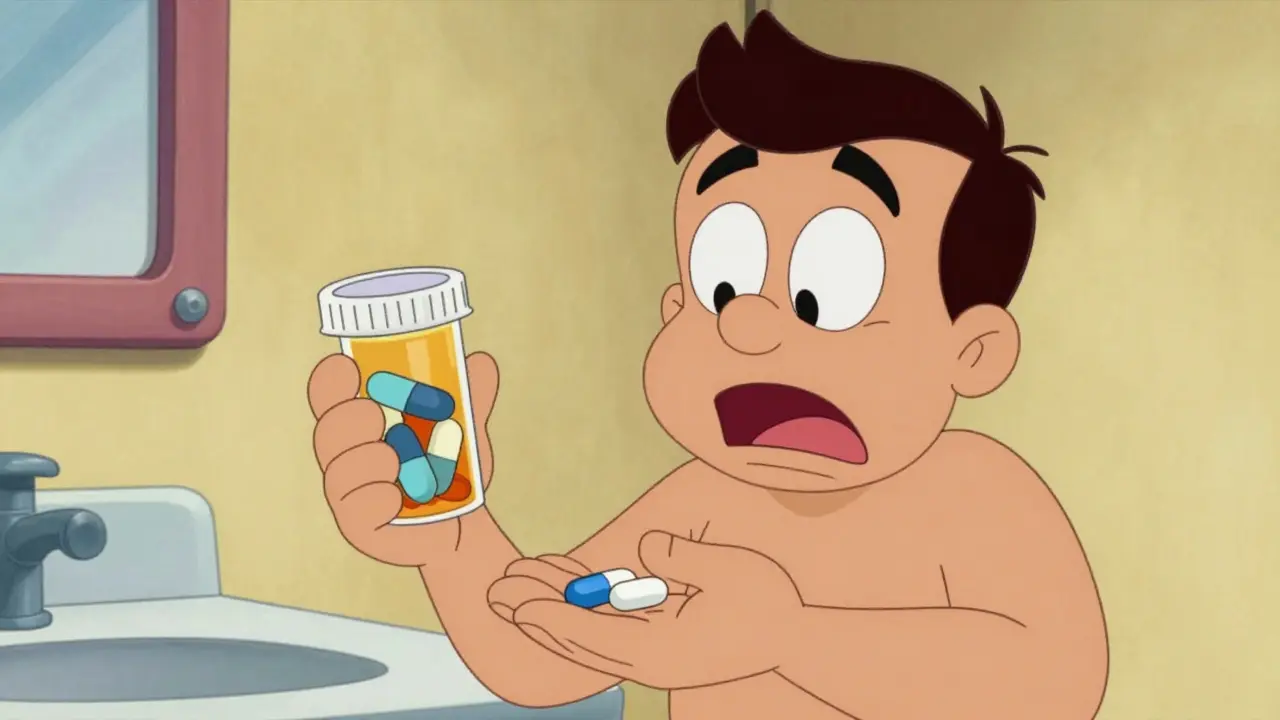
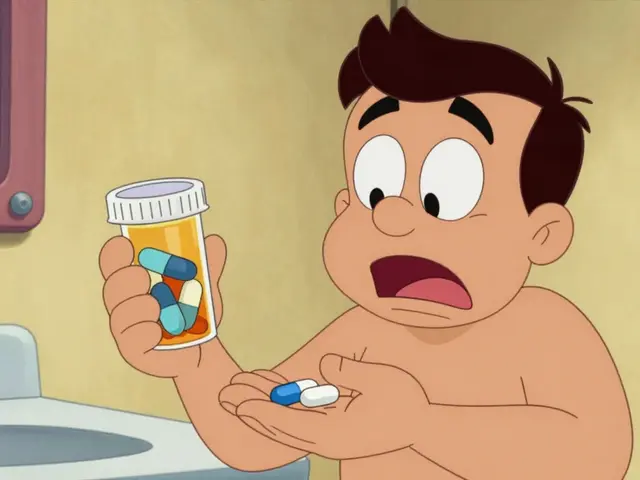
You've been taking your blood pressure medication for years. Then one refill comes in a different color-maybe blue instead of white. Your heart races. Did you get the wrong medicine? You're not alone. Every month, millions of people face this exact confusion. The truth is, generic medications often look different from brand-name drugs or even from previous refills-and it's completely legal. But why? And more importantly, is it safe?
Why Do Generic Pills Look Different?
generic drugs must contain the same active ingredients as brand-name versions to work the same way. However, U.S. trademark laws prevent them from looking identical. This rule dates back to the Hatch-Waxman Act of 1984, which created the pathway for generic drug approval. The FDA requires generics to prove bioequivalence (meaning they deliver the same amount of medicine into your bloodstream), but allows differences in color, shape, size, and markings. Why? Because brand-name companies hold patents on a drug's appearance. Generic manufacturers can't copy those visual traits.
Common Changes in Pill Appearance
Generic medications can vary in several ways:
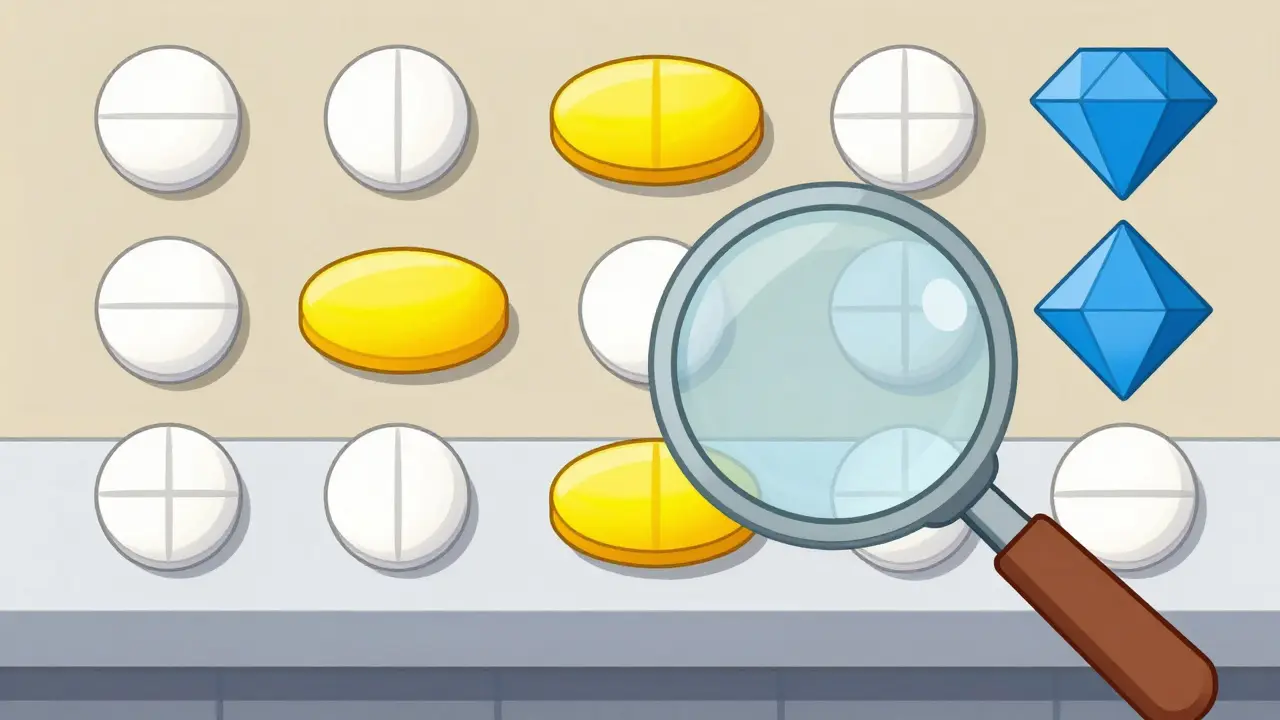
- Color: Pantone color standards guide manufacturing, but different companies use different shades. For example, Lipitor (atorvastatin) brand pills are pink and oval, while generic versions might be white round or pale yellow oblong.
- Shape: Tablets can be round, oval, caplet, or even diamond-shaped. A generic metformin pill might be oval white in one batch and round pink in another.
- Size: Pills range from 3mm to 20mm in diameter. Smaller pills might be easier to swallow, but larger ones often contain more medicine.
- Markings: Letters, numbers, or symbols embossed on pills help identify them. A generic version of a cholesterol drug might have "ATV" instead of "LIPITOR".
This variability isn't random. The FDA's Office of Generic Drugs recommends manufacturers consider physical attributes when developing products. Why? Because appearance affects how patients take their medicine.
How Appearance Changes Affect Patients
When pills change color or shape, patients often worry. In 2014, researchers at Brigham and Women's Hospital studied 38,507 people taking cardiovascular drugs. They found that when pill appearance changed, patients were 34% more likely to stop taking their medication. That's not just inconvenience-it's dangerous. Skipping doses for high blood pressure or diabetes can lead to heart attacks or strokes.
Real-world data backs this up. A 2022 survey by the National Community Pharmacists Association showed 63.2% of patients prefer consistent pill appearance, even if it costs more. Older adults are especially affected: 37% of those over 65 struggle to recognize their meds when appearance changes, compared to 22% of younger adults. One Reddit user wrote: "My blood pressure med changed from white oval to blue round last refill, and I almost didn't take it thinking it was a different medication."
What You Can Do to Stay Safe
Don't panic when your pills look different. Here's how to handle it:
- Talk to your pharmacist: They can confirm it's the right medicine and explain the change. Pharmacists report complaints about appearance changes in 18.3% of generic refills, mostly from older patients.
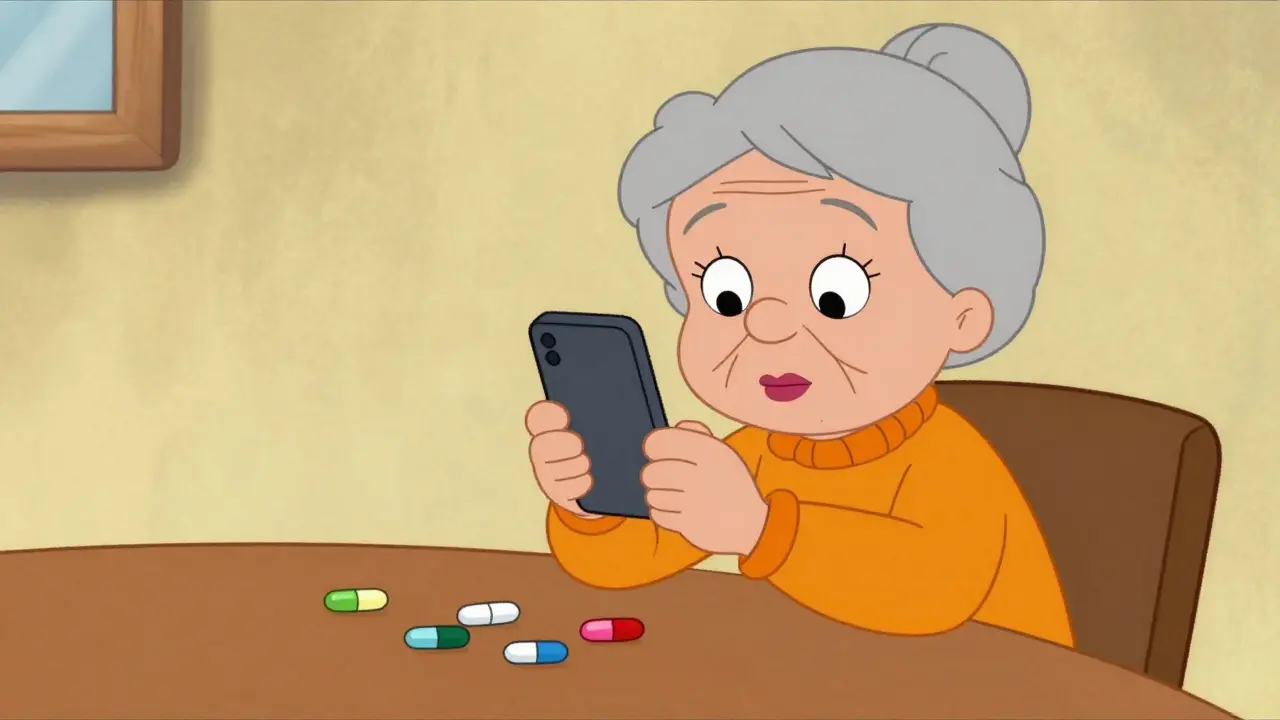
- Take photos of your pills: A Johns Hopkins University study found that keeping pictures of medications reduces errors by 27% in elderly patients. Store them in your phone's notes app.
- Use pill organizers: Fill them weekly with the same pill arrangement. This creates a visual routine, so any change stands out immediately.
- Check the prescription label: Always verify the drug name, strength, and quantity match your prescription-even if the pill looks unfamiliar.
Remember: pill identification is crucial for safety. The color or shape doesn't affect how the medicine works-only the active ingredients do. But ignoring changes can lead to mistakes.
How Pharmacists Help Manage Appearance Changes
Pharmacists have tools to ease your worries:
- Pill identification cards: The FDA provides free printable cards with images of common medications. About 68% of pharmacies use these in 2022.
- Medication history tools: Systems like Surescripts show past prescriptions with images. However, only 42.7% of pharmacies use this feature regularly.
- Personalized counseling: During medication therapy management sessions, pharmacists spend 3-5 extra minutes explaining appearance changes. This simple step cuts confusion significantly.
Some insurers let you choose a specific generic manufacturer. But 78% of pharmacy benefit managers don't guarantee consistent suppliers-so appearance changes are often unavoidable.
Future Improvements in Medication Identification
The FDA is taking action. In 2023, they launched a Visual Medication Equivalence Standards initiative under the Generic Drug User Fee Amendments program. Draft guidelines are expected in mid-2024. This could standardize appearance for high-risk drugs like blood thinners or epilepsy medications.
Europe already has stricter rules. The European Medicines Agency requires generic versions of chronic condition drugs to match brand appearance when possible. A 2022 study showed this reduced medication errors by 18.3% across EU countries. The U.S. may follow suit-but legal challenges remain. A 2022 court case upheld trademark protections for drug appearance, meaning generics will likely keep some visual differences.
Are generic pills less effective if they look different?
No. The FDA requires generic drugs to be bioequivalent to brand-name versions, meaning they deliver the same amount of active ingredient into your bloodstream. Color, shape, or size differences don't affect how well the medicine works-only the active ingredients do. However, appearance changes can cause confusion that leads to skipping doses-which is why consistent identification matters.
Why do different generic manufacturers make pills look different?
U.S. trademark laws prevent generic manufacturers from copying a brand-name drug's appearance. Each company must design its own pill-so one generic for Lipitor might be white and round, while another is yellow and oblong. This also happens between different generic makers for the same drug. The FDA allows this as long as the medicine meets bioequivalence standards.
Can I ask my pharmacist to always give me the same generic manufacturer?
You can ask, but it's often not possible. Most pharmacy benefit managers (PBMs) don't guarantee consistent suppliers-78% of formularies switch manufacturers based on cost or availability. Some insurers might allow it for high-risk drugs, but this is rare. The best approach is to verify each refill with your pharmacist instead of relying on appearance.
What should I do if I accidentally take the wrong pill?
Call your pharmacist or doctor immediately. If it's a minor mistake (like taking a similar-looking blood pressure pill by accident), they'll advise if you need to skip a dose or take extra. For serious errors (like taking the wrong heart medication), go to the emergency room. Always keep a list of your medications with dosages-this helps medical staff respond quickly.
Is it safe to switch between different generic versions of the same drug?
Yes-as long as the drug is labeled as bioequivalent by the FDA. The agency tests each generic version to ensure it works the same as the brand-name drug. However, switching between generics might cause confusion if appearance changes dramatically. Always check with your pharmacist when a new generic arrives-they can confirm it's the right medication and explain any visual differences.

Pamela Power
February 6, 2026Big Pharma is changing pill colors to confuse patients and sell more expensive generics. The FDA is useless. I've been taking meds for years and this happens every time. It's dangerous. They don't care about patients. Just profit. Always changing the damn pills. It's disgusting. The system is broken. They need to fix this immediately. Stop the nonsense. This is why people skip doses and end up in the ER.
anjar maike
February 6, 2026Color changes don't affect the medicine 🤷♀️
Cole Streeper
February 7, 2026This is all part of the government's plan to control us. They want us to take different pills so they can track us. The FDA is in cahoots with Big Pharma. I've seen this before with other meds. It's all about mind control. Don't trust them!
Dina Santorelli
February 8, 2026Yeah, conspiracy theories aside, the real problem is that patients panic and stop taking their meds. I've had to deal with this for years. It's stressful. Why can't they just make the pills look the same? It's all about money. I hate this.
divya shetty
February 10, 2026It is imperative that patients adhere to their medications regardless of appearance. The FDA has strict guidelines ensuring safety. Any deviation from taking prescribed medication is irresponsible. One must prioritize health over superficial changes.
Phoebe Norman
February 12, 2026bioequivalence is key here. active ingredients same so efficacy not affected. but appearance changes cause non-adherence. which is bad. the FDA should standardize but trademark laws prevent. so patients need to check with pharmacists. but they don't always communicate properly.
Albert Lua
February 13, 2026Hey everyone, as someone who's lived in both the US and India, I've noticed a huge difference in how generics are handled.
In India, generic drugs usually look identical to brand names because the regulations there don't have the same trademark restrictions.
It's not a problem there.
Patients don't have to worry about pill appearance.
But here in the US, it's a different story.
The FDA requires generics to look different due to trademark laws from the original drug makers.
This causes so much confusion and anxiety.
I've seen people refuse to take their meds because the pill looks different.
It's dangerous.
We need to change this.
Europe already has better standards where they standardize appearance for high-risk drugs.
It reduces errors significantly.
The US should follow suit.
It's not about saving money, it's about patient safety.
Why can't we have consistent pill appearance for chronic medications?
It's a simple fix that would save lives.
This whole system is outdated.
Big Pharma is holding onto trademark protections that don't make sense anymore.
We need to push for change.
It's time to prioritize people over profits.
Katharine Meiler
February 13, 2026The bioequivalence standards ensure therapeutic equivalence. However, the visual differences do impact adherence. A standardized approach for high-risk drugs could reduce errors. Collaboration between regulators and manufacturers is needed.
Rene Krikhaar
February 15, 2026If your pill looks different check the label for drug name and strength. Your pharmacist can confirm it's correct. Taking photos of your pills helps avoid mistakes. Always talk to your pharmacist if unsure. They're there to help.