
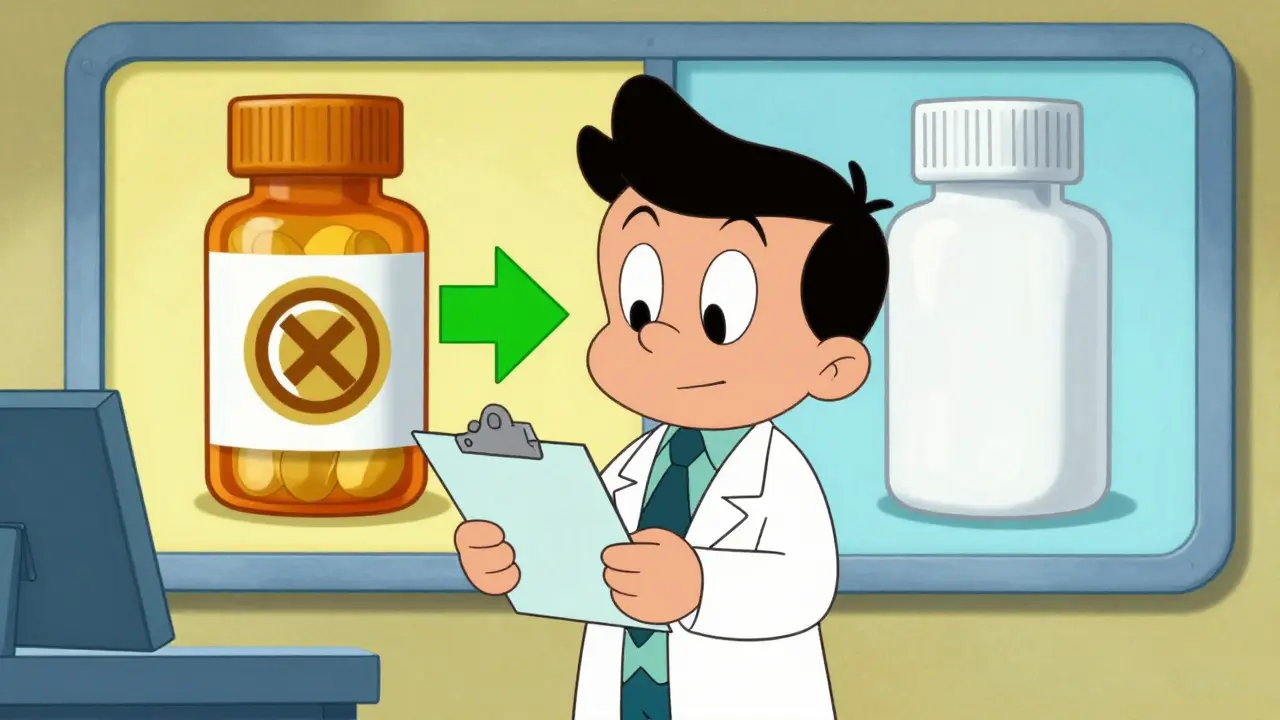
Writing a prescription might seem straightforward, but the choice between a brand name and a generic one can have a massive impact on a patient's wallet and the overall healthcare budget. For most medications, there is zero clinical difference between the two, yet some clinicians still hesitate to switch. The goal is simple: use the generic prescribing is the practice of using the International Non-proprietary Name (INN) of a medication rather than a proprietary brand name when writing prescriptions whenever possible to lower costs and improve patient adherence without risking safety.
Why does this matter? Because generic drugs often cost 80-85% less than their branded counterparts. For instance, a month of generic atorvastatin might cost around £2.50, while the original brand, Lipitor, could run as high as £30. When you multiply that by millions of patients, the savings are astronomical. In the UK alone, the NHS estimates that increasing generic substitution could save roughly £1.3 billion annually. But it isn't just about the money; using generic names actually reduces medication errors by about 50% because it eliminates the confusion caused by multiple brand names for the same active ingredient.
The Gold Standard: Bioequivalence and Safety
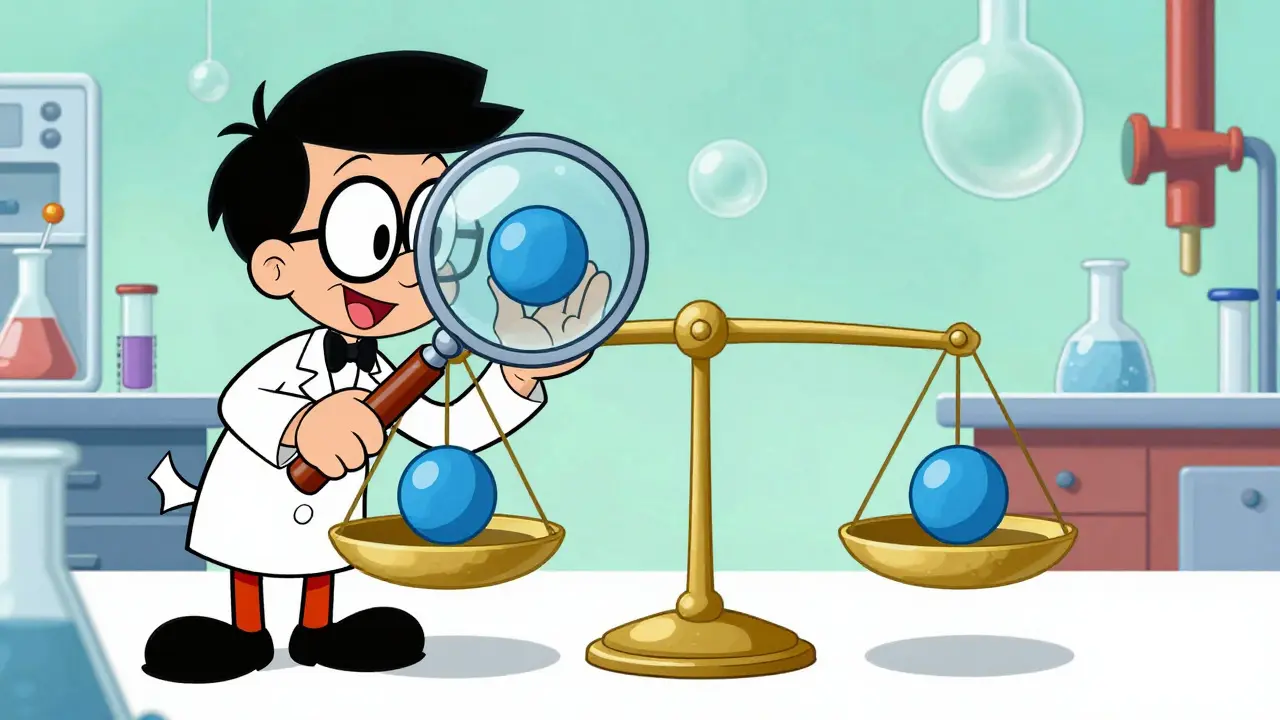
A common concern among patients-and some providers-is whether a generic is "as good" as the original. To answer this, regulatory bodies like the FDA the Food and Drug Administration, the primary regulatory agency for food and drugs in the United States and the EMA the European Medicines Agency, which evaluates and monitors medicinal products in the European Union enforce strict rules. For a drug to be approved as a generic, it must prove bioequivalence.
In the US, the FDA uses the "Orange Book" to identify therapeutically equivalent products. These generics must demonstrate 80-125% bioequivalence to the reference drug through pharmacokinetic studies. This means the generic drug must deliver the same amount of active ingredient into the bloodstream at a similar rate. If it meets these standards, the efficacy, purity, and potency are virtually identical to the brand name.
| Feature | Generic Medication | Branded Medication |
|---|---|---|
| Active Ingredient | Identical | Identical |
| Cost | Typically 80-85% lower | Premium pricing |
| Regulatory Standard | Bioequivalence testing | Original patent approval |
| Naming | International Non-proprietary Name (INN) | Proprietary Trade Name |
When to Stick With the Brand Name
While generic is the default, it isn't a one-size-fits-all rule. There are specific clinical scenarios where prescribing by brand name is not just recommended, but necessary for patient safety. The British National Formulary the gold standard pharmaceutical reference for prescribing in the UK (BNF) breaks these exceptions into three main categories.
First, consider drugs with a narrow therapeutic index. These are medications where a tiny change in blood concentration can lead to either toxicity or treatment failure. Examples include digoxin, warfarin, levothyroxine, and phenytoin. If a patient is stable on a specific brand of warfarin, switching to a different generic manufacturer can cause INR fluctuations, potentially leading to bleeding or clotting risks.
Second, some modified-release preparations behave differently depending on the manufacturer. The way a drug is released over 12 or 24 hours can vary, which might affect how the patient responds. Third, and perhaps most importantly, are biologic products complex proteins derived from living cells, often used for autoimmune diseases or cancer. Unlike simple chemical generics, biologics have biosimilars biological products that are highly similar to another approved biological product. The MHRA warns that these should be prescribed by brand name to avoid automatic substitution, as switching between different biosimilars can increase immunogenicity risks.
Overcoming the "Nocebo Effect" and Patient Skepticism
Have you ever had a patient tell you that the generic "just doesn't work" as well as the brand? You're not alone. This is often the nocebo effect-where a patient's negative expectation of a drug causes them to experience actual side effects or perceived lack of efficacy. Research suggests that up to 30% of reported efficacy differences in generics are due to this psychological phenomenon.
The key to fixing this is communication. A study in Patient Education and Counseling showed that when doctors explain why they are switching to a generic, patient acceptance jumps from 67% to 89%. Instead of just changing the script, try a direct approach: "This generic version has the exact same active ingredient as the brand you used. It's been tested to work the same way and will save you about £12 a month without changing how your treatment works." When patients feel empowered and informed, they are much more likely to stick with their therapy.
Practical Steps for Implementation
If you're looking to increase your generic prescribing rates, don't try to change everything overnight. The NHS England Generic Prescribing Toolkit suggests a structured path to reach the 90%+ target.
- Audit your patterns: Use data tools to see where you are still prescribing brands unnecessarily.
- Learn the exceptions: Memorize the narrow therapeutic index list so you know exactly when a brand is required.
- Update your defaults: Set your electronic prescribing system to default to the generic name.
- Monitor outcomes: Keep an eye on patient stability, especially when switching antiepileptics or thyroid meds.
For those in primary care, this transition usually takes about 2-3 months of conscious effort. Most clinicians find that once the habit is formed, it becomes second nature, and the clinical outcomes remain stable for the vast majority of the population.
The Future of Intelligent Substitution
We are moving toward a period of "intelligent substitution." This means we won't just blindly swap drugs; we'll use real-world evidence to decide who can safely switch and who needs to stay on a specific brand for life. As more complex generics-like advanced inhalers and topical formulations-hit the market, the level of scrutiny will increase. The FDA has already seen a higher rejection rate for complex generics because proving equivalence in a cream or a spray is much harder than in a pill.
By 2025, it's predicted that 75% of all small-molecule drugs will have generic alternatives. For providers, the mission remains the same: prioritize the International Non-proprietary Name to ensure the healthcare system remains sustainable while providing the best possible care to the patient.
Is a generic drug exactly the same as a brand-name drug?
In terms of the active pharmaceutical ingredient, strength, dosage form, and route of administration, yes. They are required to be bioequivalent, meaning they work the same way in the body. However, they may contain different inactive ingredients (excipients), which is why a small number of patients might have different reactions or allergies.
Which drugs should I NEVER prescribe generically?
You should generally avoid generic substitution for narrow therapeutic index drugs (like warfarin, digoxin, and levothyroxine), certain modified-release formulations where kinetics vary by brand, and biological medicines (biologics). For these, prescribing by brand name ensures consistency and safety.
Why do some patients report that generics are less effective?
This is often due to the nocebo effect, where the belief that a generic is inferior leads to a perceived loss of efficacy. In some rare cases, variations in inactive ingredients or slight pharmacokinetic differences in narrow-index drugs can cause real changes in response, requiring a brand-specific prescription.
How can I improve patient acceptance of generic drugs?
Use the 'Explain, Empower, Engage' framework. Clearly explain that the active ingredient is identical, emphasize the cost savings, and reassure them that the drug has undergone rigorous bioequivalence testing. Transparency increases acceptance from roughly 67% to 89%.
What is the "Orange Book" and how does it help?
The Orange Book is an FDA publication that lists approved drug products with therapeutic equivalence evaluations. If a generic has an 'A' rating, it is considered therapeutically equivalent to the brand-name drug, meaning it can be expected to have the same clinical effect.

Wendy Ajurín
April 19, 2026The emphasis on bioequivalence is absolutely critical here. Many practitioners overlook the fact that the pharmacokinetic profiles are strictly monitored to ensure that the AUC and Cmax are within that 80-125% range. This rigor is what allows the transition to generics to be clinically safe for the vast majority of the population.