
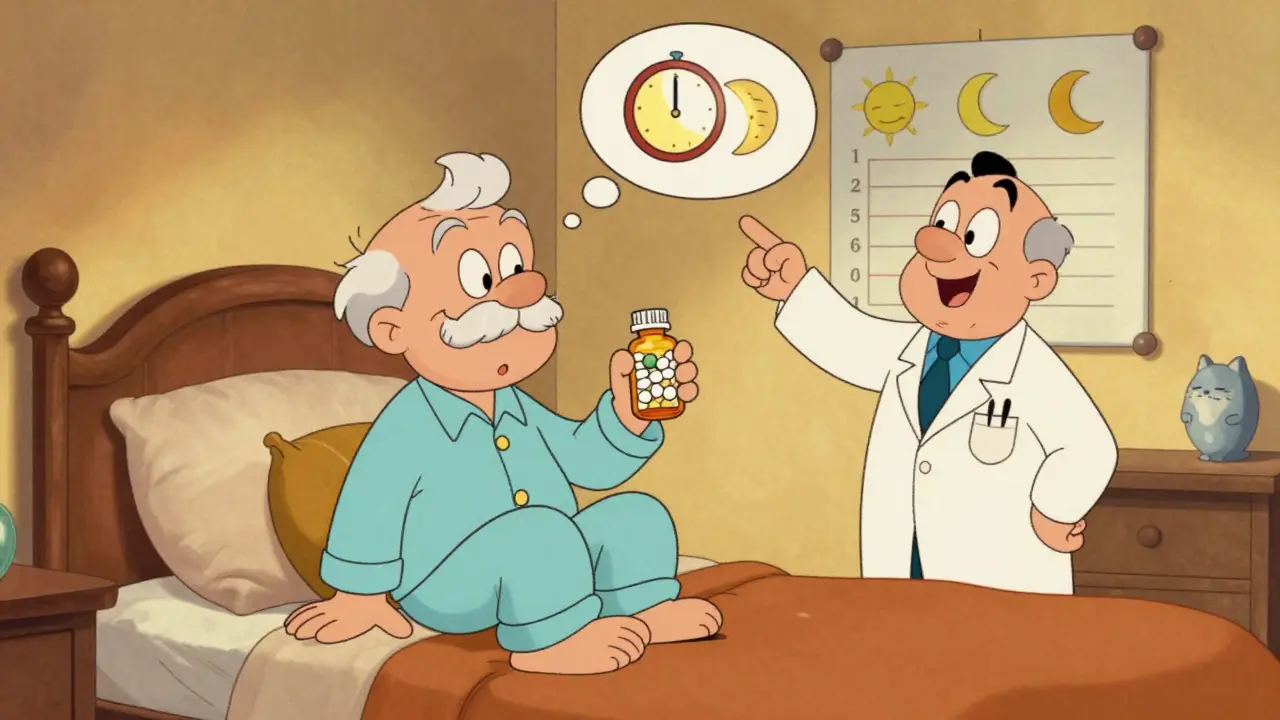
By age 65, nearly half of all seniors struggle with sleep. Not just trouble falling asleep - but staying asleep, waking up too early, or feeling groggy all day. It’s not normal aging. It’s a signal that something needs to change. And too often, the first answer is a pill. But for older adults, sleep medications carry risks that aren’t just inconvenient - they’re dangerous.
Why Sleep Pills Are Riskier After 65
Your body changes as you age. Your liver and kidneys don’t process drugs the way they used to. That means a pill that was safe at 50 can become a hazard at 70. Sleep medications - even ones you think are mild - can linger in your system longer, increasing the chance of falls, confusion, and memory problems.The American Geriatrics Society has been clear since 1991: benzodiazepines like diazepam (Valium) and triazolam (Halcion) should be avoided in seniors. These drugs don’t just make you drowsy - they blur your balance, slow your reactions, and increase your risk of breaking a hip by up to 50%. And it’s not just old-school sedatives. Even newer “Z-drugs” like zolpidem (Ambien) and eszopiclone (Lunesta) raise fall risk by 30% in people over 65, according to the FDA.
Then there’s the brain. A 2014 study in the BMJ found that long-term use of benzodiazepines was linked to a 51% higher risk of developing Alzheimer’s disease. The risk jumped to 84% for those using long-acting versions for more than six months. That’s not a small chance - it’s a major red flag.
And it’s not just the drugs themselves. Many seniors take multiple medications. A sleep pill can interact with blood pressure meds, painkillers, or antidepressants, creating side effects no one expected. One woman in Melbourne, 72, started taking trazodone for sleep and began wandering at night, confused and disoriented. Her family didn’t connect it to the medication until her doctor reviewed her full list - and pulled the trazodone. Within two weeks, she was back to normal.
The Best First Step: CBT-I, Not a Pill
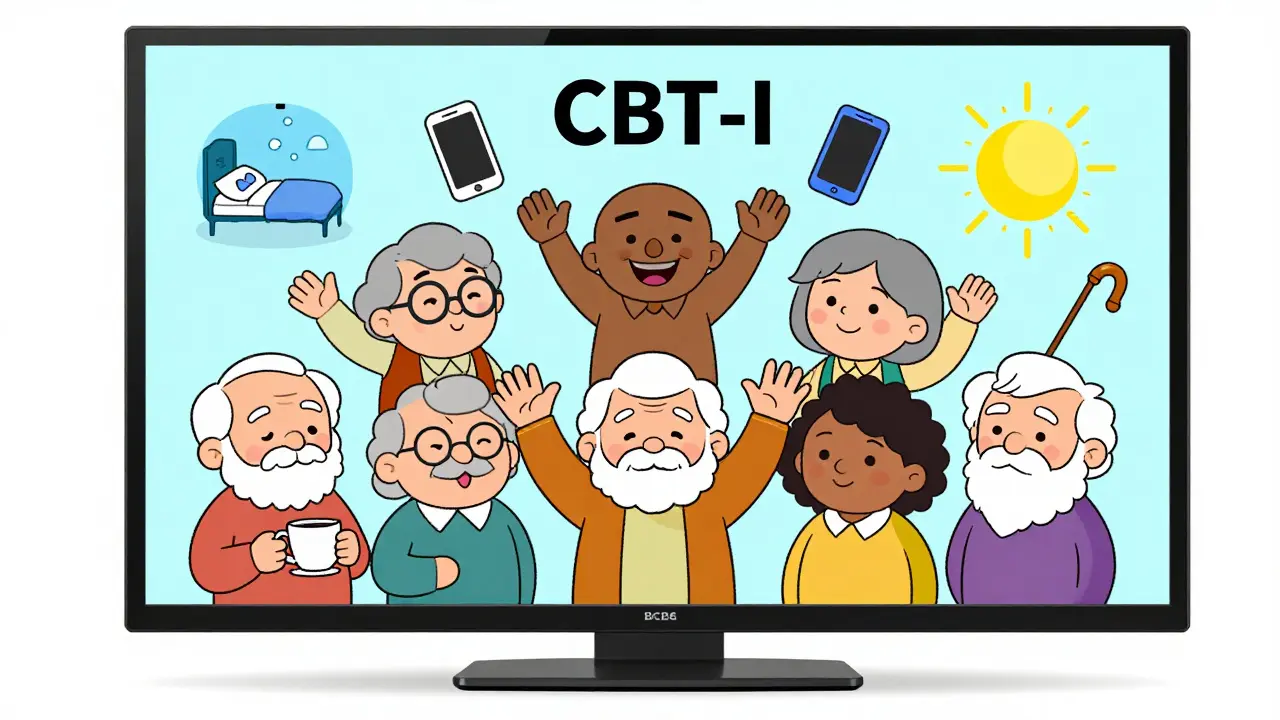
There’s a treatment that works better than any pill - and it doesn’t come in a bottle. It’s called Cognitive Behavioral Therapy for Insomnia, or CBT-I. It’s not talk therapy. It’s a structured, evidence-based program that retrains your brain and body to sleep naturally.CBT-I includes four key tools:
- Sleep restriction: You limit time in bed to match how much you actually sleep. This builds sleep pressure so you fall asleep faster and stay asleep longer.
- Stimulus control: Your bed is only for sleep and sex. No reading, no TV, no scrolling. If you can’t sleep after 20 minutes, get up and sit in dim light until you feel sleepy.
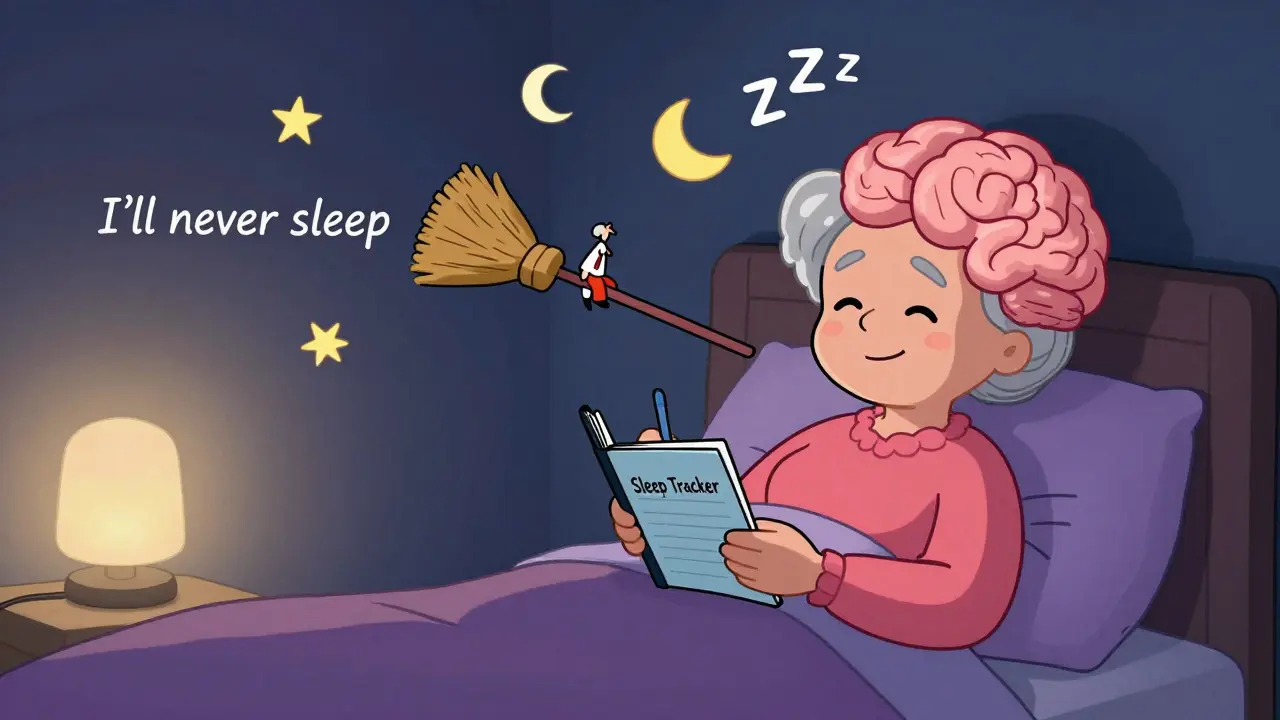
- Cognitive restructuring: You challenge the anxious thoughts like “I’ll never sleep” or “If I don’t sleep tonight, tomorrow will be a disaster.”
- Sleep hygiene: Simple habits - no caffeine after noon, consistent wake-up time, cool dark room - that support natural sleep.
A 2019 study in JAMA Internal Medicine showed that when seniors did CBT-I over the phone, 57% no longer met the criteria for insomnia after eight weeks. And 89% stuck with it. That’s better than any drug trial.
And the results last. Unlike pills, which stop working once you quit, CBT-I teaches skills that stick. One 74-year-old man in Sydney had been on Lunesta for 12 years. After six weeks of CBT-I, he cut his dose in half. Two years later, he’s off it entirely - and sleeps better than he has since his 50s.
When Medication Is Still Needed: Safer Options
Sometimes, CBT-I isn’t enough - or isn’t available. Maybe you’re in pain. Maybe you’re grieving. Maybe you’ve tried everything and still can’t sleep. In those cases, medication might still be part of the plan. But not just any medication.Here’s what experts now recommend for seniors who need help:
- Low-dose doxepin (3-6 mg): Originally an antidepressant, at this tiny dose it blocks histamine receptors to promote sleep without causing next-day grogginess or memory issues. A 2010 study showed it increased total sleep time by nearly 30 minutes with side effects no worse than placebo.
- Ramelteon (8 mg): This mimics melatonin but works more precisely on brain receptors that regulate sleep timing. It doesn’t cause dizziness, dependence, or rebound insomnia. It reduces how long it takes to fall asleep by about 14 minutes.
- Lemborexant (5-10 mg): A newer option that blocks orexin, the brain’s wakefulness signal. A 2021 study in JAMA Internal Medicine found it caused less postural instability than zolpidem in adults over 55. It’s not perfect - but it’s among the safest pills we have.
- Melatonin (2-5 mg): Not a sedative, but a timing signal. It helps reset your internal clock, especially if you wake up too early or have jet lag. Don’t take more than 5 mg - higher doses can cause headaches or next-day fog.
What to avoid: benzodiazepines, Z-drugs like Ambien, trazodone (often prescribed off-label but linked to dizziness and falls), and over-the-counter sleep aids with diphenhydramine (Benadryl). These are all on the 2019 Beers Criteria list of medications to avoid in seniors.
Cost, Access, and the Hidden Inequality
One problem with safer options? Price. Low-dose doxepin can cost $400 a month without insurance. Generic zolpidem? Around $15. That’s a huge gap. And it’s not just about money - it’s about access.A 2022 study from UCSF found white seniors were three times more likely than Black seniors to use sleep medications frequently. Why? Not because they sleep worse. Because they’re more likely to have doctors who prescribe pills - and less likely to be referred to CBT-I. Many public clinics don’t offer sleep specialists. Telehealth CBT-I programs like Sleepio are helping, but they’re not yet covered by all Medicare plans.
It’s not fair. And it’s not just about sleep. It’s about equity in care.
How to Start Making a Change
You don’t have to quit pills cold turkey. But you can start moving toward safer sleep - today.- Review your meds. Sit down with your doctor or pharmacist. Ask: “Is this still necessary? Are there safer alternatives?” Don’t be afraid to question a prescription you’ve had for years.
- Try CBT-I. Ask your GP for a referral. Look for programs through your local hospital, aged care service, or online platforms like Sleepio. Many are covered by Medicare if referred by a doctor.
- Start small. If you’re on Ambien, don’t stop. But ask if you can cut the dose in half for a week. Track how you feel. Do you wake up clearer? Less dizzy? That’s your body telling you it doesn’t need the full dose.
- Track your sleep. Use a simple notebook or free app. Note when you go to bed, when you wake, and how you feel in the morning. Patterns emerge. And patterns help your doctor help you.
- Optimize your environment. Make your bedroom dark, cool, and quiet. Get sunlight in the morning. Walk for 20 minutes after lunch. These aren’t magic fixes - but they’re powerful.
One woman in her 80s, who’d been on a nightly cocktail of pills for 15 years, started with just one change: she stopped using her phone in bed. Then she added a 10-minute evening walk. Then she tried CBT-I. Within six months, she was down to one pill - and only on weekends. She says she’s slept better in her 80s than she did in her 40s.
The Future of Sleep for Seniors
The medical community is shifting. The FDA now requires stronger warnings on Z-drugs. Medicare is pushing for fewer benzodiazepines in nursing homes. The American Geriatrics Society is updating its guidelines in 2024 to make deprescribing sleep meds even clearer.The future isn’t more pills. It’s personalized care. It’s knowing your risks, your history, your lifestyle - and matching treatment to that, not to a one-size-fits-all script.
Good sleep isn’t about taking something. It’s about restoring something. Your rhythm. Your safety. Your peace. And it’s never too late to start.
Are over-the-counter sleep aids safe for seniors?
No. Most OTC sleep aids - like those containing diphenhydramine (Benadryl) or doxylamine - are anticholinergic drugs. They block a brain chemical needed for memory and focus. In seniors, they cause confusion, dry mouth, constipation, and increased fall risk. The American Geriatrics Society explicitly lists them as potentially inappropriate. Even if they help you fall asleep, they’re not worth the risk.
Can I stop my sleep medication cold turkey?
Don’t. Stopping suddenly - especially benzodiazepines or Z-drugs - can cause rebound insomnia, anxiety, tremors, or even seizures. If you want to stop, work with your doctor to taper slowly. A safe plan usually takes 4 to 8 weeks, reducing the dose by 10-25% every week or two. Keep a sleep diary during this time so you and your doctor can adjust as needed.
Is melatonin a good option for seniors?
Yes - but only in low doses (2-5 mg), taken about an hour before bed. Melatonin doesn’t sedate you. It helps shift your internal clock. It’s useful if you wake up too early or have delayed sleep phase. It’s not a fix for general insomnia. And don’t buy high-dose versions - they can cause headaches, dizziness, or next-day grogginess.
Why is CBT-I better than pills for seniors?
Because it works on the root cause - not just the symptom. Pills mask the problem. CBT-I fixes the habits and thoughts keeping you awake. It has no side effects, doesn’t interact with other meds, and the results last. A 2023 study showed digital CBT-I helped 63% of seniors with chronic insomnia - just as well as in-person therapy. And it’s covered by Medicare when referred by a doctor.
What should I ask my doctor about my sleep meds?
Ask: 1) Is this medication still necessary? 2) Is it on the Beers Criteria list for seniors? 3) Have you considered CBT-I first? 4) Can we try lowering the dose? 5) Are there non-drug options I can try alongside this? Write these down. Bring them to your next appointment. You have the right to understand every medication you take.
What to Do Next
If you or someone you care for is on sleep meds, don’t wait for a crisis. Start now.- Call your doctor or pharmacist and ask for a medication review.
- Search for a CBT-I program through your local hospital or Medicare provider.
- Download a free sleep tracker app - or just use a notebook.
- Replace one habit: no screens after 8 p.m., or a 15-minute walk after dinner.
Good sleep isn’t a luxury. It’s a foundation. For safety. For memory. For joy. And it’s never too late to build it back.


Natasha Sandra
December 25, 2025OMG YES!! 🙌 I’ve been telling my mom for YEARS that Ambien is a nightmare waiting to happen. She’s 78 and was on it for 10 years-fell twice, woke up confused, thought she was in a hotel. We switched to melatonin (2mg, no more!) and now she walks every evening and sleeps like a baby. No pills, no drama. 🌙💖
Sumler Luu
December 26, 2025I appreciate this post. My father was prescribed trazodone after a hospital stay, and we didn’t realize the wandering was a side effect until his neurologist flagged it. We pulled it slowly, and within 10 days, he was himself again. CBT-I is not widely known, but it’s the real solution. Thank you for the clarity.
Sandeep Jain
December 27, 2025bro this is so true… i mean like, my auntie in delhi she was takin’ diphenhydramine every night ‘cuz it was cheap and her doctor just gave it to her. she got so confused she forgot her own grandkids names for a week. then we switched to melatonin and she started walkin’ after dinner… now she sleeps like a kitten. no more hospital trips. pls tell more ppl abt this.
Peter sullen
December 28, 2025It is imperative to underscore the clinical imperative of deprescribing sedative-hypnotics in the geriatric population, given the documented neurocognitive decline, increased all-cause mortality, and elevated risk of iatrogenic falls associated with benzodiazepine and Z-drug utilization. The evidence base for CBT-I is not merely robust-it is definitive. Moreover, the cost differential between low-dose doxepin and generic zolpidem is not a barrier to care; it is a systemic failure of health equity infrastructure. Access to telehealth-delivered CBT-I must be prioritized in Medicare reimbursement models to mitigate disparities in care delivery.
Rajni Jain
December 28, 2025my grandma started this and now she’s got a sleep journal and walks every day at 6pm. she says she used to dread bedtime, now she looks forward to it. she even made a little chart with stickers for each good night 😊 i cried when she told me she didn’t need her pill anymore. you’re right-it’s not about the meds, it’s about the rhythm. thank you for sharing this 💛
Brittany Fuhs
December 29, 2025Of course, this is exactly what happens when you let ‘wellness influencers’ replace real medicine. Sleep meds are prescribed because they WORK. CBT-I? That’s for people who have time to sit around and journal. My mom’s doctor gave her Ambien because she was exhausted, not because he was lazy. And now you want to take away her peace? This is cultural sabotage disguised as ‘safety.’
Sophia Daniels
December 31, 2025Okay but let’s be real-sleep meds are the opioid crisis for old people and nobody’s talking about it. 🚨 My neighbor’s husband OD’d on Lunesta + blood pressure meds and they didn’t even know it was the combo that killed him. He was just ‘sleeping too hard.’ Meanwhile, CBT-I is free, safe, and actually helps you sleep like a human again. Why are we still letting doctors hand out chemical pacifiers like candy? This isn’t care. It’s negligence with a prescription pad.
Steven Destiny
January 1, 2026Brittany, you’re missing the point. It’s not about ‘taking away peace’-it’s about preserving dignity. My 82-year-old mother was on three sleep meds for 12 years. She couldn’t walk to the bathroom without help. After CBT-I and cutting everything out? She’s gardening again. She’s cooking. She’s laughing. You don’t need a pill to sleep-you need your brain to remember how. That’s not ‘cultural sabotage.’ That’s science. And it’s beautiful.