

For someone living with Crohn’s disease or ulcerative colitis, finding the right treatment isn’t just about taking a pill-it’s about reclaiming your life. The biologics revolution in inflammatory bowel disease (IBD) has changed everything. No longer are patients stuck choosing between steroids that wreck their bones or immunomodulators that take months to work. Today, targeted therapies like anti-TNF inhibitors, anti-integrin drugs, and IL-12/23 blockers can quiet the immune system’s attack on the gut with precision. But with so many options, how do you know which one is right for you?
What Are IBD Biologics and How Do They Work?
IBD biologics are made from living cells, not chemicals. They’re designed to mimic proteins your body naturally produces to calm inflammation. Instead of suppressing your whole immune system like older drugs, these medicines target specific troublemakers-like TNF-alpha, integrins, or interleukins-that fuel gut damage in Crohn’s and colitis.
Think of it like shutting down a single faulty wire in a circuit instead of flipping the whole breaker. Anti-TNF drugs block tumor necrosis factor, a key inflammatory signal. Anti-integrins stop immune cells from sticking to the gut lining. IL-12/23 inhibitors cut off signals that trigger chronic inflammation. Each class works differently, and that difference matters when you’re choosing treatment.
Anti-TNF Inhibitors: The First Wave
These were the game-changers. Infliximab (Remicade) hit the market in 1998 and quickly became the gold standard. It’s given through an IV, usually every 8 weeks after three initial doses. Adalimumab (Humira) followed as a self-injectable-people could give themselves shots at home every other week. Golimumab (Simponi) and certolizumab pegol (Cimzia) rounded out the group.
They work fast. Many patients feel better within 2 to 4 weeks. In bio-naive patients with moderate to severe ulcerative colitis, infliximab has shown the strongest remission rates compared to other anti-TNFs. A 2022 meta-analysis found infliximab led to mucosal healing in over 90% of cases-far ahead of adalimumab.
But they come with trade-offs. Serious infections are more common. Reactivation of tuberculosis is a real risk. Some patients develop antibodies that make the drug stop working over time. And infusion reactions? They happen. About 42% of people on infliximab report them-rashes, fever, chills. A small number have life-threatening reactions.
Still, for many, especially those with severe disease, they’re the best first step. Dr. Adam Cheifetz from Beth Israel Deaconess says infliximab still has the strongest evidence base for CD and UC. And with biosimilars like Inflectra and Cyltezo now available, costs have dropped by 15-30%.
Anti-Integrin Therapies: Gut-Selective and Safer
Vedolizumab (Entyvio) is the only anti-integrin approved for IBD in the U.S. It works by blocking a molecule called α4β7 integrin, which keeps immune cells from migrating to the intestines. Unlike anti-TNFs, it doesn’t affect the brain, lungs, or skin. That makes it a top choice for patients with multiple sclerosis, latent TB, or a history of serious infections.
It’s given as an IV infusion, same as infliximab: weeks 0, 2, and 6, then every 8 weeks. But here’s the catch-it takes longer to work. Most patients don’t see full results until week 10. That’s brutal if you’re in active flare. On Reddit, one user wrote: “Switched from Humira to Entyvio after 5 years-no more weekly injections but had to wait 10 weeks for full effect, which was brutal.”
But once it works? It lasts. Vedolizumab has the highest patient satisfaction score among biologics: 4.1 out of 5. Only 18% report side effects, compared to 58% for Humira’s injection site reactions. And crucially, it doesn’t raise the risk of PML (a rare brain infection linked to natalizumab, another integrin drug used in MS).
It’s not better than infliximab for everyone. But if you’ve had infections, or you’re worried about long-term safety, it’s often the smart next move.
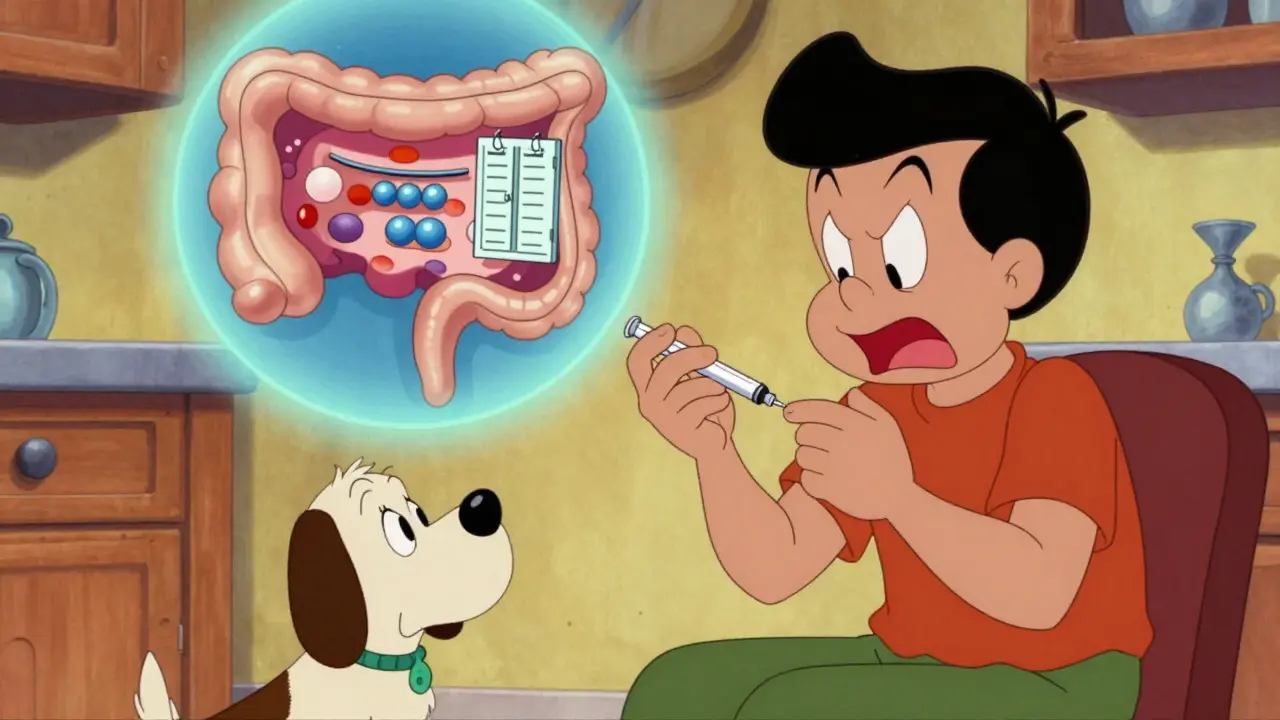
IL-12/23 and IL-23 Inhibitors: The New Generation
Ustekinumab (Stelara) was the first IL-12/23 inhibitor approved for IBD. It blocks two cytokines involved in inflammation: IL-12 and IL-23. Given as a subcutaneous injection every 8 or 12 weeks (based on weight), it’s convenient. Patients report fewer side effects than anti-TNFs. It’s especially useful for those with psoriasis alongside IBD-anti-TNFs can sometimes make psoriasis worse.
Then came the IL-23-only inhibitors: risankizumab (Skyrizi) and mirikizumab (Omvoh). In June 2024, the FDA approved risankizumab for ulcerative colitis-making it the first IL-23 inhibitor approved for both Crohn’s and UC. In trials, 29% of UC patients went into remission at 52 weeks versus just 10% on placebo. That’s a big jump.
These drugs are giving hope to people who failed other biologics. They’re also safer. No increased risk of tuberculosis. No PML. Fewer serious infections. That’s why experts believe they’ll become first-line for many patients in the next five years.
But they’re expensive. A single 300mg dose of vedolizumab costs about $5,500. Ustekinumab runs around $7,200 per dose. Insurance helps, but 41% of patients still say out-of-pocket costs are a burden. Manufacturer assistance programs can cut that to $0-$5 per infusion for those who qualify.
Which Biologic Is Right for You?
There’s no one-size-fits-all. Your choice depends on your disease severity, past treatments, lifestyle, and risks.
If you have severe, active disease and need fast relief, infliximab still leads the pack. If you’ve tried anti-TNFs and they stopped working, ustekinumab or risankizumab are strong next steps. If you’ve had infections, are pregnant, or have psoriasis, vedolizumab is often preferred. If you hate clinics and want control at home, adalimumab or ustekinumab are easier than infusions.
But here’s the truth: most of the data comes from indirect comparisons. We don’t have many head-to-head trials. That’s why doctors rely on network meta-analyses-which have limitations. Dr. Jean-Frédéric Colombel says it plainly: “We’re making decisions based on imperfect data.”
That’s why personalized care matters. Your doctor should consider your genetics, biomarkers, and even your daily life. If you work 12-hour shifts and can’t take off for 4-hour infusions, convenience might outweigh a 5% higher remission rate.

What to Expect When Starting a Biologic
Before you start, get all your vaccines. Live vaccines (like MMR or shingles) are dangerous once you’re on biologics. You need them done at least 4 weeks beforehand.
For infliximab or vedolizumab: plan for 3-5 hours per infusion. You’ll get premedication (usually antihistamines and steroids) to reduce reactions. Nurses monitor you closely. Some people nap. Others read. It’s not glamorous, but it’s manageable.
For adalimumab or ustekinumab: you’ll get training from a nurse. Most patients master self-injection after one or two tries. But 22% develop injection anxiety. If you panic at needles, ask for support. Some clinics offer telehealth coaching.
Side effects? Watch for fever, chills, new rashes, or unexplained fatigue. Report them. Infections can sneak up fast. You’ll need regular blood tests and TB screenings every 6-12 months.
And don’t ignore the emotional side. Fear of long-term side effects is real. 29% of patients say it keeps them up at night. Talking to others helps. Platforms like MyIBDTeam have over 5,000 active users sharing stories. “Life-changing symptom control” is the top comment in positive reviews.
Cost, Access, and the Future
IBD biologics cost $18.7 billion globally in 2023. Anti-TNFs still make up 65% of sales. But IL-23 inhibitors are growing at 25% a year. By 2028, they could be 30% of the market.
Insurance coverage varies wildly. Some require step therapy-try steroids or immunomodulators first. Others won’t cover risankizumab unless you’ve failed two other biologics. The Crohn’s & Colitis Foundation reports 25% of patients face insurance barriers.
But help exists. Janssen CarePath, AbbVie’s patient support, and IBD Help Center (888-694-8872) can guide you through appeals and copay programs. Apps like MyTherapy help track doses and side effects. 68% of users say it improves adherence.
The future? Biomarker-guided therapy. Blood tests that predict who responds to which drug. Trials like RHEA and VEGA are underway. By 2026, we may know which patient gets which biologic-not by guesswork, but by science.
For now, the choice is complex. But you’re not alone. Millions have walked this path. And with each new drug, the goal gets closer: not just managing IBD-but beating it.


Suresh Kumar Govindan
January 25, 2026The biologics industry is a carefully orchestrated illusion. Anti-TNFs? Patented monopolies disguised as science. The real cure-dietary ketosis and fasting-has been buried by Big Pharma for decades. You think your remission is from infliximab? Think again. Your body was healing all along. The drugs just masked the symptoms while they sold you more vials.
George Rahn
January 26, 2026Let us not mince words: the American healthcare system has turned IBD into a lucrative auction. Biologics are not medicine-they are financial instruments wrapped in clinical jargon. The $7,200 price tag on ustekinumab is not a cost of production-it is a tax on suffering. We have engineered a dystopia where healing is commodified, and the only thing more expensive than the drug is the moral bankruptcy of its distributors.
Shweta Deshpande
January 27, 2026Hi everyone, I just wanted to say how much hope this post gave me! I was diagnosed with UC two years ago and felt so alone-until I started reading stories like yours. I switched to vedolizumab last year after failing Humira, and honestly? It took forever to kick in, but now I’m hiking again, cooking for my family, even traveling. I know it’s not perfect, and side effects still scare me, but this isn’t just about meds-it’s about getting your life back. You’re not broken, you’re just figuring out the right key. And you’re not alone. I’m rooting for you all, every single day 💕
Aishah Bango
January 29, 2026If you’re taking biologics and not doing a 30-day gut reset with bone broth and probiotics, you’re not treating the root cause-you’re just paying for temporary silence. The pharmaceutical industry doesn’t want you healed. They want you dependent. Your body isn’t broken-it’s starving for real food, sleep, and peace. Stop outsourcing your healing to a pill.
Neil Thorogood
January 30, 2026So let me get this straight: you’re getting a 4-hour IV drip every 8 weeks… for a drug that might make you catch TB… while someone else takes a shot at home that costs $2k less and has fewer side effects? 😅 I mean… bravo. You’re basically doing a luxury spa day with a side of immune system sabotage. 🤦♂️💉 #BiologicLuxury #MyVibesAreInfused
Jessica Knuteson
February 1, 2026Network meta-analyses are statistical fiction. Effect sizes are extrapolated from populations that don’t reflect real-world comorbidities. The 90% mucosal healing claim for infliximab? Derived from trials with strict inclusion criteria. Real patients have anxiety, obesity, diabetes, and insurance denials. The data is elegant. The reality is messy. We are not optimizing care-we are optimizing publication metrics.
Angie Thompson
February 2, 2026OMG I just found out my cousin in India is on risankizumab and it’s working AMAZING!! 🙌 She had been in pain for 7 years and now she’s dancing at weddings again! I cried reading about how it’s approved for UC now-this is the future! 🌟 Also, if you’re struggling with costs, I used the IBD Help Center and got my meds for $0! Seriously, call them. They’re angels in lab coats. You got this!! 💪❤️
rasna saha
February 4, 2026I just wanted to say thank you for writing this. I’ve been on adalimumab for 3 years and sometimes I feel like no one gets how exhausting it is-injecting myself, worrying about infections, the cost, the fear. But reading this made me feel seen. I don’t have to be brave all the time. It’s okay to be tired. You’re doing better than you think. I’m right here with you.
James Nicoll
February 4, 2026So we’ve got billionaires funding trials for drugs that cost more than a Tesla… while people in rural India are still using steroids because they can’t afford a single shot. The real biologic revolution? It’s not in the lab. It’s in the protest march outside the FDA. Until medicine is a human right-not a privilege for the insured-we’re just rearranging deck chairs on the Titanic. 🚢💊