
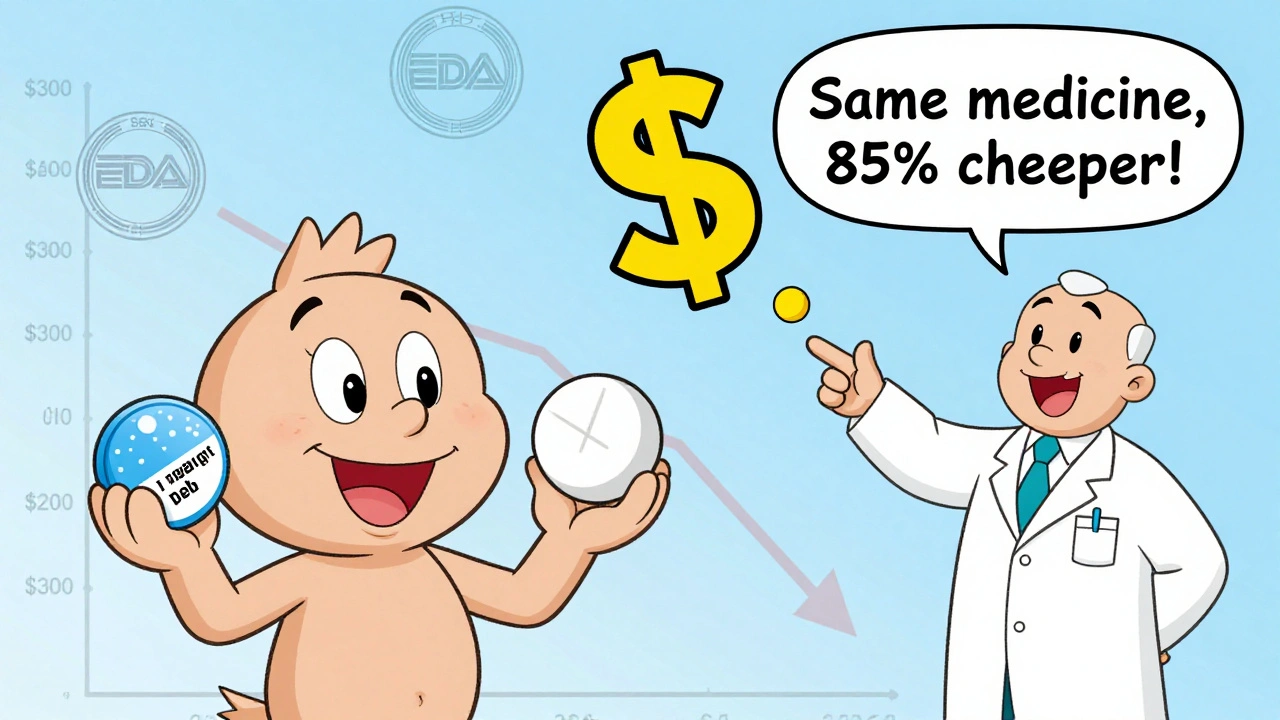
Think your prescription is expensive because it’s the only option? It’s not. More than 9 out of 10 prescriptions filled in the U.S. are for generic medications-and for good reason. They work just as well, cost a fraction of the price, and are held to the same strict standards as the brand-name versions you’ve been paying more for. If you’re still using brand-name drugs out of habit or fear, it’s time to ask: why not switch?
They’re the exact same medicine
Generic drugs aren’t copies. They’re identical in every way that matters. The active ingredient-the part that actually treats your condition-is the same. The dosage, strength, and how it’s taken (pill, liquid, injection) are the same. The FDA requires every generic to deliver the same amount of medicine into your bloodstream at the same rate as the brand-name version. This is called bioequivalence, and it’s not a suggestion-it’s a legal requirement.
For example, the generic version of Lipitor (atorvastatin) contains the exact same molecule as the original. So does the generic for metformin, warfarin, or fexofenadine. The only differences are in the inactive ingredients: the color, shape, or filler materials. These don’t affect how the drug works. They’re just there to make the pill look different or easier to swallow. You might notice your pill changed color when your pharmacy switched suppliers, but that doesn’t mean it’s a different drug. It’s still the same active ingredient, in the same dose, doing the same job.
They save you serious money
Let’s talk numbers. A 30-day supply of brand-name Coumadin (warfarin) can cost over $300. The generic? Around $4. Glucophage (metformin) for diabetes? $300 a month. Generic metformin? $4. The average brand-name drug costs 85% more than its generic equivalent. That’s not a small difference-it’s life-changing for people on fixed incomes.
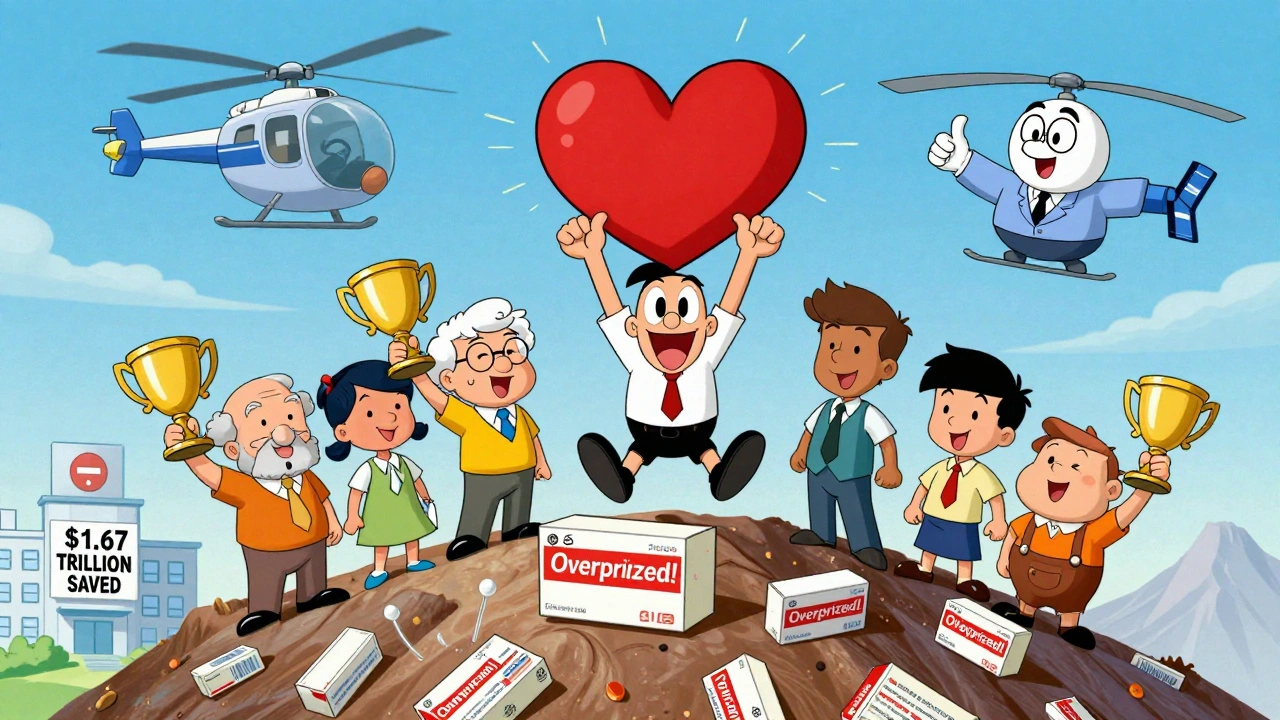
Insurance companies know this. That’s why they push generics. Most plans charge $1-$10 for a generic prescription, compared to $25-$75 for the brand-name version. Some plans even refuse to cover the brand-name unless you’ve tried and failed the generic first. And it’s not just you saving money. From 2012 to 2022, generic drugs saved the U.S. healthcare system over $1.67 trillion. That’s billions of dollars kept in people’s pockets instead of going to pharmaceutical marketing departments.
They’re just as safe
There’s a myth that generics are “lower quality.” That’s not true. The FDA inspects the same manufacturing facilities for generics as it does for brand-name drugs. In fact, many brand-name companies make their own generic versions. The FDA requires generics to meet the same purity, strength, and stability standards. Every batch is tested. Every factory is inspected. In 2023, the FDA conducted over 1,200 inspections of generic drug plants worldwide.
Adverse event reports for generics are proportional to how often they’re used. Since generics make up 90% of prescriptions, they naturally show up in more reports. But that doesn’t mean they’re riskier. Studies tracking hundreds of thousands of patients-like one published in the Journal of the American Heart Association-found no difference in outcomes between generic and brand-name heart medications. Patients on generic blood pressure pills had the same rate of heart attacks, strokes, and hospitalizations as those on the brand-name versions.
They help you stick to your treatment
Medication adherence is one of the biggest problems in healthcare. People skip doses because they can’t afford them. A 2023 study of 5,000 patients found that those using generics were 68% less likely to skip doses due to cost. That’s huge. If you’re not taking your medicine because it’s too expensive, you’re not getting the benefit. You’re risking complications-worse health, more doctor visits, higher hospital bills.
One diabetes patient on PatientsLikeMe wrote: “Metformin generics cost me $4/month versus $300 for Glucophage. This keeps me adherent to my treatment.” That’s not just savings. That’s better health. That’s fewer emergencies. That’s living with your condition, not fighting it.
They’re approved by experts
Doctors, pharmacists, and health agencies all agree: generics are safe and effective. The American Medical Association recommends prescribing generics whenever possible to reduce out-of-pocket costs without sacrificing care. Dr. Janet Woodcock, former director of the FDA’s drug division, said: “Generic drugs undergo rigorous review to ensure they are as safe and effective as brand-name drugs.”
Even specialists who are cautious about certain drugs-like neurologists treating epilepsy-still say most generics are fine. The FDA’s standards for bioequivalence are so tight that even for drugs with narrow therapeutic windows (where tiny changes in blood levels matter), approved generics fall within safe, effective limits. If your doctor has concerns about a specific drug, they’ll tell you. But for the vast majority of medications, there’s no reason not to switch.
What about biosimilars?
As brand-name biologic drugs (like Humira or Enbrel) start losing patents, a new type of generic-called biosimilars-is entering the market. These aren’t exact copies like traditional generics, because biologics are made from living cells, not chemicals. But they’re proven to work the same way. The FDA has approved 37 biosimilars as of late 2023, and they’re projected to save Medicare $50 billion a year by 2030. This isn’t the future-it’s happening now.
How to switch
Switching is simple. When your prescription is due for a refill, ask your pharmacist: “Is there a generic available?” If there is, they’ll usually dispense it unless your doctor says otherwise. You can also ask your doctor to write “Dispense as written” or “Brand necessary” on the prescription if you truly need the brand-name version. But unless you’ve had a bad reaction or your doctor specifically recommends against it, go with the generic.
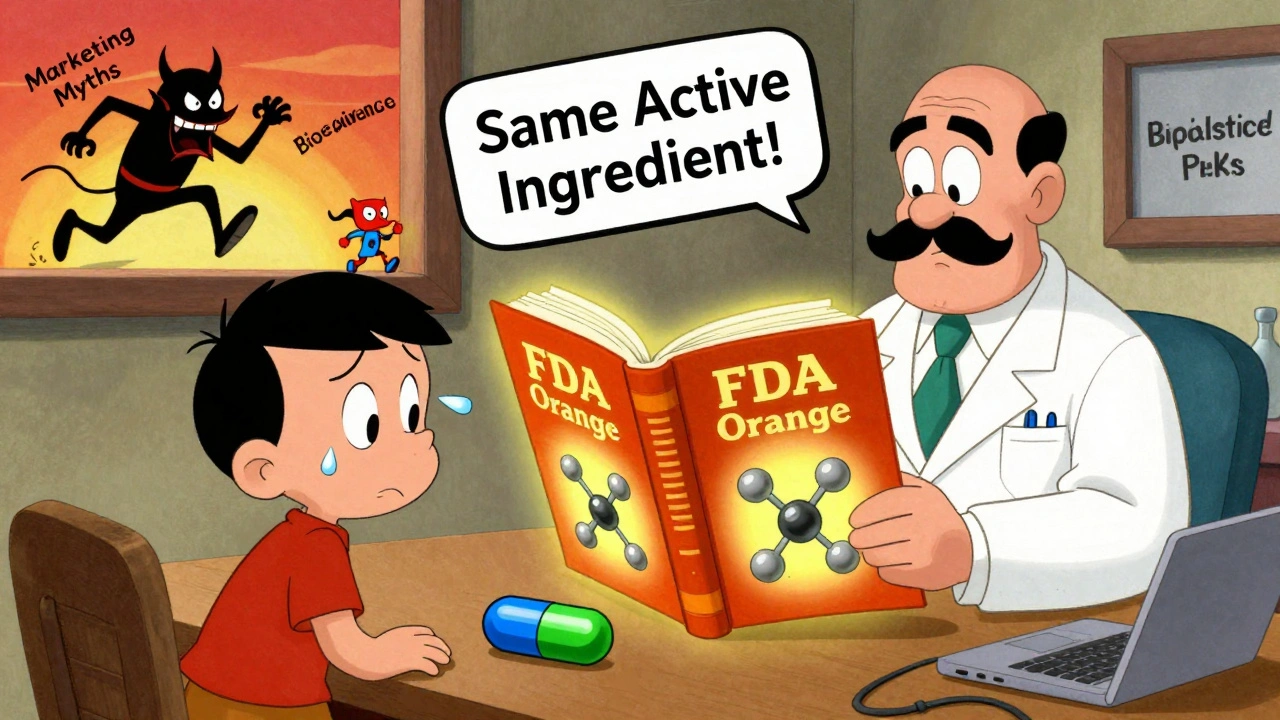
Pharmacists are trained to explain the switch. If you’re nervous about the new pill shape or color, ask them to show you the FDA’s Orange Book-a public list of all approved generics and their therapeutic equivalence ratings. You can also check the FDA’s website for patient guides on generic drugs. No need to guess. The information is there.
Why some people hesitate
It’s understandable. We’re told brand-name equals better. Ads make it look like the original is the only real option. And when your pill changes color, it’s unsettling. But that’s just marketing. The FDA doesn’t allow generics to be marketed as “weaker” or “inferior.” They’re required to be equivalent. The anxiety comes from perception, not science.
One Reddit user wrote: “Switching my blood pressure meds to generic saved me $280 a month without any change in effectiveness.” That’s the real story. Not the fear. Not the ads. The results.
Bottom line
Generic medications aren’t a compromise. They’re the smarter choice. Same medicine. Same effectiveness. Same safety. 85% cheaper. For millions of people, switching to generics means being able to afford their treatment. For the system, it means billions saved. For you, it means less stress, fewer skipped doses, and better health without paying extra.
If your doctor hasn’t mentioned generics, ask. If your pharmacy switched your pill without telling you, don’t panic-call them. Ask if it’s the same drug. They’ll confirm it is. And you’ll be saving money without losing anything.
Are generic medications as effective as brand-name drugs?
Yes. The FDA requires generic medications to have the same active ingredient, strength, dosage form, and route of administration as the brand-name version. They must also prove bioequivalence-meaning they deliver the same amount of medicine into your bloodstream at the same rate. Studies involving hundreds of thousands of patients show no meaningful difference in effectiveness for conditions like high blood pressure, diabetes, or heart disease.
Why are generic drugs so much cheaper?
Generic manufacturers don’t have to repeat expensive clinical trials. The original brand-name company already proved the drug’s safety and effectiveness. Generics only need to prove they’re bioequivalent, which costs far less. Plus, once multiple companies start making the same generic, competition drives prices down. In markets with five or more generic makers, prices can drop by 85% compared to the brand-name version.
Can generic drugs have different side effects?
The active ingredient is identical, so the side effects are the same. But generics can have different inactive ingredients-like dyes or fillers-which might cause rare allergic reactions in sensitive individuals. These are uncommon, and pharmacists can check your history to avoid problematic fillers. If you notice a new reaction after switching, tell your doctor. But for most people, the side effect profile doesn’t change.
What if my pill looks different now?
That’s normal. Generic manufacturers can change the color, shape, or size of their pills as long as the active ingredient stays the same. It’s purely cosmetic. If you’re confused or worried, ask your pharmacist to confirm it’s still the same medication. They can show you the FDA’s list of approved generics. Don’t stop taking it-just double-check.
Are there any drugs where I shouldn’t use generics?
For nearly all medications, generics are safe and effective. A small number of drugs with a narrow therapeutic index-like warfarin, thyroid meds, or some seizure drugs-require very precise blood levels. Even then, the FDA approves generics only if they meet strict bioequivalence standards. Some doctors may prefer brand-name for these in rare cases, but it’s not because generics are inferior. It’s about personal experience or patient history. Always discuss concerns with your doctor, but don’t assume you can’t use generics.
Do insurance plans favor generic medications?
Yes. Most insurance plans have tiered pricing, with generics in the lowest tier-often costing just $1-$10 per prescription. Brand-name drugs can cost $25-$75 or more. Some plans require you to try the generic first before covering the brand-name version. This isn’t a trick-it’s how they keep costs down so more people can afford their medicine.
How do I know if a generic is right for me?
Ask your doctor or pharmacist. If your drug has a generic version, it’s almost always a good option. The FDA and major medical groups agree generics are equivalent. The only exceptions are rare cases where a patient has had a specific reaction to a filler in a particular generic. But that’s not common. For 99% of people, switching to generic is a smart, safe, and cost-effective choice.

Aileen Ferris
December 9, 2025generic my ass. my cousin took the cheap version for her anxiety and started hallucinating cats. yeah. cats. i dont trust no government approved pill that costs less than my coffee.
Rebecca Dong
December 11, 2025you know what they dont tell you? the FDA lets pharma companies OWN the generic factories. yeah. the same ones that make brand-name. so you're still paying for the same company, just without the logo. #BigPharmaIsALie
Sarah Clifford
December 12, 2025i switched to generic lisinopril and my face started swelling. i thought it was the same but turns out the dye was different. now i only take the blue one. the red one is evil.
Regan Mears
December 13, 2025I understand the fear, but let’s be real: the science is overwhelming. Generics are not a gamble-they’re a calculated, evidence-based decision. The FDA doesn’t cut corners, and the data from peer-reviewed studies across decades shows no meaningful difference in outcomes. You’re not risking your health-you’re protecting your wallet and your future self.
Queenie Chan
December 14, 2025I mean, I get it-switching pills feels like swapping your favorite hoodie for a plain one from Target. Same warmth, different vibe. But here’s the kicker: the FDA’s bioequivalence standards are so tight, they’d catch a difference in a single molecule. It’s like saying two identical snowflakes are different because one has a slightly shinier point. The magic’s in the chemistry, not the color.
Kaitlynn nail
December 15, 2025It’s not about cost. It’s about essence. The brand-name carries the weight of decades of research. The generic? Just a shadow with a barcode.
Jack Appleby
December 15, 2025The notion that generics are 'identical' is a statistical fallacy. While bioequivalence is required, the 90-111% confidence interval allows for clinically significant variance in absorption kinetics-especially in patients with altered GI motility, hepatic metabolism, or polypharmacy. You’re not 'saving money'-you’re gambling with pharmacokinetics.
Frank Nouwens
December 16, 2025It is my professional observation that the utilization of generic pharmaceuticals has resulted in a marked improvement in medication adherence rates among the underserved population. The economic burden associated with brand-name therapeutics often results in non-compliance, which in turn exacerbates long-term health outcomes. Therefore, the adoption of generics represents a pragmatic and ethically sound public health strategy.
Ben Greening
December 17, 2025I have been taking generic metformin for five years. No issues. No side effects. My A1C is stable. My bank account is happier. I don’t understand the fear.
Nikki Smellie
December 17, 2025Did you know the FDA doesn't test every single batch? They sample. And those samples? Sometimes sent from overseas. And the labs? Owned by the same conglomerates that make the brand names. I'm not taking anything that doesn't come with a U.S. stamp and a notary seal. 🤐
David Palmer
December 18, 2025you think you're saving money but you're just letting them win. they want you to be dependent on cheap pills so you never question the system. i stopped taking meds altogether. i drink lemon water now. it's purer.
Doris Lee
December 19, 2025Switching to generics was the best health decision I ever made. I used to skip doses because I couldn’t afford it. Now I take them every day. My blood pressure is under control. I sleep better. I’m alive. That’s the real win.
Michaux Hyatt
December 19, 2025I’m a pharmacist and I prescribe generics to my own family. My mom’s on generic Lipitor, my brother’s on generic metformin, and my sister’s on generic sertraline. No issues. No complaints. Just savings and stability. If you’re still worried, ask your pharmacist for the FDA’s Orange Book. It’s public. It’s real. And it’s reassuring.