Blue Light and Eye Health: Screen Filters and Habits That Actually Work
Learn how blue light affects your eyes and sleep, and discover the real habits that reduce eye strain-no glasses or filters needed. Science-backed tips for screen users.
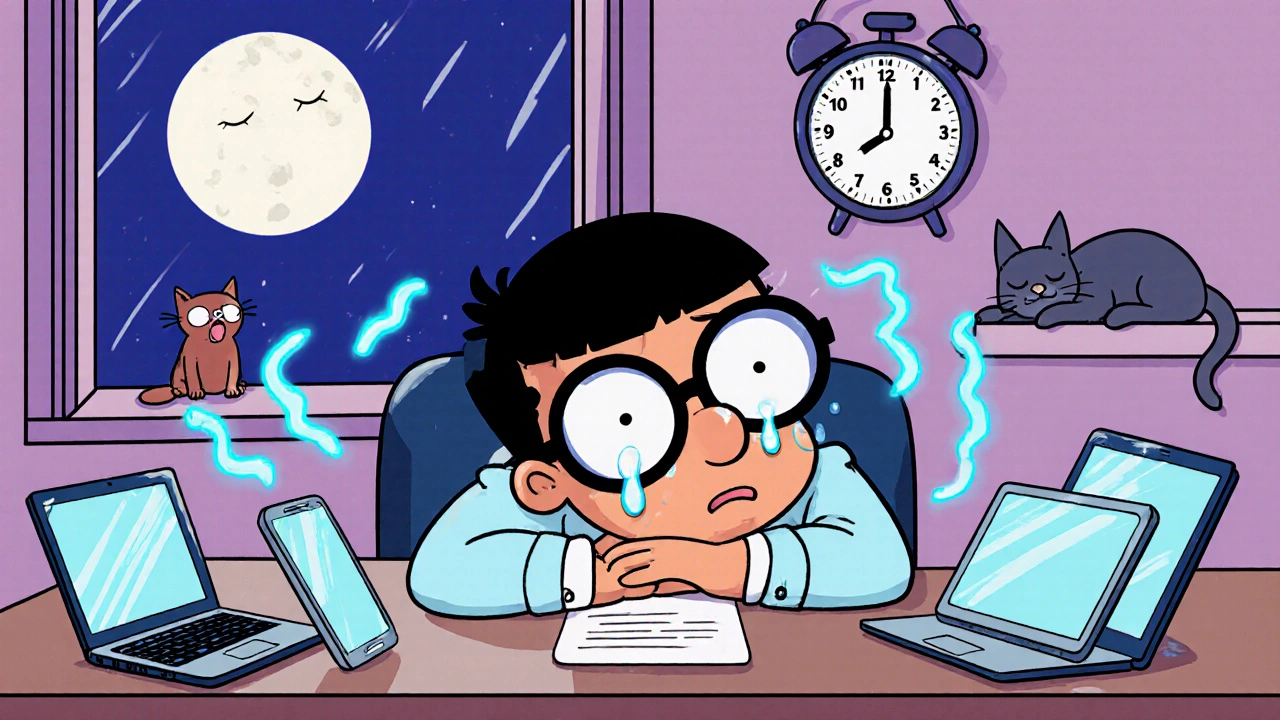
When you spend hours staring at phones, laptops, or tablets, your eyes don’t get a break—that’s digital eye strain, a condition caused by prolonged screen use that leads to eye discomfort, blurred vision, and headaches. Also known as computer vision syndrome, it’s not just tired eyes—it’s your visual system working overtime in a way it wasn’t built for.
It’s not just about brightness or glare. The real issue is how your eyes focus and move when reading text on a screen. Unlike printed pages, screens emit blue light, a high-energy visible light that scatters more easily and forces your eyes to work harder to focus. Add in reduced blinking—people blink 66% less when looking at screens—and you’ve got dry, irritated eyes. This isn’t just a problem for office workers. Students, gamers, and anyone scrolling before bed are affected too.
People often dismiss the symptoms as temporary: dryness, blurry vision, neck pain, or headaches after screen use. But if you’re dealing with this daily, it’s not normal. Your eyes are signaling overload. And while glasses labeled "blue light blocking" are everywhere, the real fix isn’t always a product—it’s behavior. The 20-20-20 rule (every 20 minutes, look at something 20 feet away for 20 seconds) isn’t a myth—it’s backed by eye care professionals. Adjusting screen height, reducing ambient glare, and using artificial tears can make a bigger difference than any filter.
What’s interesting is how this connects to other health issues. For example, people with dry eye syndrome, a chronic condition where eyes don’t produce enough tears or the tears evaporate too quickly, often find screen use makes symptoms worse. And if you’re on medications that reduce tear production—like antihistamines or antidepressants—you’re at higher risk. It’s not just about screens; it’s about your whole health picture.
You’ll find posts here that dig into practical solutions: how to set up your workspace to reduce strain, what over-the-counter eye drops actually help, why some people swear by special glasses while others see no change, and how sleep and hydration play a role. There’s also advice on managing screen time for kids and older adults, who are just as vulnerable. No fluff. No marketing. Just what works based on real user experiences and clinical insights.
Learn how blue light affects your eyes and sleep, and discover the real habits that reduce eye strain-no glasses or filters needed. Science-backed tips for screen users.