
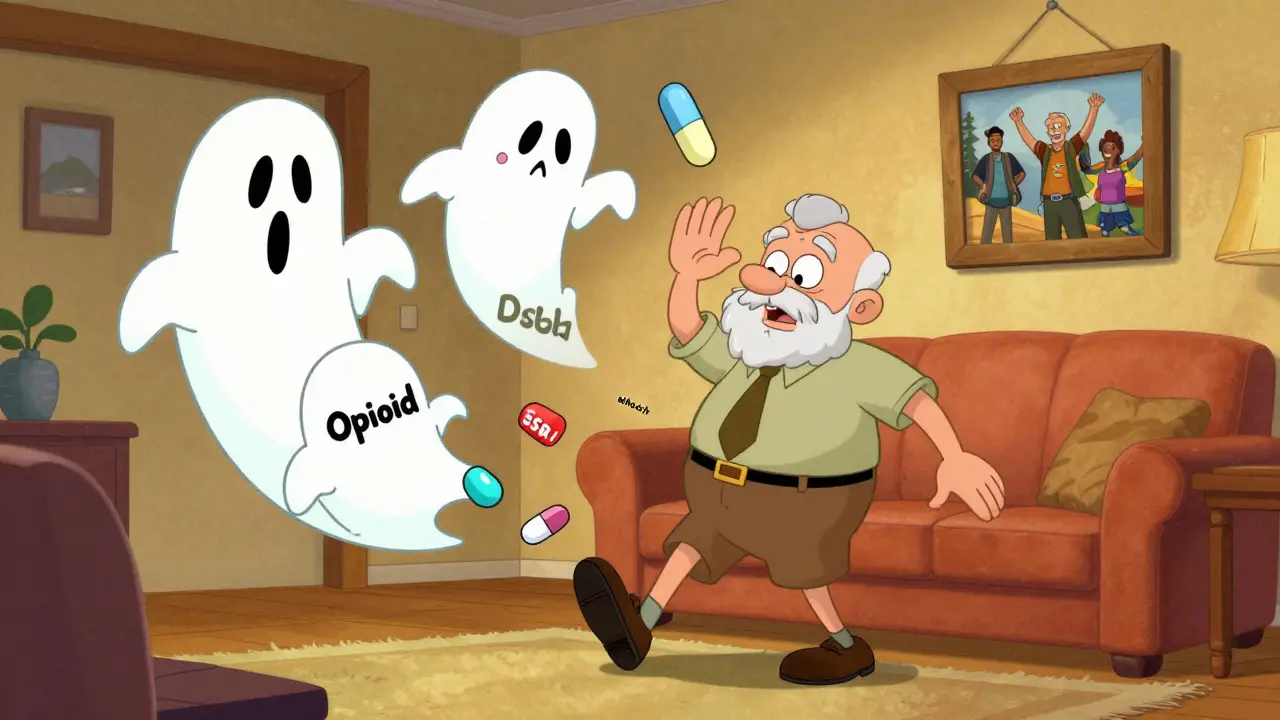
Every year, more than 36,000 older adults in the U.S. die from falls. That’s more than car crashes or gun violence among seniors. And a huge part of this crisis isn’t slippery floors or poor lighting-it’s the medications they’re taking. Many of these drugs are prescribed to help with sleep, anxiety, blood pressure, or pain, but they quietly steal balance, clarity, and stability. The truth? Medications are one of the most common, preventable causes of falls in seniors.
What Makes a Drug Risky for Falls?
Not all medications are created equal when it comes to fall risk. The dangerous ones don’t just make you drowsy-they mess with your body’s ability to stay upright. They can cause a sudden drop in blood pressure when you stand up (orthostatic hypotension), blur your vision, slow your reflexes, or fog your thinking. These effects are worse in older adults because their bodies process drugs differently. Liver and kidney function slow down, so medications stick around longer and build up in the system. Even a normal dose can become too strong. The CDC’s STEADI program calls these drugs fall risk-increasing drugs (FRIDs). And they’re everywhere. A 2023 study in JAMA Health Forum found that between 65% and 93% of seniors hospitalized after a fall were taking at least one of these medications. Many were taking three or more at once. That’s not coincidence-it’s a cascade.The Top 5 Medication Categories That Increase Fall Risk
- Antidepressants - Especially SSRIs like sertraline (Zoloft) and fluoxetine (Prozac), and tricyclics like amitriptyline (Amitril). These drugs can cause dizziness, low blood pressure, and slowed reaction time. Research shows SSRIs double the risk of falling. Tricyclics are even worse-they block acetylcholine, which affects muscle control and coordination.
- Benzodiazepines - Used for anxiety or insomnia, drugs like diazepam (Valium) and lorazepam (Ativan) are highly sedating. Even short-term use increases fall risk by 42%. Long-acting versions are especially dangerous because they linger in the body for days. The American Geriatrics Society says these should be avoided entirely in seniors.
- Antipsychotics - Prescribed for dementia-related agitation, drugs like risperidone (Risperdal) and quetiapine (Seroquel) can cause stiffness, slow movement, and sudden drops in blood pressure. These are often given off-label, meaning not approved for seniors, but still widely used. The risk of falling with antipsychotics is nearly 3 times higher than in those not taking them.
- Blood pressure medications - ACE inhibitors (lisinopril), beta blockers (carvedilol), and diuretics (hydrochlorothiazide) are essential for heart health-but they can cause dizziness when standing. The risk spikes when doses are changed or when multiple blood pressure drugs are combined. Many seniors don’t realize their fall is tied to their hypertension meds.
- Opioids and sedatives - Painkillers like oxycodone and sleep aids like zolpidem (Ambien) slow reflexes and impair judgment. When opioids are mixed with benzodiazepines, fall risk jumps by 150%. That combination is one of the deadliest in geriatric medicine.
Even over-the-counter drugs are dangerous. First-generation antihistamines like diphenhydramine (Benadryl) are common in sleep aids and cold medicines. They’re strong anticholinergics-meaning they block a brain chemical needed for memory and muscle control. A 2020 study found that seniors taking these daily had a 50% higher chance of falling over a year. Muscle relaxants like cyclobenzaprine (Flexeril) are another hidden culprit.
Why Polypharmacy Is a Silent Killer
Taking four or more medications is common among seniors. It’s not unusual for someone to be on blood pressure pills, a statin, a painkiller, an antidepressant, and a sleep aid. But each new drug adds another layer of risk. The problem isn’t just the individual drugs-it’s how they interact. A 2021 study in the Journal of the American Geriatrics Society showed that seniors taking five or more medications had a 40% higher chance of falling than those on two or fewer. And it’s not always obvious. One drug might cause dizziness, another lowers blood pressure, and a third slows your reaction time. Together, they create a perfect storm. The National Council on Aging warns that many of these drugs are prescribed years ago and never re-evaluated. A pill for anxiety from 2015 might still be on the list in 2026. No one checks if it’s still needed. That’s why the American Geriatrics Society’s Beers Criteria exists-to flag drugs that are more harmful than helpful in older adults.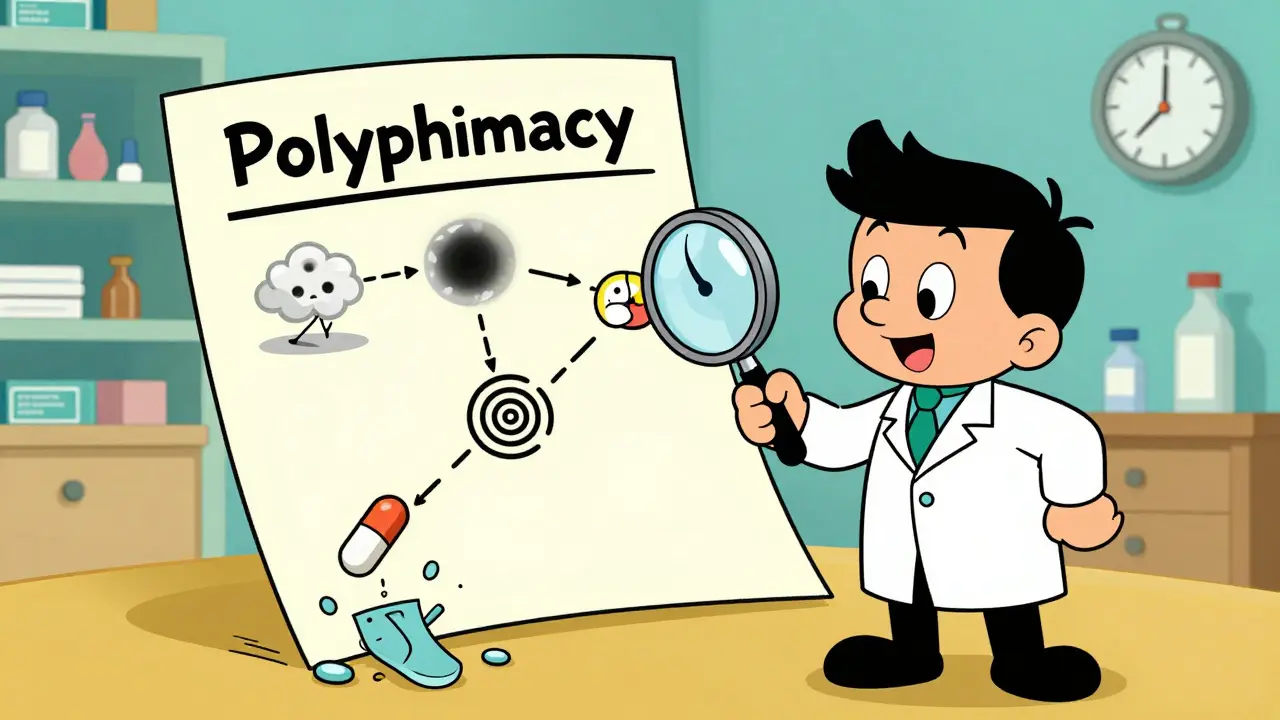
What Experts Say: Deprescribing Is the Solution
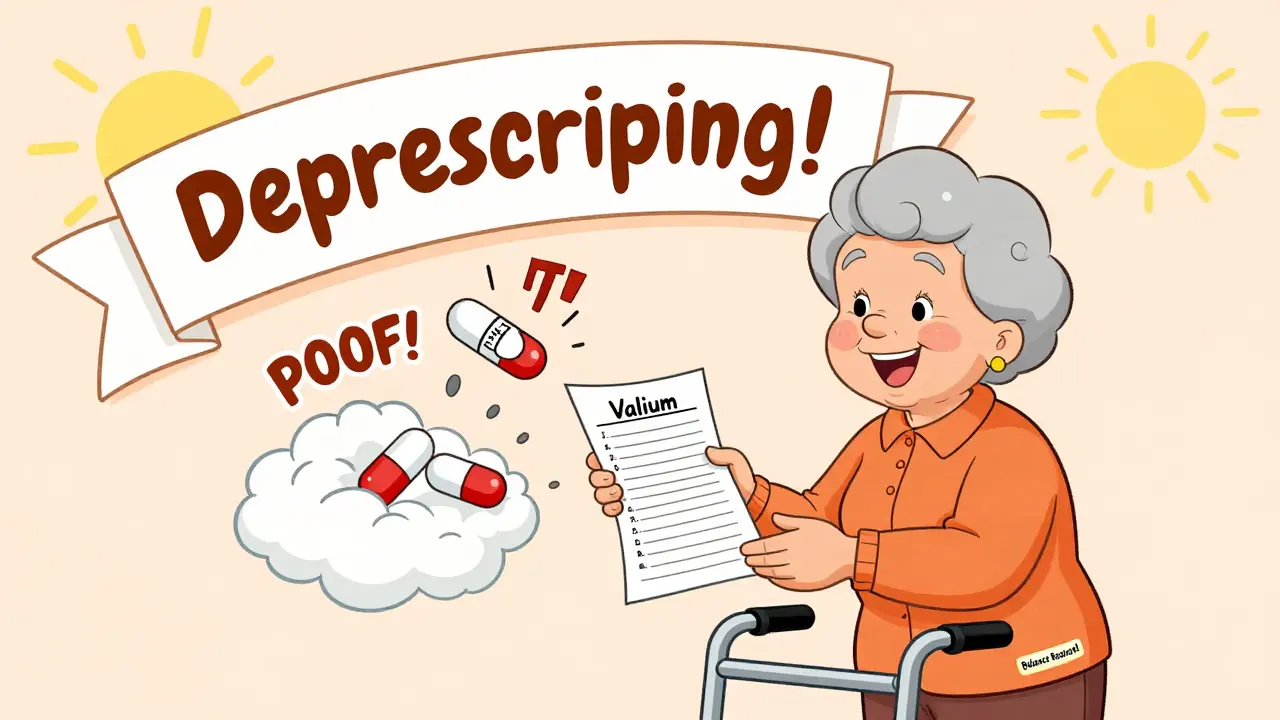
The good news? Falls from medication can be prevented. The most effective strategy isn’t more tests or better shoes-it’s stopping the wrong drugs. Dr. Cara Cassino, a geriatrician, says: “Reviewing medications with all patients 65 and older is the single most effective clinical intervention for reducing fall risk.” And she’s right. Studies show that when pharmacists or doctors carefully review and reduce unnecessary medications, fall rates drop by 20% to 30%. The process is called deprescribing. It’s not about quitting all meds-it’s about removing the ones that do more harm than good. For example:- Switching from a long-acting benzodiazepine to a non-drug sleep strategy like CBT-I.
- Replacing an anticholinergic bladder drug with pelvic floor exercises.
- Lowering the dose of an antidepressant if anxiety has improved.
- Stopping an opioid if pain is controlled with physical therapy.
Programs like HomeMeds, led by pharmacists, have proven that a structured review cuts falls by 22%. The CDC’s STEADI toolkit gives doctors clear steps: ask about falls, check for orthostatic hypotension, review the full med list, and consider stopping one drug at a time.
What Seniors and Families Can Do
You don’t need to wait for a doctor to bring it up. Here’s what you can do right now:- Bring your full med list to every appointment-prescriptions, OTCs, supplements, and herbal products. Write them down. Don’t rely on memory.
- Ask: “Is this still necessary?” For every drug, ask: Why was it prescribed? Is it still helping? Could it be stopped?
- Watch for dizziness when standing up. If you feel lightheaded, tell your doctor. It’s not just aging-it’s a red flag.
- Never stop a drug cold turkey. Some medications, like antidepressants or blood pressure pills, need to be tapered slowly. Work with your provider.
- Use a pharmacist. Community pharmacists can spot dangerous interactions and suggest safer alternatives. Many offer free med reviews.
One woman in Melbourne, 78, started falling every few weeks. Her doctor had her on four meds: a blood pressure pill, an antidepressant, a sleep aid, and a muscle relaxant. After a pharmacist-led review, two were stopped. Within six weeks, her falls stopped. She didn’t need more tests. She just needed fewer pills.
The Bigger Picture: A System That’s Falling Behind
Despite the evidence, only 42% of primary care doctors routinely check for medication-related fall risk. Many still see falls as “just part of getting old.” But the numbers don’t lie. Between 2018 and 2021, fall deaths rose 31% in the U.S.-while frailty, dementia, and living conditions stayed flat. The only thing that changed? More seniors were on CNS-active drugs. By 2025, 75% of academic medical centers plan to have formal deprescribing protocols. But that’s not enough. Families need to be part of the conversation. Seniors need to know they have the right to ask, “Is this helping me-or hurting me?”When to Seek Help
If you or a loved one has had even one fall in the past year-especially if it was unexplained-get a medication review. Also seek help if:- You feel dizzy when standing
- You’ve been told to “take it easy” because you’re “getting older”
- You’re on four or more regular medications
- You’re taking a benzodiazepine, antipsychotic, or opioid
- You’ve noticed memory lapses or confusion after starting a new drug
Don’t wait for a fall to happen. Prevention starts with a conversation. One pill at a time.
Which medications are most likely to cause falls in seniors?
The top medications linked to falls in seniors include antidepressants (especially SSRIs and tricyclics), benzodiazepines (like Valium and Ativan), antipsychotics (such as Risperdal), blood pressure drugs (like lisinopril and hydrochlorothiazide), and opioids. Over-the-counter antihistamines like diphenhydramine (Benadryl) and muscle relaxants also significantly increase fall risk due to drowsiness, dizziness, and impaired balance.
Can stopping a medication really reduce fall risk?
Yes. Studies show that carefully reducing or stopping high-risk medications can lower fall rates by 20% to 30%. A 2021 study in the Journal of the American Geriatrics Society found that pharmacist-led medication reviews reduced falls by 22% in community-dwelling seniors. The key is doing it safely-never stopping abruptly. Work with a doctor or pharmacist to taper off drugs one at a time.
What is the Beers Criteria and why does it matter?
The Beers Criteria is a list of medications that experts say should be avoided or used with extreme caution in adults 65 and older because they carry high risks of side effects like falls, confusion, or kidney damage. First published in 1991 and updated every two years, the latest version (2023) strongly warns against benzodiazepines, antipsychotics, and certain antidepressants. It’s used by doctors and pharmacists to guide safer prescribing.
Is it safe to take multiple medications as a senior?
Taking four or more medications increases fall risk significantly, even if each drug is individually safe. The danger comes from interactions-like a blood pressure pill causing dizziness while a sleep aid slows your reaction time. The more drugs you take, the harder it is for your body to handle them. A medication review can help identify which ones are truly necessary and which can be stopped or replaced.
Should I stop my medication if I’m worried about falls?
No-never stop a medication on your own. Some drugs, like antidepressants or blood pressure pills, can cause dangerous withdrawal symptoms if stopped suddenly. Instead, make a list of all your medications and schedule a review with your doctor or pharmacist. Ask: “Could this drug be contributing to my dizziness or falls?” Together, you can decide if it’s safe to lower the dose or stop it.

Frank Declemij
January 30, 2026Just read this and immediately checked my mom’s med list. Three of those drugs. We’re scheduling a pharmacist review next week.
Sheryl Dhlamini
January 30, 2026I’ve seen this happen to my grandma. She was on five meds, fell three times in six months, and no one ever asked if any could be cut. Turns out, the sleep aid and the muscle relaxant were the culprits. Stopped both. She hasn’t fallen since. It’s not magic-it’s just common sense.
Laia Freeman
January 31, 2026OMG YES THIS IS SO TRUE!! I’ve been begging my dad to talk to his doctor about his meds-he’s on like 8 things and he’s always stumbling around like he’s drunk but no one ever connects the dots. I’m printing this out and handing it to him with a highlighter. He’s gonna hate me but I don’t care. He’s my dad.
paul walker
January 31, 2026My uncle died after a fall last year. They found 11 prescriptions in his cabinet. No one ever questioned it. We assumed he was just getting older. This article hit me hard. We need to stop normalizing this.
Keith Oliver
January 31, 2026Look, I get it, but this is just Big Pharma’s way of making doctors look bad. You think they’re not prescribing these because they care? Nah, they’re paid to. You ever wonder why every senior’s got a pill bottle labeled ‘take once daily’? It’s not medicine-it’s marketing.
LOUIS YOUANES
February 2, 2026Deprescribing? That’s a buzzword invented by overworked geriatricians trying to sound profound. The real issue? We’ve turned aging into a medical condition. Seniors aren’t fragile-they’re over-medicated. And nobody wants to admit that the system is broken because it’s profitable to keep them drugged up.
Alex Flores Gomez
February 3, 2026People think ‘natural remedies’ are safer? Please. I’ve seen seniors take ginkgo biloba with warfarin and end up in the ER. Herbal doesn’t mean harmless. The problem isn’t just pharmaceuticals-it’s the complete lack of medical literacy. You can’t just Google ‘what causes dizziness’ and self-diagnose your way out of a polypharmacy crisis.
Doug Gray
February 4, 2026It’s funny how we blame meds for falls but never ask why seniors are on so many in the first place. Who’s the real culprit? The doctor? The system? Or the fact that we’ve created a culture where ‘more is better’? We treat aging like a disease to be managed, not a phase of life to be honored. And now we’re surprised when the pills start killing them?
kabir das
February 5, 2026My aunt took Benadryl every night for 15 years. She thought it was ‘just a sleep aid’. She didn’t know it was an anticholinergic. She started forgetting her own name. Then she fell. Broke her hip. Died six months later. No one ever told her. No one ever asked. Now I don’t let anyone in my family touch anything that says ‘drowsiness may occur’.
rajaneesh s rajan
February 6, 2026India has the same problem. Grandparents on 6+ meds. Doctors don’t even check interactions. They just write scripts. And the family? They think ‘more pills = better care’. I told my uncle to stop his sleeping pills-he cried. Said he’d ‘never sleep again’. He did. And he hasn’t fallen since. The real tragedy? He didn’t need any of them.
Andy Steenberge
February 7, 2026There’s a quiet revolution happening in geriatric care. Pharmacists are stepping up. HomeMeds programs are working. People are learning to ask ‘why?’ instead of ‘how many?’. It’s not about rejecting medicine-it’s about restoring balance. We don’t need more drugs. We need better questions. And we need to listen to the people who take them.
Robin Keith
February 8, 2026Let’s be honest-this isn’t just about medication. It’s about our entire societal abandonment of the elderly. We give them prescriptions instead of presence. We give them pills instead of purpose. We give them doctors instead of dinner companions. And then we’re shocked when they fall? No. We’re not shocked. We just shrug. Because we’ve been trained to see aging as a clinical problem, not a human one. And that’s the real tragedy-the silence. The silence of families who don’t visit. The silence of doctors who don’t question. The silence of a system that profits from dependency. This article? It’s not a warning. It’s a mirror. And we don’t like what we see.
Pawan Kumar
February 10, 2026Who’s really behind this? The CDC? The American Geriatrics Society? Or the insurance companies who save millions when seniors don’t fall? This is a cover-up. They don’t want you to know that most of these drugs were approved in the 1980s with zero long-term studies on seniors. They’re using us as guinea pigs. And now they’re telling us to ‘deprescribe’? It’s too late. The damage is done.
Kristie Horst
February 10, 2026How ironic that we call this ‘deprescribing’ as if stopping medication is some radical act. In truth, it’s just returning to sanity. We don’t need to be ‘fixed’-we need to be heard. And if the only way to be heard is to stop a pill that’s making us dizzy, then so be it. Thank you for writing this. It’s not just informative-it’s a lifeline.
DHARMAN CHELLANI
February 12, 2026Stop the meds. Start walking. That’s it. No fancy studies. No Beers Criteria. Just move. Your body doesn’t need pills. It needs gravity.