If you’ve been told you have sleep apnea, you’re not alone. Around 22 million Americans have obstructive sleep apnea, and most of them don’t even know it. The good news? CPAP therapy works-when you use it. The bad news? Many people quit within the first few weeks. Why? It’s rarely the machine. It’s usually the mask, the pressure, or the feeling that you’re sleeping with a space helmet strapped to your face. This isn’t about tech specs or price tags. It’s about making CPAP work for you, not the other way around.
What CPAP Machines Actually Do
CPAP stands for Continuous Positive Airway Pressure. It’s not a cure. It’s a tool. The machine pushes a steady stream of air through a mask, keeping your airway open while you sleep. No collapse. No snoring. No waking up gasping for air. The goal? Get your apnea-hypopnea index (AHI) below 5 events per hour. That’s the medical threshold for normal breathing during sleep. Studies show people who stick with CPAP cut their risk of heart attacks and strokes by 20-30%. Daytime fatigue? It drops. Mood? Improves. Focus? Sharpens. But none of that matters if you’re not wearing it.
The Four Main Types of CPAP Machines
Not all machines are the same. There are four main types, each designed for different needs.
- Traditional CPAP: Delivers one fixed pressure all night. Most common. Costs $500-$1,000. Models like the ResMed AirSense 10 and Philips DreamStation are popular. Good if your breathing doesn’t change much. But if you toss and turn, wake up, or sleep on your back one night and your side the next, this can feel like a constant blast of air you can’t escape.
- APAP (Auto-Adjusting): This one reads your breathing and changes pressure on the fly. If you snore, it boosts pressure. If you’re quiet, it drops it. Prices range from $1,700-$3,000. A 2021 study found users stick with APAP 15% longer than traditional CPAP. Why? It feels more natural. Doctors are starting to recommend it as a first choice, especially for new users.
- BiPAP (Bilevel): Gives you two pressures: higher for inhaling, lower for exhaling. Think of it like a breath of relief. Costs $600-$1,600. Best for people who need high pressure (over 15 cm H2O) or have other breathing issues like COPD. Cleveland Clinic reports 25% higher comfort ratings than CPAP users. But it requires extra testing to set up right.
- EPAP (Expiratory): These aren’t machines. They’re tiny nasal valves you stick in your nostrils. Costs $50-$150 a month. Only works for mild sleep apnea (AHI under 15). Efficacy? About 45%. Not a replacement for real CPAP if you’re moderate or severe.
Travel CPAPs like the ResMed AirMini ($650) are tiny-smaller than a soda can. Great for trips. But they don’t have built-in humidifiers. You’ll need to buy one separately ($80). And yes, they’re louder. Around 52 dBA. Compare that to standard machines at 30 dBA. You’ll notice the difference.
Mask Fitting: The #1 Reason People Quit
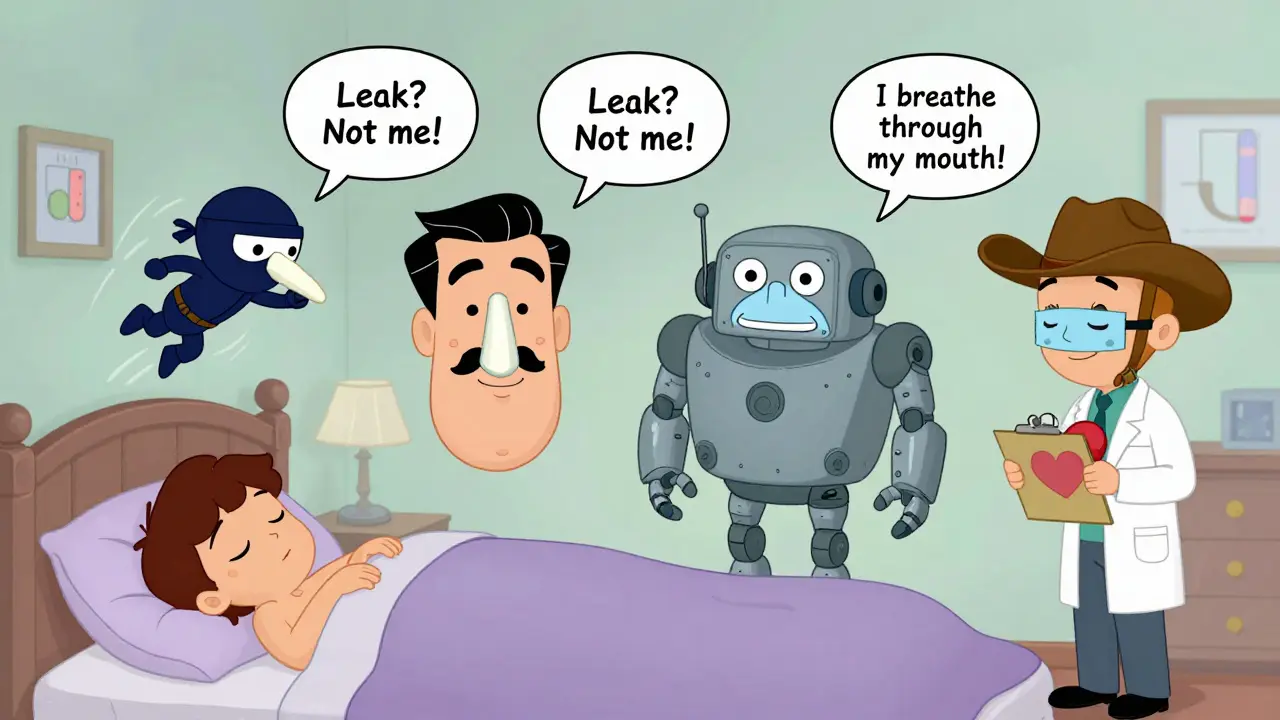
Dr. Indira Gurubhagavatula from UPenn says it plainly: “20-30% of patients fail CPAP because of poor mask fit, not pressure.” That’s huge. You can have the fanciest machine in the world, but if your mask leaks or digs into your skin, you won’t wear it.
There are four main mask types:
- Nasal pillows: Tiny silicone prongs that sit at the entrance of your nostrils. Best for side sleepers. Least facial contact. Only 32% of users choose these, but they’re the quietest and least irritating. User u/NasalPillowFan on Reddit says switching from a full nasal mask cut their leak rate from 15 to 3 L/min.
- Nasal masks: Cover your nose only. 45% of users. Good balance of seal and comfort. Best if you breathe through your nose and don’t mind a little pressure on the bridge.
- Full-face masks: Cover nose and mouth. 18% of users. Essential if you breathe through your mouth or have nasal congestion. But they’re bulkier. 35% more skin irritation than nasal pillows, according to GoodRx.
- Hybrid/oral masks: Rare. 5% of users. For severe nasal blockages. Usually paired with a chin strap.
Proper fitting isn’t guesswork. It’s measurement. You need to check your nasal bridge width, cheekbone structure, and how your face moves when you sleep. A bad seal? That’s 60% of all leaks. Acceptable leak rate? Below 24 L/min. Anything higher and you’re losing pressure-and sleep.
Adherence Strategies That Actually Work
Only 46% of people use their CPAP 4+ hours a night, 70% of nights. That’s the magic number for real benefits. So how do you get there?
- Start slow. Don’t try to sleep with it on night one. Wear the mask for 10 minutes while watching TV. Daytime sessions build tolerance. Do this 3 times a day for a week.
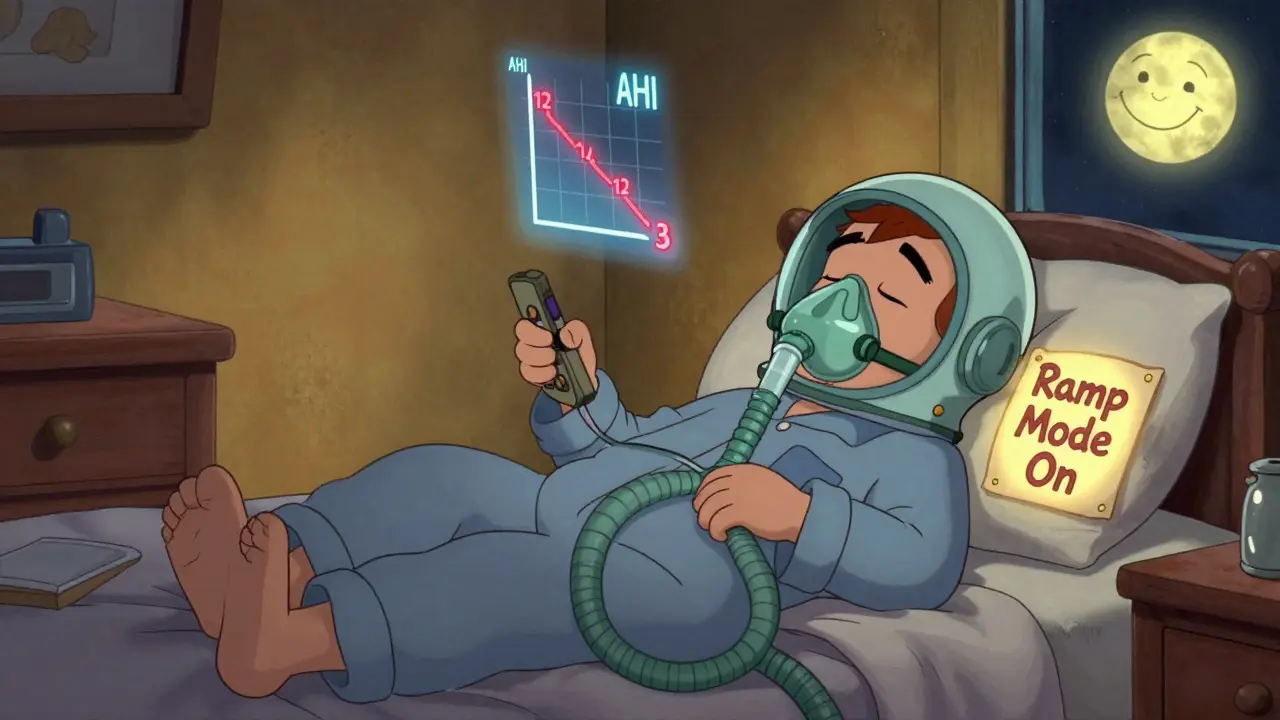
- Use ramp mode. Every machine has it. It starts at low pressure and slowly increases over 5-45 minutes. 75% of users rely on this. Use it. Always.
- Heat the air. Humidification cuts dry mouth and nose complaints by 50%. If your machine doesn’t have a heated humidifier, get one. Heated tubing? Even better. Users with it have 78% adherence. Without? Just 52%.
- Use a CPAP pillow. These have cutouts so the mask doesn’t press into your face. One Reddit user said it cut leaks by 40%.
- Track your data. Modern machines show you usage, AHI, leak rates. Check it every morning. Seeing your progress-like dropping from 12 AHI to 3-keeps you motivated.
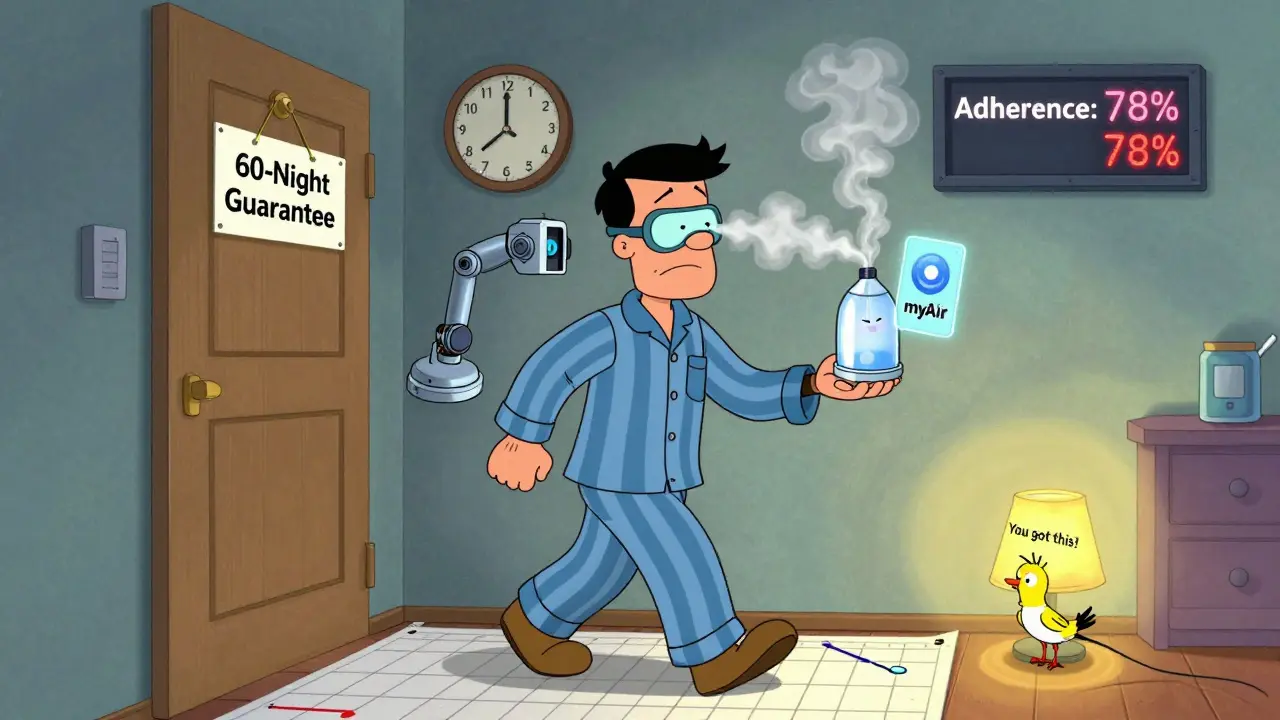
- Try the 60-night guarantee. Companies like CPAP.com let you return or swap masks for free within 60 days. Use it. If your mask feels wrong, don’t suffer. Swap it.
ResMed’s myAir app gives personalized coaching. Users who use it have 27% higher adherence. That’s not marketing. That’s data.
What’s New in 2026
Technology is moving fast. ResMed’s AirSense 11 uses AI to predict apnea events before they happen-and cuts AHI by 22% compared to older models. Philips’ DreamStation 3 runs at 25 dBA, quieter than a whisper. Fisher & Paykel’s SleepStyle has an “exhale relief” algorithm that drops pressure by up to 50% when you breathe out. It feels like you’re breathing normally.
Insurance rules are changing too. Starting in 2024, Medicare and most insurers require machines to track usage. You must use it 4+ hours a night, 90% of nights, to keep getting coverage. That’s not punishment. It’s accountability. It’s forcing manufacturers and doctors to help you succeed.
Who Needs What?
Here’s a quick guide:
- First-time user? Start with APAP. It adapts. You’ll feel less resistance.
- High pressure needed? (>15 cm H2O)? BiPAP is worth the extra cost and testing.
- Side sleeper? Nose breather? Try nasal pillows.
- Mouth breather? Sinus issues? Full-face mask. No compromise.
- Travel often? AirMini + portable humidifier. Worth the trade-offs.
- Struggling to stick with it? Use myAir app. Try a new mask. Talk to your sleep tech. Don’t give up.
CPAP isn’t about perfection. It’s about consistency. One night of use is better than zero. Two nights? Better. You don’t need 8 hours every night. You need 4, most nights. And you can get there.
Can I use a CPAP machine without a prescription?
No. In the U.S., all CPAP machines require a prescription. Insurance won’t cover it without one, and retailers won’t sell it. You need a sleep study to confirm sleep apnea and determine the right pressure. Skipping this step means you might get the wrong setting-or no benefit at all.
Why does my CPAP mask leak?
Leaks usually come from a bad fit, not a broken mask. Common causes: wrong size, wrong type for your face shape, straps too tight or too loose, or facial hair interfering with the seal. Try a different mask style. Nasal pillows often solve leaks for people with beards. Re-measure your face. And check for wear-silicone softens over time. Replace masks every 3-6 months.
Is APAP better than CPAP?
For most people, yes. APAP adjusts pressure automatically, so it’s more comfortable during changing sleep stages, positions, or congestion. Studies show 15% higher adherence with APAP. But if your breathing is stable and you’re already doing well on CPAP, there’s no need to switch. APAP costs more-$1,700-$3,000-so it’s not always necessary. Talk to your sleep doctor about your night-to-night variability.
What if I can’t tolerate the pressure?
You’re not alone. Many people feel claustrophobic or suffocated at first. Start with ramp mode. Use it for 10-15 minutes before bed. Try a lower starting pressure. If that doesn’t help, ask about BiPAP-it gives you lower exhalation pressure. Some users also benefit from a chin strap to prevent mouth breathing. And remember: it takes 2-4 weeks to adjust. Don’t quit before then.
Do I need a humidifier?
Almost always. Dry nose, throat, or mouth is the #1 complaint. Heated humidification reduces those complaints by 50%. If you live in a dry climate or use air conditioning, it’s essential. Some machines have built-in humidifiers. Others need separate tanks. Always use distilled water. Tap water can leave mineral buildup and promote mold.
How long do CPAP machines last?
Most machines last 5-7 years with proper care. Masks, hoses, and filters need replacing every 3-6 months. Humidifier chambers every 6-12 months. Clean your equipment weekly. Buildup can harbor bacteria and reduce effectiveness. If your machine is older than 5 years and your AHI is creeping up, it might be time for an upgrade-especially if newer models have better noise control or AI features.