
Medication Weight Change Calculator
Estimate potential weight changes from medications based on clinical data. This tool is for informational purposes only and should not replace professional medical advice.
It’s not uncommon to start a new medication and suddenly feel either constantly hungry or completely uninterested in food. For some, it’s a surprise weight gain of 10 pounds in a few weeks. For others, it’s losing interest in meals they used to enjoy. These aren’t just inconveniences-they’re real, measurable side effects tied to how drugs interact with your brain and body. And if you’re taking medications for depression, psychosis, diabetes, or even allergies, you’re not alone. Around 40% of U.S. adults are affected by obesity, and medication-induced appetite changes contribute to a significant portion of those cases.
Why Your Appetite Changes When You Take Medication
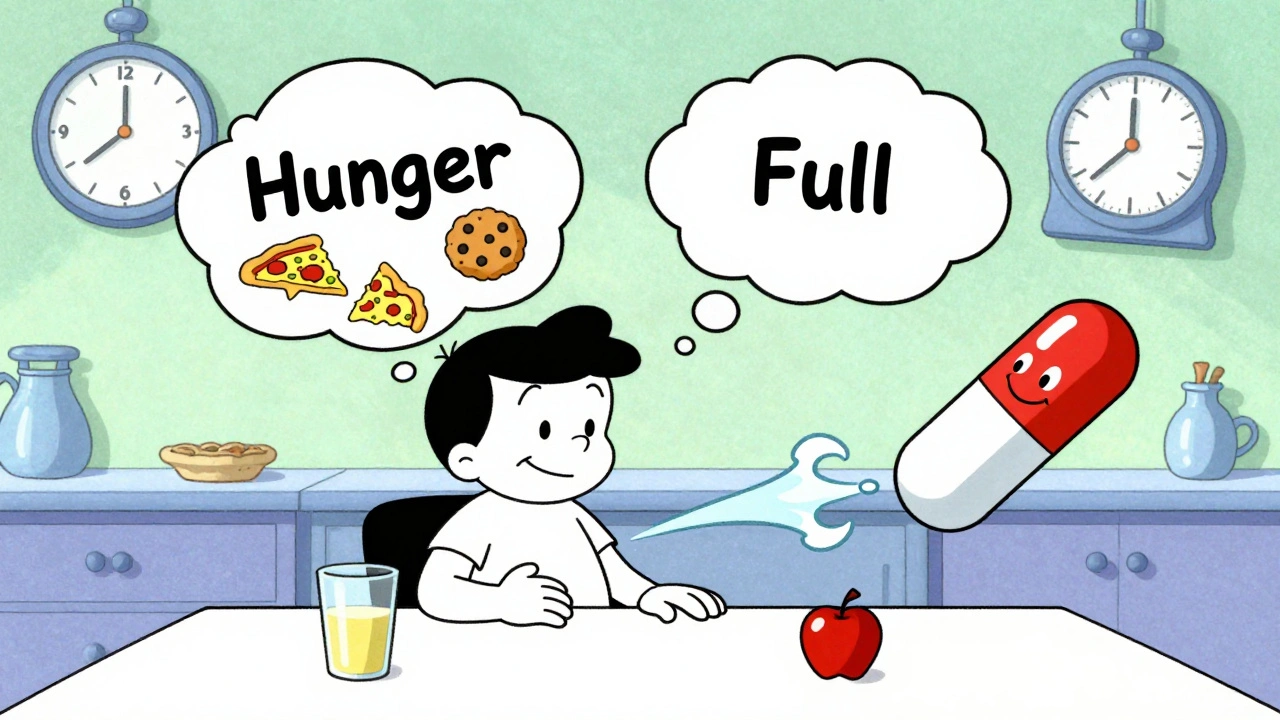
Your appetite isn’t controlled by willpower-it’s regulated by complex brain chemistry. Medications can mess with neurotransmitters like serotonin, dopamine, histamine, and even hormones like ghrelin (the hunger hormone) and leptin (the fullness hormone). For example, second-generation antipsychotics like olanzapine increase ghrelin levels by 15-20% within just four weeks. That means your brain gets stronger signals to eat, even when you’re not physically hungry. Some antidepressants work differently depending on how long you’ve been taking them. In the first few months, drugs like SSRIs might reduce impulsivity and make you feel fuller faster. But after a year or more, your brain adapts. Serotonin receptors become less responsive, and suddenly, you crave carbs-especially sugary or starchy foods. This is why many people report gaining weight on antidepressants even if they didn’t change their eating habits. On the flip side, medications like amphetamines and topiramate suppress appetite by boosting norepinephrine and dopamine. Amphetamines can cut daily calorie intake by 300-500 calories. Topiramate, often used for seizures or migraines, leads to weight loss in 60% of users, averaging 3-5 kg over six months. It’s not a magic pill for weight loss, but it shows how powerful these chemical shifts can be.Which Medications Are Most Likely to Change Your Appetite?
Not all drugs affect appetite the same way. Here’s a breakdown of the most common culprits based on clinical data:| Medication Class | Examples | Typical Appetite Effect | Average Weight Change (6 Months) |
|---|---|---|---|
| Antipsychotics | Olanzapine, Risperidone, Quetiapine | Strong increase | +4 to +10 kg |
| Antidepressants | Mirtazapine, Amitriptyline, Paroxetine | Increase | +2 to +5 kg |
| Antidepressants | Bupropion, Vortioxetine | Decrease or neutral | -1 to +0.5 kg |
| Diabetes Medications | Insulin, Sulfonylureas | Increase | +2 to +4 kg |
| Diabetes Medications | Metformin | Decrease | -2 to -3 kg |
| Mood Stabilizers | Lithium | Increase | +3 to +5 kg |
| Antihistamines | Diphenhydramine | Mild increase | +1 to +2 kg |
| Appetite Suppressants | Topiramate, Amphetamines | Strong decrease | -3 to -5 kg |
Some people are more vulnerable than others. Mirtazapine, for instance, causes weight gain in 40% of users within six months. That’s four times higher than bupropion, which often leads to weight loss. If you’re already overweight or have a family history of metabolic issues, your risk goes up. The good news? Not everyone gains weight-even on the same drug. Genetics, diet, activity level, and even gut bacteria play a role.
When Weight Gain Happens Fast-What to Watch For
Weight gain from medication doesn’t creep up slowly. Most of it happens in the first six months. In fact, 80% of significant weight gain occurs within that window. That’s why experts like the Endocrine Society recommend checking your BMI and waist circumference at the start of treatment and every three months after. If you’re on olanzapine or quetiapine, expect the biggest changes early. One study found patients gained 4-6 kg in just 10 weeks. That’s not just a few pounds-it’s enough to trigger insulin resistance, raise blood pressure, and increase heart disease risk. And it’s not just about the number on the scale. Many people report constant hunger, especially at night, or feeling like they can’t stop eating even when full. Reddit threads from people on antipsychotics are full of stories like: “I ate two full pizzas in one night and didn’t feel guilty.” That’s not lack of discipline. That’s pharmacology.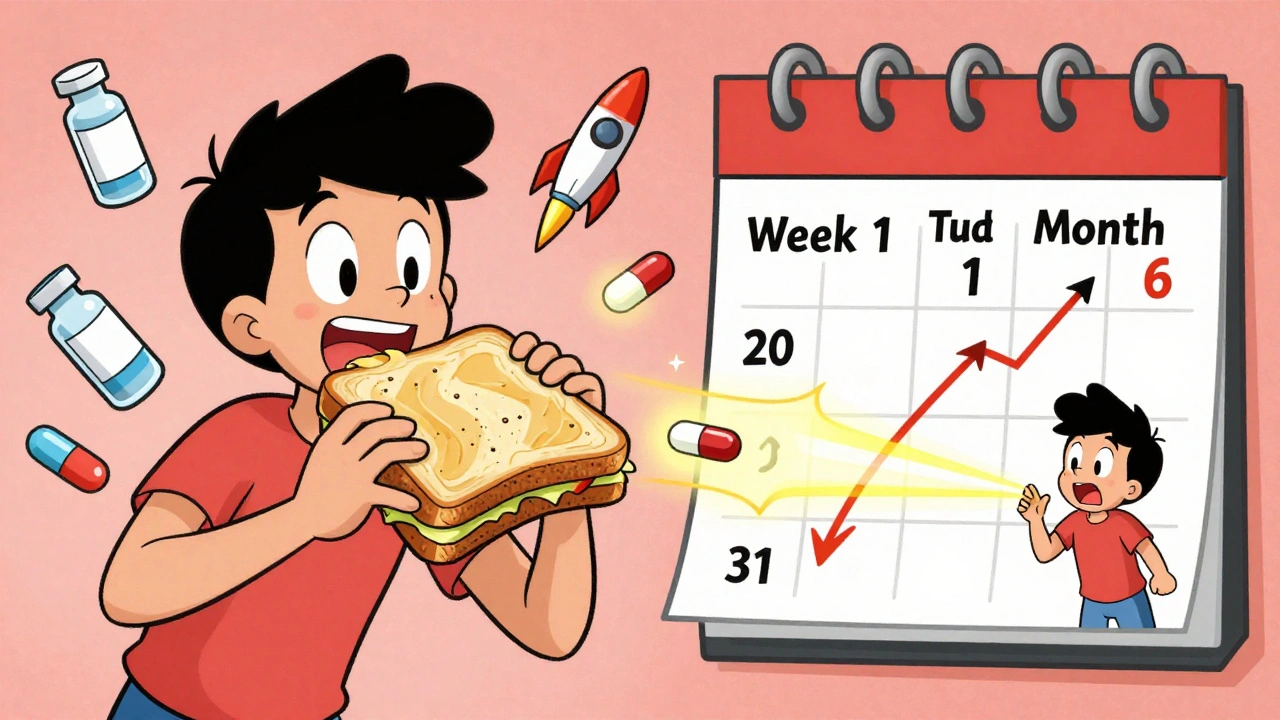
How to Manage Appetite Changes Without Stopping Your Medication
The first rule: Never stop your medication on your own. Abruptly stopping antipsychotics, antidepressants, or seizure meds can cause seizures, relapse, or dangerous withdrawal symptoms. Instead, work with your doctor to adjust your plan. Here’s what actually works, backed by research and real-world results:- Meal prep twice a week. People who plan meals in advance eat 200 fewer calories per day than those who eat spontaneously. When you’re hungry, you grab what’s easiest-and that’s often chips, cookies, or fast food.
- Swap refined carbs for whole grains. A 2022 study found that replacing white bread and pasta with oats, brown rice, and quinoa increased satiety by 45 minutes per meal. Fiber slows digestion and keeps blood sugar steady.
- Snack on protein every 3-4 hours. A 15-20g protein snack (like Greek yogurt, hard-boiled eggs, or a handful of almonds) keeps hunger spikes down by 40%. Protein stabilizes insulin and reduces cravings.
- Drink water before meals. In a group of 200 people managing medication-induced hunger, drinking two glasses of water 20 minutes before eating reduced calorie intake by 13% on average.
- Practice mindful eating. Put your fork down between bites. Chew slowly. Turn off screens. This simple habit reduces portion sizes by 15-20% without making you feel deprived.
- Do resistance training 2-3 times a week. Building muscle raises your resting metabolic rate by 50-100 calories per day. That’s like burning an extra apple every day-without changing your diet.
- Remove high-calorie snacks from your home. Behavioral studies show that just not having junk food visible reduces impulsive eating by 35%.
One user switched from mirtazapine to bupropion and lost 15 pounds in six months without worsening their depression. Another replaced sugary snacks with cottage cheese and berries and stopped nighttime binges. These aren’t extreme diets-they’re smart adjustments that fit into real life.
When to Talk to Your Doctor About Switching Medications
If you’ve tried lifestyle changes for 3-4 months and still can’t manage the weight gain-or if your health is at risk (high blood pressure, rising blood sugar, fatty liver)-it’s time to talk about alternatives. Your doctor can consider:- Switching from olanzapine to lurasidone or aripiprazole, which have much lower weight gain risk.
- Changing from paroxetine to fluoxetine or vortioxetine, which are more weight-neutral.
- Adding metformin to your regimen if you’re on insulin or sulfonylureas. It helps counteract weight gain and improves insulin sensitivity.
- Trying newer drugs like Auvelity (dextromethorphan/bupropion), which showed only 0.7% average weight gain in trials compared to 2.5% for traditional antidepressants.
There’s also promising research in genetic testing. A 2023 study identified 12 gene variants linked to higher risk of antipsychotic-induced weight gain. In the future, doctors might test your DNA before prescribing to avoid drugs that could cause problems for you specifically.

What’s Changing in Medicine Right Now
The medical community is finally taking this seriously. In 2023, the FDA required new psychiatric drugs to include detailed weight change data by dose and duration. That’s a big shift-before, companies didn’t have to report this unless it was a major safety issue. Pharmaceutical companies are now developing “appetite-neutral” medications. Karuna Therapeutics’ KarXT, a new schizophrenia treatment, caused only 0.4 kg of weight gain in five weeks-compared to 3.2 kg with olanzapine. That’s a game-changer. Digital tools are helping too. Platforms like Noom, which use behavioral coaching, saw 45% user satisfaction in managing medication-related weight gain-much higher than standard care. These aren’t magic apps. They’re about building habits that stick.You’re Not Broken-Your Medicine Is Just Affecting You
If you’re struggling with appetite changes, don’t blame yourself. This isn’t about willpower. It’s about chemistry. Your body is responding to a drug the way it’s designed to-sometimes in ways that aren’t helpful. The goal isn’t to fight your biology. It’s to work with it. Start by tracking your weight weekly for the first three months after starting a new medication. Keep a food journal. Note when you feel hungriest. Talk to your doctor early-not when you’ve gained 20 pounds, but when you notice the first signs. Small changes make a big difference. Eating protein before bed. Walking after dinner. Choosing whole foods over processed ones. These aren’t diets. They’re tools. And with the right support, you can manage your health without sacrificing the medication you need to feel better.Can antidepressants make you gain weight even if you eat the same amount?
Yes. Antidepressants like mirtazapine and paroxetine change how your brain regulates hunger and cravings. Even if you eat the same number of calories, your body may store more fat or burn fewer calories due to metabolic shifts. Long-term use can also lead to carbohydrate cravings, which increase calorie intake indirectly.
How long does it take for appetite changes to start after beginning a new medication?
For drugs like antipsychotics and antidepressants, appetite changes often begin within 2-4 weeks. Weight gain becomes noticeable around 6-8 weeks, with the most rapid changes happening in the first 3 months. Some people notice increased hunger within days, especially with medications like olanzapine or lithium.
Is it possible to lose weight while on a medication that causes weight gain?
Yes, but it requires intentional effort. People on antipsychotics have lost weight by combining meal planning, protein-rich snacks, resistance training, and mindful eating. In one study, proactive behavioral interventions reduced weight gain by 50%. It’s harder than losing weight without medication, but it’s absolutely possible.
Do all antipsychotics cause weight gain?
No. Older antipsychotics like haloperidol cause less weight gain than newer ones like olanzapine and quetiapine. Newer options like lurasidone, aripiprazole, and ziprasidone have minimal impact on weight. Your doctor can choose a medication based on your weight history and metabolic risk.
Can switching medications help with weight gain?
Many people experience weight loss after switching from a high-risk medication to a weight-neutral one. For example, switching from mirtazapine to bupropion or from olanzapine to aripiprazole often leads to gradual weight loss over 6-12 months. But this must be done under medical supervision to avoid relapse or withdrawal.
Are there any supplements that can help counteract medication-induced weight gain?
There’s no supplement proven to reliably block medication-induced weight gain. Some people try chromium or green tea extract, but studies show little to no effect. The most effective strategies are behavioral and dietary: protein intake, meal planning, movement, and sleep. Focus on what works, not on unproven pills.
Why does my doctor say not to worry about weight gain yet?
Sometimes, the priority is stabilizing your mental or physical health first. If you’re severely depressed or experiencing psychosis, gaining a few pounds is a manageable trade-off compared to worsening symptoms. But if weight gain continues past 3-6 months, your doctor should revisit the plan. It’s not about ignoring the issue-it’s about timing the intervention right.
What to Do Next
If you’re on a medication and noticing appetite changes:- Write down when the changes started and what they look like (e.g., “I snack all night,” “I feel full but keep eating”).
- Check your weight weekly for the next month. Even small trends matter.
- Start one simple habit: drink water before meals or add protein to your snacks.
- Book a follow-up with your doctor. Bring your notes. Ask: “Is this weight gain expected? Are there alternatives?”
- Don’t wait until you’ve gained 15 pounds. Early action gives you more options.
You’re not powerless. Medications are tools-not sentences. With the right information and support, you can manage your health on your terms.


jagdish kumar
December 4, 2025It's not about willpower. It's about chemistry. We're just meat puppets with pills pulling our strings.
And they call it treatment.
Carolyn Ford
December 6, 2025Oh, please. You're telling me people can't control their eating habits? That's a myth. If you're gaining weight on meds, you're just not trying hard enough. I've been on sertraline for 12 years-zero weight gain. No excuses. Discipline. It's not rocket science.
Gillian Watson
December 7, 2025I’ve been on lithium for six years. Gained 18 kilos. Didn’t change a thing. Just ate like I always did. Turns out my brain forgot how to say ‘enough.’
Now I walk after dinner. Barely helps. But it’s something.
At least I’m not alone.
Gareth Storer
December 9, 2025So… let me get this straight. The pharma giants make drugs that make you fat, then sell you apps to fix it? Genius. Next they’ll charge you for breathing.
And you’re supposed to be grateful?
Pavan Kankala
December 9, 2025They don’t want you healthy. They want you dependent. Weight gain? That’s not a side effect-that’s a business model. If you lose weight, you might stop taking the pill. And then? No more monthly checks. No more profits.
They’re not curing you. They’re farming you.
Martyn Stuart
December 10, 2025Important note: Meal prep isn’t just ‘good advice’-it’s neurochemical sabotage. When you plan, you bypass the dopamine-driven urge to grab whatever’s handy. Protein snacks? They stabilize ghrelin spikes. Water before meals? It triggers gastric distension signals that reduce intake. These aren’t hacks-they’re neuroscience.
And yes, resistance training boosts BMR even if you’re sedentary otherwise. It’s not about looking good. It’s about staying alive.
Jessica Baydowicz
December 10, 2025Y’all, I switched from mirtazapine to bupropion and went from ‘I need a nap after toast’ to ‘I’m hiking on weekends’-and I didn’t even try that hard! Just swapped snacks for hard-boiled eggs and drank water like it was my job. You can do this. You’re not broken. You’re just medicated. And that’s okay!
Yasmine Hajar
December 12, 2025I cried the first time I realized I wasn’t lazy-I was pharmacologically hijacked. My brain told me I was hungry when I wasn’t. I ate because my neurons were screaming. And nobody told me that was possible.
Thank you for writing this. I didn’t know I could talk about it without feeling like a failure.
Karl Barrett
December 12, 2025The neuroendocrine feedback loops involved here are non-linear and time-dependent. SSRIs initially increase 5-HT2C receptor sensitivity, which suppresses appetite via POMC neurons in the arcuate nucleus. But chronic exposure leads to receptor downregulation, which disinhibits NPY/AgRP pathways-hence the carb cravings. Weight gain isn’t caloric excess-it’s metabolic reprogramming. The key is early intervention with metformin or behavioral modulation before adipose tissue becomes insulin resistant. This isn’t diet culture. It’s systems biology.