Mood Stabilizers: What They Are, How They Work, and What You Need to Know
When your emotions swing too high or too low—like when you’re stuck in a cycle of intense energy followed by deep despair—you might be dealing with something more than just stress. Mood stabilizers, a class of medications designed to even out extreme emotional highs and lows. Also known as psychiatric mood regulators, they’re not antidepressants or anti-anxiety drugs. They’re built to prevent the wild swings that come with conditions like bipolar disorder, helping people stay grounded without crashing or burning out. These drugs don’t make you feel "normal" right away—they work over weeks or months to reduce the frequency and severity of manic or depressive episodes.
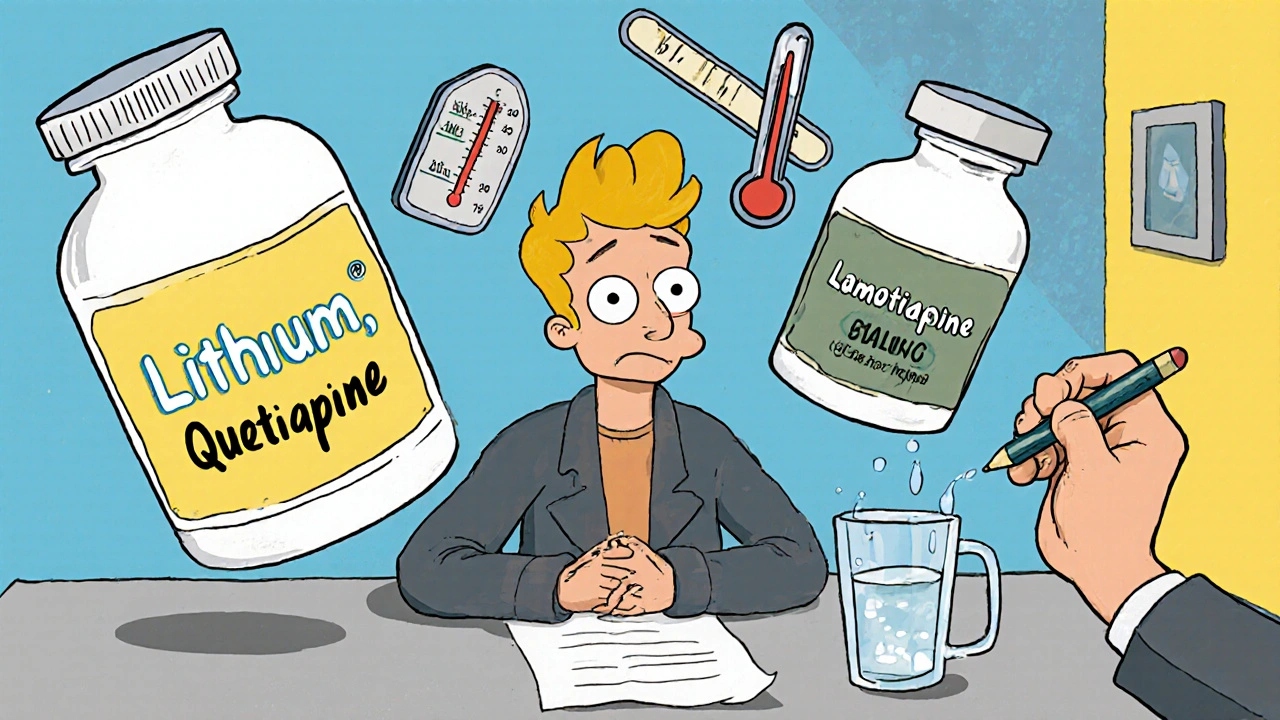
Mood stabilizers include several types of drugs, each with different ways of working. Lithium, one of the oldest and most studied mood stabilizers. Also known as lithium carbonate, it’s often the first choice for bipolar disorder because it’s effective at preventing both mania and depression. Then there are anticonvulsants, originally developed to treat seizures but found to calm overactive brain circuits linked to mood swings. Also known as anti-seizure drugs, common ones include valproate, lamotrigine, and carbamazepine. Some people respond better to one than the other, and doctors often mix them with other meds depending on symptoms. These drugs aren’t quick fixes—they require regular blood tests, careful dosing, and patience. Side effects like weight gain, tremors, or brain fog are common, but they’re often manageable with adjustments.
What you won’t find in most ads is how these drugs interact with other things you take. For example, mixing mood stabilizers with alcohol can make side effects worse, just like how some antibiotics can mess with your gut. And if you’re on lithium, even small changes in salt intake or hydration can throw off your levels. That’s why knowing what else you’re taking matters—whether it’s over-the-counter painkillers, herbal supplements, or even common cold meds. The same goes for conditions like kidney problems or thyroid issues, which can affect how your body handles these drugs. That’s why checking in with your doctor isn’t optional—it’s part of staying safe.
Some people worry that taking mood stabilizers means they’re "broken" or "dependent." But think of them like insulin for diabetes—they don’t cure the condition, but they make living with it possible. Many people on these meds go on to hold jobs, raise families, and live full lives. The key is finding the right one, the right dose, and the right support system. You’re not alone in this. Thousands of people use these drugs every day, and the more we understand how they work, the better we can use them.
Below, you’ll find real-world guides that cover exactly what you need to know: how to spot dangerous interactions, what to do when side effects hit, how to handle insurance coverage for these meds, and when to ask for a second opinion. These aren’t theory pieces—they’re practical tools from people who’ve been there.