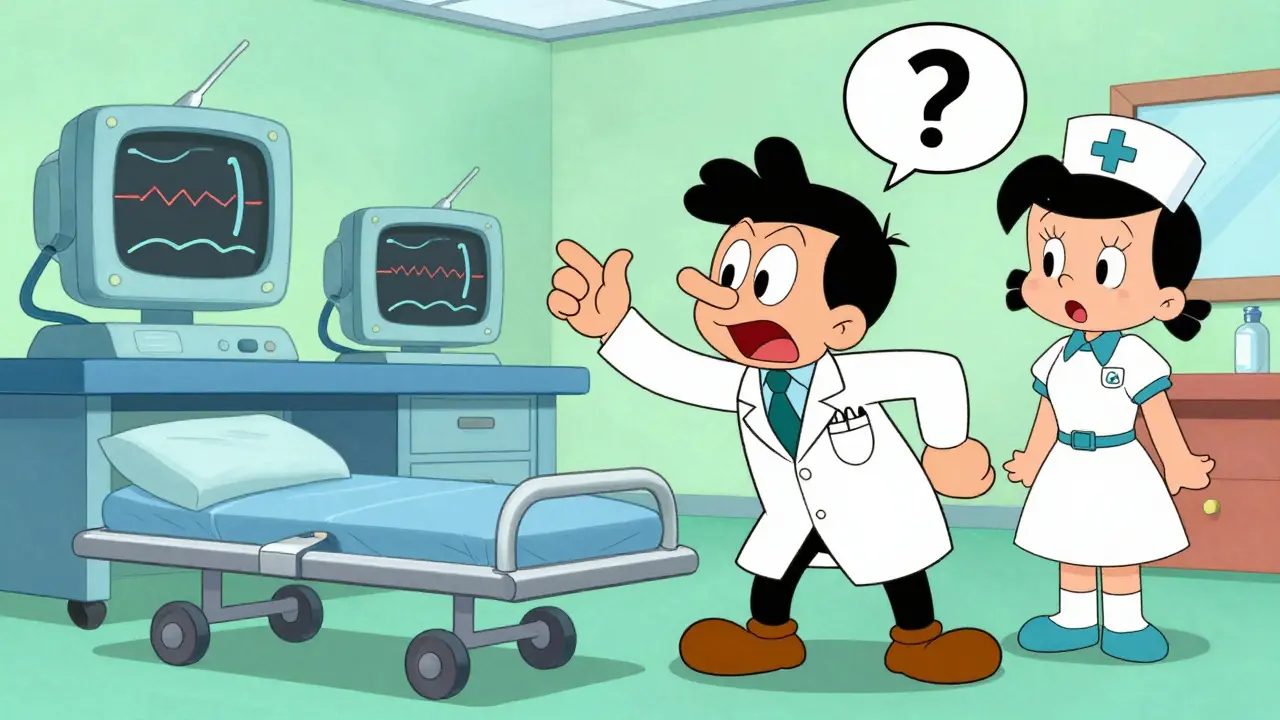
Imagine a chaotic emergency room where every second counts. A doctor shouts a medication order over the noise of monitors and sirens. The nurse hears something that sounds like 'Celebrex,' but the doctor actually said 'Celexa.' In a high-stress environment, these small phonetic slips can lead to catastrophic patient outcomes. Verbal prescriptions-medication orders given orally in person or over the phone-are a necessary evil in medicine, but they carry a staggering error rate of 30% to 50% when handled without strict protocols. While electronic systems are the gold standard, there are still moments, like during a sterile surgery or a trauma resuscitation, where a written order would literally cost a patient's life.
The Core Danger of Oral Orders
The problem with verbal orders is that they exist only in the memories of the people involved until they are written down. This "memory gap" is where most mistakes happen. According to data from the Pennsylvania Patient Safety Reporting System, a significant number of errors occur because of sound-alike drug names. For instance, Hydralazine and Hydroxyzine sound nearly identical in a noisy hallway, yet they treat entirely different conditions. When a provider relies on a quick verbal command, the risk of a "near-miss" or a full-scale medication error skyrockets.
It is not just about the drug name. Numbers are another danger zone. A dose of "15 mg" can easily be misheard as "50 mg" if the connection is poor or the speaker is rushed. This is why the Institute for Safe Medication Practices (ISMP) emphasizes that standardized verification isn't just a suggestion-it's a survival mechanism for the patient.
The Gold Standard: Read-Back Verification
The most effective way to kill the error rate is through a process called read-back verification. This is where the person receiving the order repeats the entire prescription back to the prescriber, word for word, before any medication is administered. The The Joint Commission made this a requirement back in 2006 because it can reduce errors by up to 50%.
To do this right, the receiver shouldn't just say "Got it" or "Okay." They need to state the patient's name, the drug, the exact dose, the route (like IV or oral), and the frequency. If the prescriber hears a mistake in the read-back, they correct it immediately. If the receiver is unsure about a drug name, they should ask the prescriber to spell it out phonetically. For example, instead of just saying "Ampicillin," a safe provider will say "Ampicillin, spelled A-M-P-I-C-I-L-L-I-N." This eliminates the guesswork and ensures the pharmacy dispenses the correct agent.
| Method | Estimated Accuracy Rate | Primary Risk | Best Use Case |
|---|---|---|---|
| Electronic (CPOE) | 85% - 95% | System downtime/Wrong patient selection | Standard hospital ward/Clinic |
| Verbal (with Read-Back) | 50% - 70% | Phonetic confusion/Distractions | Sterile surgery/Trauma ER |
| Verbal (without Read-Back) | Low | Extreme risk of miscommunication | Avoid entirely |
Handling High-Alert Medications
Not all drugs are created equal. Some medications are so dangerous that a small mistake in dosing can be fatal. These are known as "high-alert medications." For these, verbal orders should be strictly prohibited unless it is a true life-or-death emergency. Chemotherapy is a prime example; the Pennsylvania Patient Safety Authority generally prohibits verbal orders for chemo, allowing them only to hold or stop a treatment.
Other high-risk drugs that should rarely be ordered verbally include:
- Insulin: A decimal point error can lead to severe hypoglycemia.
- Heparin: Incorrect dosing can cause internal bleeding.
- Opioids: High risk for respiratory depression if the dose is misheard.
If you find yourself in a situation where a high-alert drug must be ordered verbally, double the verification. Use a second nurse to witness the read-back and ensure the drug name is spelled out character by character.
Eliminating Ambiguity in Communication
The way we speak matters. Common medical abbreviations are a breeding ground for errors. In a verbal order, "BID" might be misinterpreted. The safe move is to replace all jargon with clear, plain English. Instead of "BID," say "twice daily." Instead of "PO," say "by mouth."
Numbers should also be delivered using two different methods to ensure clarity. For example, if you are ordering 15 milligrams, state it as "fifteen milligrams," and then immediately follow it with "one-five milligrams." This redundancy acts as a safety net, catching any auditory slips before they reach the patient.
Distractions are the enemy of clarity. A common failure point occurs during shift changes, where nearly 42% of verbal order errors happen. If a physician is interrupted by another staff member while giving an order, the chain of communication breaks. Providers should use verbal cues to protect their focus, such as saying, "I need to finish this prescription first, and then I will answer your question." This small boundary prevents the mental lapse that leads to a dosing error.
The Paper Trail: Transcription and Authentication
A verbal order isn't "real" until it's in the chart. The transition from a spoken word to a written record is a critical vulnerability. Every verbal order must be transcribed into the Electronic Health Record (EHR) immediately. A complete entry must include:
- The patient's full name and identifiers.
- The medication name (spelled out).
- The dose with specific units (e.g., mcg, mg).
- The route and frequency.
- The specific indication (why the drug is being given).
- The name of the prescriber.
- The exact date and time the order was received.
While CMS (Centers for Medicare & Medicaid Services) allows up to 48 hours for a doctor to sign off (authenticate) a verbal order, waiting that long is dangerous. Leading institutions, such as Johns Hopkins, require same-shift verification. The goal is to close the loop as quickly as possible so that the written record reflects the actual intent of the provider.
Moving Toward a Safer Future
The rise of Computerized Physician Order Entry (CPOE) has already significantly cut down the reliance on verbal orders. In some hospital settings, verbal orders have dropped from 22% to around 10% of all prescriptions. As voice recognition technology improves, we may see an even further decline. However, as long as there are surgeons in sterile gowns and ER doctors treating trauma patients, the verbal order will exist.
The key to survival in these scenarios isn't the technology, but the culture. A culture where a nurse feels empowered to tell a senior surgeon, "I didn't catch that, please spell the drug name for me," is a culture where patients stay safe. Asking for clarification isn't a sign of incompetence; it's the hallmark of a professional who prioritizes safety over speed.
Are verbal orders legal in all healthcare settings?
Yes, they are generally permissible under CMS and The Joint Commission regulations, but they must follow strict institutional protocols and be authenticated by the prescriber within a specific timeframe (usually 48 hours per CMS, though often much sooner per hospital policy).
What is the most common cause of verbal order errors?
The most common causes are sound-alike drug name confusion (e.g., Celebrex vs. Celexa) and communication breakdowns during high-stress moments or shift changes, often exacerbated by a failure to use read-back verification.
When is a verbal order absolutely necessary?
Verbal orders are critical during sterile procedures (like surgery) where the provider cannot touch a computer or paper, and during true medical emergencies (like cardiac arrest or trauma) where the delay of writing an order would risk the patient's life.
How does read-back verification actually work?
The receiver listens to the order, writes it down, and then reads the entire order back to the prescriber. The prescriber must confirm that the read-back is 100% accurate before the medication is prepared or administered.
Which medications should NEVER be ordered verbally?
High-alert medications should be avoided verbally except in emergencies. This includes chemotherapy, insulin, heparin, and potent opioids, due to the extreme risk associated with dosing errors.
Next Steps for Providers
If you are a nurse or physician looking to tighten your safety protocols, start by implementing a "no-interruptions zone" during medication ordering. For those in leadership, consider auditing your read-back rates; research shows that in some settings, read-backs happen less than half the time. Training staff to use phonetic spelling for all "sound-alike" drugs can immediately lower your risk profile. When in doubt, always default to the most conservative communication method: write it down, print it, or use the EHR.