
Red Yeast Rice & Statin Dose Calculator
How This Calculator Works
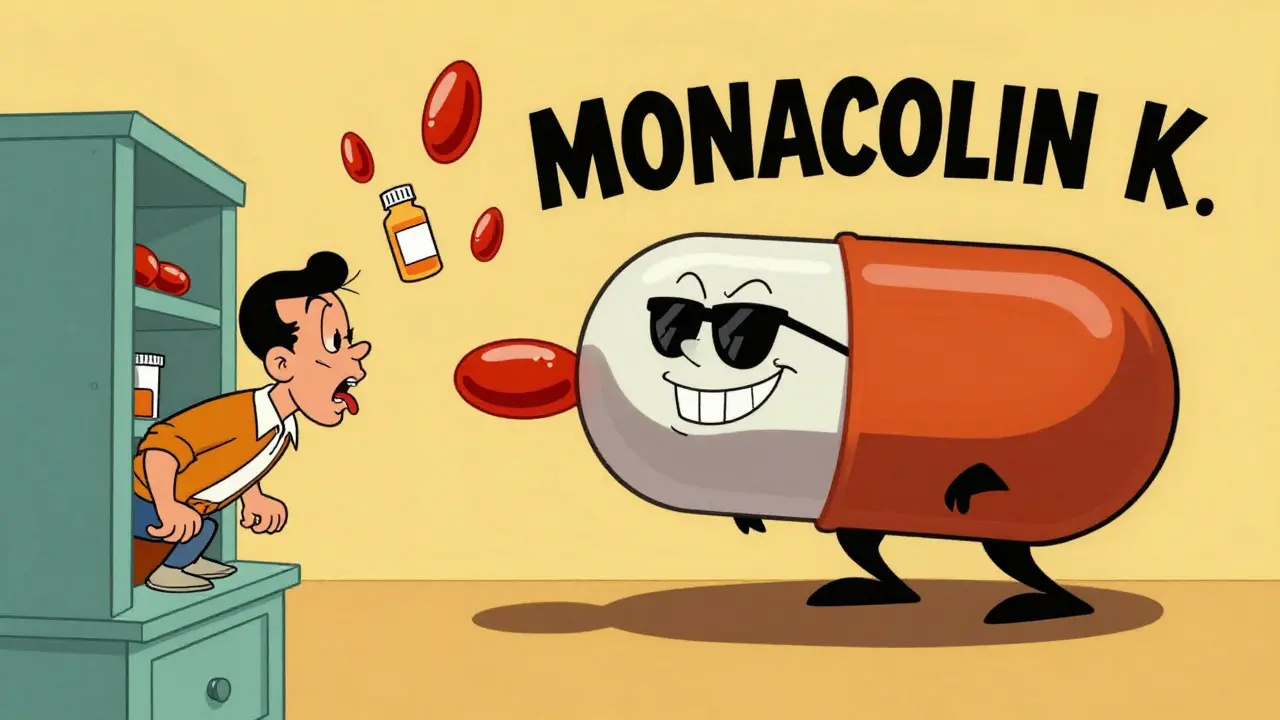
Red yeast rice contains monacolin K, which is identical to the active ingredient in statin medications. Combining both creates a dangerous overdose risk. This tool calculates your total monacolin K equivalent to help you avoid potentially harmful combinations.
Enter Your Medication Details
Results
Enter your medication details to see results
Many people turn to red yeast rice as a "natural" way to lower cholesterol-especially if they’ve had bad reactions to statins. But here’s the harsh truth: if you’re already taking a statin, adding red yeast rice isn’t a smart upgrade. It’s a recipe for serious muscle and liver damage. And the worst part? Most people don’t even realize they’re doubling down on the same drug.
What Is Red Yeast Rice, Really?
Red yeast rice isn’t some mystical herb. It’s white rice fermented with a mold called Monascus purpureus a fungus used in traditional Chinese medicine for centuries. Back in the 1970s, scientists discovered that this mold produces a compound called monacolin K chemically identical to lovastatin, the active ingredient in the prescription drug Mevacor. That’s not a coincidence-it’s the same mechanism. Both block HMG-CoA reductase, the enzyme your liver uses to make cholesterol.
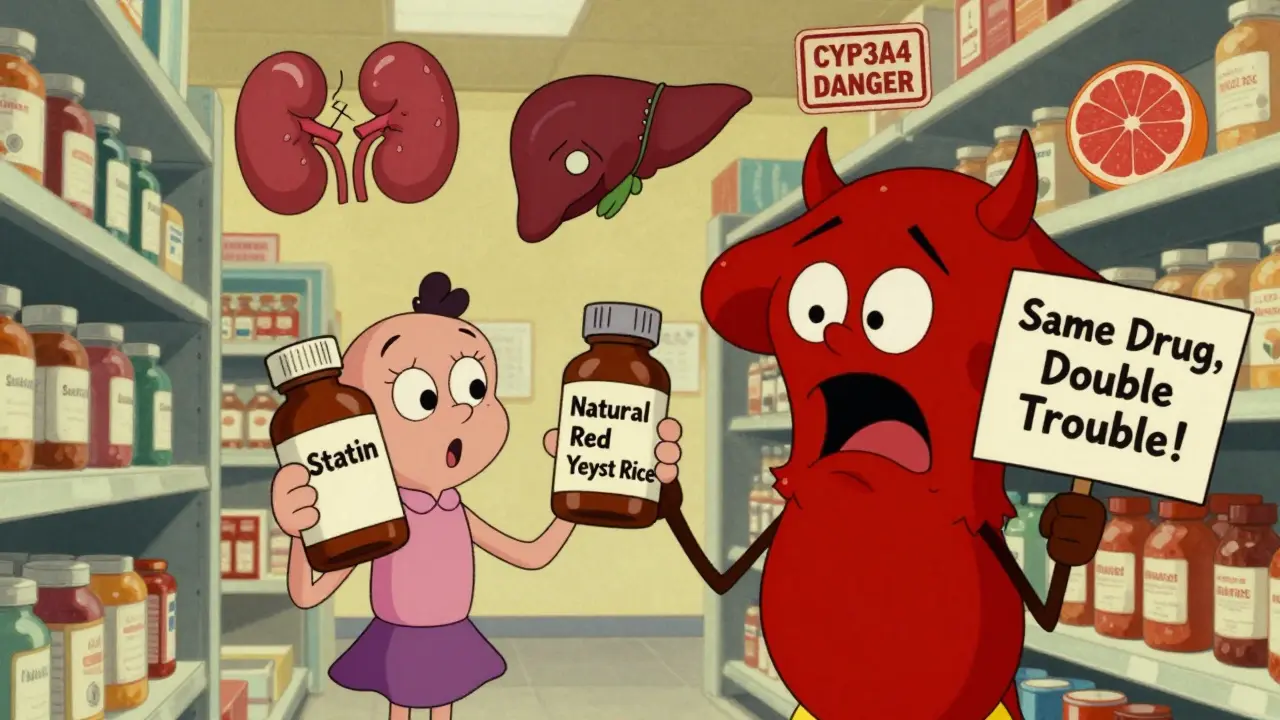
So if you’re taking a statin like atorvastatin or rosuvastatin, and you also take red yeast rice, you’re essentially taking two doses of the same drug. One from your pharmacy, one from your supplement bottle. There’s no "natural" advantage here-just double the risk.
Why the Dose Isn’t What You Think
Unlike prescription statins, which are made in controlled labs with exact dosages, red yeast rice supplements vary wildly. One bottle might have 3 mg of monacolin K. Another might have 12 mg. A third might have almost none. A 2022 analysis by ConsumerLab.com found only 30% of tested products matched their label claims. Some even contained toxic mold byproducts like citrinin, a kidney-damaging mycotoxin found in 25-30% of samples.
Prescription statins are dosed in clear increments: 10 mg, 20 mg, 40 mg. Red yeast rice? You’re guessing. A typical 1,200 mg capsule might contain 3-5 mg of monacolin K-roughly equivalent to 10-20 mg of lovastatin. But if you’re on 20 mg of atorvastatin and take a high-potency red yeast rice capsule, you’re hitting your liver with 30+ mg of HMG-CoA reductase inhibitors. That’s not therapy. That’s an overdose.
The Real Danger: Muscle and Liver Damage
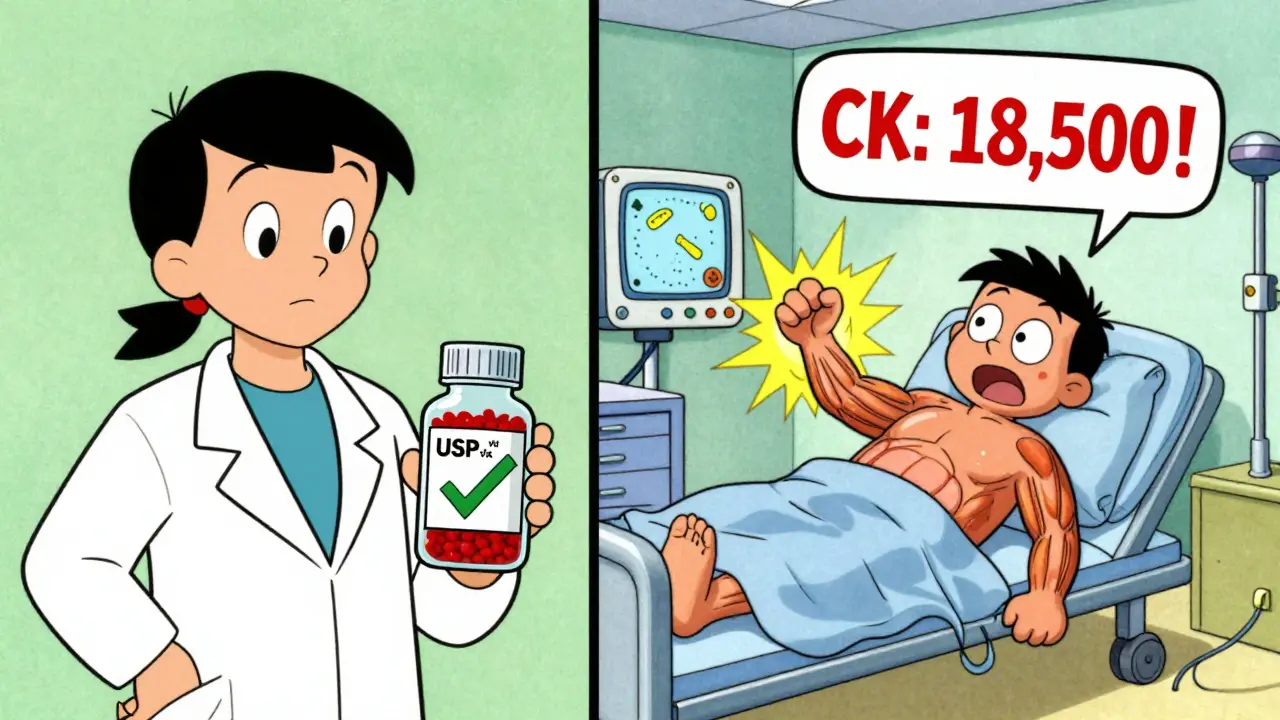
The most common side effect of statins is muscle pain. For most people, it’s mild. But when you combine red yeast rice with statins, that risk jumps 3.7 times, according to Mayo Clinic data. The result? Rhabdomyolysis-a condition where muscle tissue breaks down and floods your bloodstream with toxins. This can lead to kidney failure, liver injury, and even death.
Case reports are chilling. One Reddit user, "CardioWarrior99," shared how he ended up in the hospital after combining 1,200 mg of red yeast rice with 20 mg of atorvastatin. His creatine kinase (CK) levels hit 18,500 U/L. Normal is under 200. Another WebMD forum post from 2023 described an ALT liver enzyme level of 450 U/L (normal is under 40) after stacking both. These aren’t outliers. The FDA recorded 127 serious cases of muscle damage from this combo between 2018 and 2022-nearly triple the number from the prior five years.
Who Actually Benefits from Red Yeast Rice?
Red yeast rice isn’t the enemy. The problem is mixing it with statins. For people who truly can’t tolerate statins-about 7-29% of users-RYR can be a lifeline. A 2017 study in the Journal of Alternative and Complementary Medicine found 60% of statin-intolerant patients could tolerate 1,800 mg of red yeast rice daily, with LDL cholesterol dropping 25-30%. That’s comparable to low-dose statin therapy.
But here’s the catch: it only works as monotherapy. If you stopped statins because of muscle pain, and your doctor agrees you’re a candidate for RYR, then yes-go for it. But if you’re still on the statin? Stop. The benefit doesn’t outweigh the risk. You’re not getting "extra" cholesterol lowering. You’re just increasing your odds of ending up in the ER.
What Should You Do Instead?
If you’re statin-intolerant and looking for alternatives, there are safer, regulated options:
- Ezetimibe a non-statin pill that blocks cholesterol absorption in the gut
- PCSK9 inhibitors injectable drugs like evolocumab, proven to cut LDL by 60% with minimal side effects
- Bempedoic acid a newer oral option that works differently from statins
These options are FDA-approved, dosed precisely, and monitored with lab tests. Red yeast rice? No such luck. Even if you find a "reputable" brand, you’re still gambling with unregulated potency and contamination risks.
How to Stay Safe
If you’re considering red yeast rice:
- Stop statins first. Never take both together. If you’re on a statin, don’t touch RYR.
- Choose USP-verified products. Less than 15% of RYR supplements carry this seal, but it means they’ve been tested for monacolin K content and lack of citrinin.
- Start low. If your doctor approves RYR, begin with 600 mg daily and wait 8-12 weeks to check your cholesterol and liver enzymes.
- Get tested. Baseline liver function (ALT, AST) and CK levels before starting. Repeat at 3 months and annually.
- Avoid grapefruit. Like statins, RYR interacts with grapefruit juice and other CYP3A4 inhibitors (like certain antibiotics and antifungals), raising blood levels dangerously.
Why Do People Keep Using This Combo?
Because the marketing works. "All-natural," "no side effects," "doctor-recommended"-these phrases sell. And many doctors don’t ask about supplements. A 2021 Mayo Clinic study found 45% of patients didn’t tell their doctors they were taking red yeast rice. Why? They think it’s harmless. They’re wrong.
There’s also the cost factor. A month’s supply of RYR runs $15-$30. PCSK9 inhibitors cost $300+ a month. But if you’re risking kidney failure or hospitalization to save $285, you’re not saving-you’re losing.
The Bottom Line
Red yeast rice has a role in cholesterol management-but only for people who can’t take statins at all. For everyone else, it’s a dangerous gamble. The FDA doesn’t approve it as a drug. The American Heart Association says to avoid combining it with statins. Major medical centers like Kaiser Permanente ban it outright. And the evidence? Over 120 documented cases of severe injury in just four years.
If you’re on a statin and thinking of adding red yeast rice, don’t. Talk to your doctor about safer alternatives. If you’re already taking both, stop the supplement immediately and get your CK and liver enzymes checked. This isn’t about natural vs. pharmaceutical. It’s about safety. And when two drugs do the exact same thing, you don’t need both. You just need one-and you need to know exactly how much you’re taking.
Can I take red yeast rice if I’ve had muscle pain from statins?
Yes-but only if you’ve completely stopped the statin. Red yeast rice can be an effective alternative for statin-intolerant patients, with studies showing up to 60% tolerance in those who previously couldn’t handle statins. However, you must be under medical supervision, start with a low dose (600 mg daily), and get baseline liver and muscle enzyme tests. Never take it while still on a statin.
Is red yeast rice safer than statins?
Not necessarily. Prescription statins are standardized, tested, and monitored. Red yeast rice varies in potency, often contains contaminants like citrinin, and lacks consistent dosing. While some people tolerate RYR better than statins, the lack of regulation makes it riskier overall. The only time it’s "safer" is when used alone, not as a replacement for a statin you’re still taking.
How much monacolin K is in red yeast rice supplements?
It varies wildly-from undetectable levels to over 34 mg per gram. Most supplements contain 3-10 mg of monacolin K per daily dose. A typical 1,200 mg capsule usually delivers 3-5 mg, which is equivalent to 10-20 mg of lovastatin. But because labeling is unreliable, you can’t assume what’s in your bottle. Only USP-verified products guarantee accurate dosing.
Can I take red yeast rice with other cholesterol medications?
It depends. Red yeast rice should not be combined with any statin, regardless of type. It can also interact with other drugs that affect the CYP3A4 liver enzyme, including grapefruit juice, certain antibiotics (like clarithromycin), antifungals (like ketoconazole), and some heart medications. Always consult your doctor before combining RYR with any other medication or supplement.
Are there any long-term studies on red yeast rice safety?
Yes. A 2023 JAMA Cardiology study followed statin-intolerant patients taking red yeast rice alone for over 4 years and found a 47% reduction in major cardiac events. But crucially, the study excluded anyone taking statins. There are no long-term studies on combining RYR with statins because the risk is too high. The existing data shows clear dangers when used together.

Alec Stewart Stewart
February 4, 2026I was totally in the dark about this until my cousin ended up in the ER. 😅 She was taking RYR "to be natural" while on her statin. Turns out her CK was through the roof. Now she’s on ezetimibe and feels way better. Just... don’t mix them. It’s not worth it.
Caleb Sutton
February 4, 2026This is all Big Pharma fearmongering. They don’t want you to know you can get the same effect from a jar of rice. The FDA banned it for years then let it back in because they’re corrupt. Citrinin? Probably in your multivitamin too. They just want you hooked on $500/month injections.
pradnya paramita
February 4, 2026The pharmacokinetic overlap is non-trivial. Monacolin K is a potent HMG-CoA reductase inhibitor with a half-life of ~2 hours, identical to lovastatin. Concurrent administration leads to additive AUC exposure, significantly elevating the risk of myopathy. Monitoring CK and transaminases is mandatory if RYR is used monotherapeutically.
Katherine Urbahn
February 5, 2026I am absolutely appalled that anyone would consider self-medicating with an unregulated, potentially toxic, and inconsistently dosed supplement-especially when safe, scientifically validated alternatives exist. The irresponsibility here is staggering. You are not a ‘health warrior’ if you are gambling with your liver.
Jhoantan Moreira
February 6, 2026This is such an important post 🙏 Honestly, I wish more doctors asked about supplements. My aunt took RYR after stopping statins and her numbers improved without side effects. But she did it under supervision, got tested, and avoided grapefruit. It’s not about fear-it’s about smart choices. 💪
Joseph Cooksey
February 6, 2026Let’s be real. People don’t want to hear the truth. They want a magic pill they can buy off Amazon with a picture of a rice field and a Sanskrit word on the label. Meanwhile, the real solution? Lifestyle changes. Diet. Exercise. Sleep. But nooo, let’s just stack two versions of the same drug and call it ‘holistic.’ You’re not healing. You’re just delaying the inevitable hospital visit. And don’t even get me started on the ‘natural’ myth. Everything is chemical. Even water.
Justin Fauth
February 6, 2026America’s gone soft. Back in my day, if you had high cholesterol, you took the pill or you worked out. Now we’re out here mixing moon juice with prescription meds like it’s a TikTok trend. This isn’t wellness-it’s stupidity. And now we’re paying for it in ER bills. Fix your diet. Or take the statin. But don’t play Russian roulette with your kidneys.
Meenal Khurana
February 7, 2026I stopped statins due to muscle pain. My doctor approved RYR. Started at 600 mg. Tested at 3 months. LDL down 28%. No side effects. Just don’t combine.