
Medication Review Checklist
Your Medication Review Checklist
Prepare for your next doctor's visit with this checklist. Keep it handy when discussing your medications.
Important questions to ask your doctor
- Which of my medications are still necessary?
- Could any medication be causing my dizziness or confusion?
- Are any of my medications being prescribed just to treat side effects of others?
- Can we review my medications together with my specialist?
- What would happen if we stopped one of these medications?
Imagine taking 10 or more pills every day. Not just for a week - every single day. You wake up, sort through a dozen different bottles, try to remember which one is for your blood pressure, which one makes you dizzy, and which one you’re supposed to skip if you eat breakfast. You’re not alone. In Australia, nearly half of adults over 65 are taking five or more prescription drugs. And that number is climbing. This isn’t just about convenience - it’s about danger.
What Exactly Is Polypharmacy?
Polypharmacy isn’t a diagnosis. It’s a situation: when someone takes five or more medications regularly. That includes prescriptions, over-the-counter drugs, vitamins, and herbal supplements. It’s not always bad. Someone with heart disease, diabetes, and high blood pressure might need five meds to stay alive. That’s appropriate polypharmacy. But too often, it becomes inappropriate polypharmacy - where drugs are added without stopping others, or when side effects lead to more prescriptions just to fix the side effects.
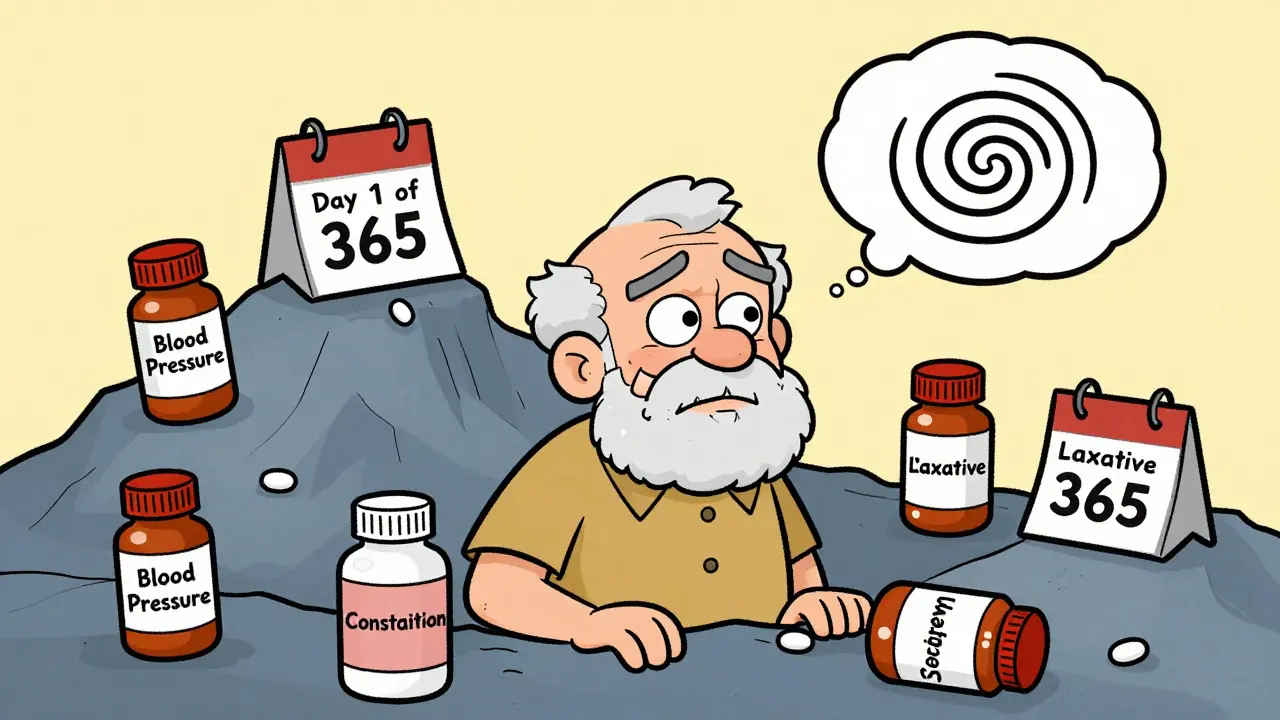
This is called a medication cascade. For example, a patient gets a blood pressure pill that causes dizziness. The doctor then prescribes a balance medication. That makes them constipated, so they get a laxative. Now they’re on four drugs for one original problem. The original issue? Maybe it was just the wrong dose. Or maybe the first drug wasn’t even needed.
Why More Drugs = More Risks
Each new medication doesn’t just add benefit - it adds risk. The body doesn’t handle multiple drugs the same way as it does one. As we age, our liver and kidneys slow down. That means drugs stick around longer, build up, and can turn harmless doses into toxic ones.
Here’s what happens when you take five or more meds:
- You’re 1.5 to 2 times more likely to fall - and break a hip.
- One in three people over 65 taking multiple drugs report confusion or memory issues.
- 42% of those on seven or more medications have trouble walking or moving normally.
- Patients on 10+ drugs are 28% more likely to die within five years than those on just one to four.
And it’s not just about physical harm. A 2022 Medicare survey found that 48% of people on five or more drugs believed they had a side effect from their meds. Nearly a third said they stopped going out with friends because they felt too tired, dizzy, or confused.
The Hidden Cost: Money and Mental Load
Let’s talk about money. If you’re on five to nine medications, you’re spending an average of $317 a month just on prescriptions. For someone on a fixed income, that’s a choice between medicine and groceries. Robert, 68, from Melbourne, told his doctor he was skipping his heart pill every other week because he couldn’t afford both his meds and his electricity bill.
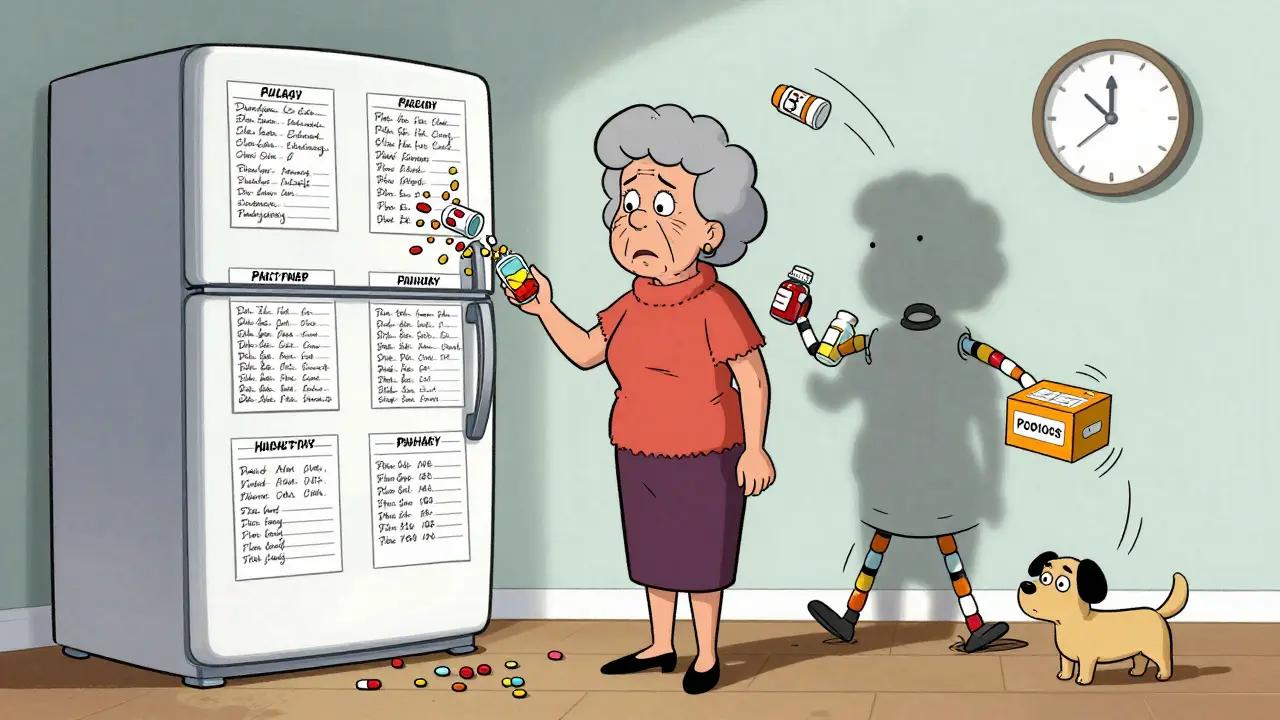
Then there’s the mental burden. Martha, 72, used to take 17 pills a day. She kept a chart on her fridge. But she’d still mix them up - took her blood thinner twice one morning. She ended up in the ER with bleeding. "I felt like a pharmacy on legs," she said. "Not a person. A pharmacy."
Studies show patients on 10+ drugs are over three times more likely to miss doses. Why? Complexity. Cost. Side effects. It’s overwhelming.
Who’s Most at Risk?
Older adults are the most affected - not because they’re careless, but because they’re often treated by multiple specialists. One doctor prescribes a statin. Another adds a sleep aid. A third gives a painkiller. None of them talk to each other. And your GP? They’re lucky if they get 15 minutes to review your entire list.
Women over 65 are more likely than men to be on five or more drugs. Why? They live longer, have more chronic conditions, and are more likely to be prescribed antidepressants, benzodiazepines, and anticholinergics - drugs that are especially risky for the brain.
And it’s not just seniors. People with multiple chronic conditions - like kidney disease, heart failure, and diabetes - are also at high risk. Their treatment plans can easily spiral into 10+ medications if not carefully managed.
What’s Being Done? Deprescribing
The answer isn’t to stop all meds. It’s to stop the ones that aren’t helping - or are hurting. That’s called deprescribing.
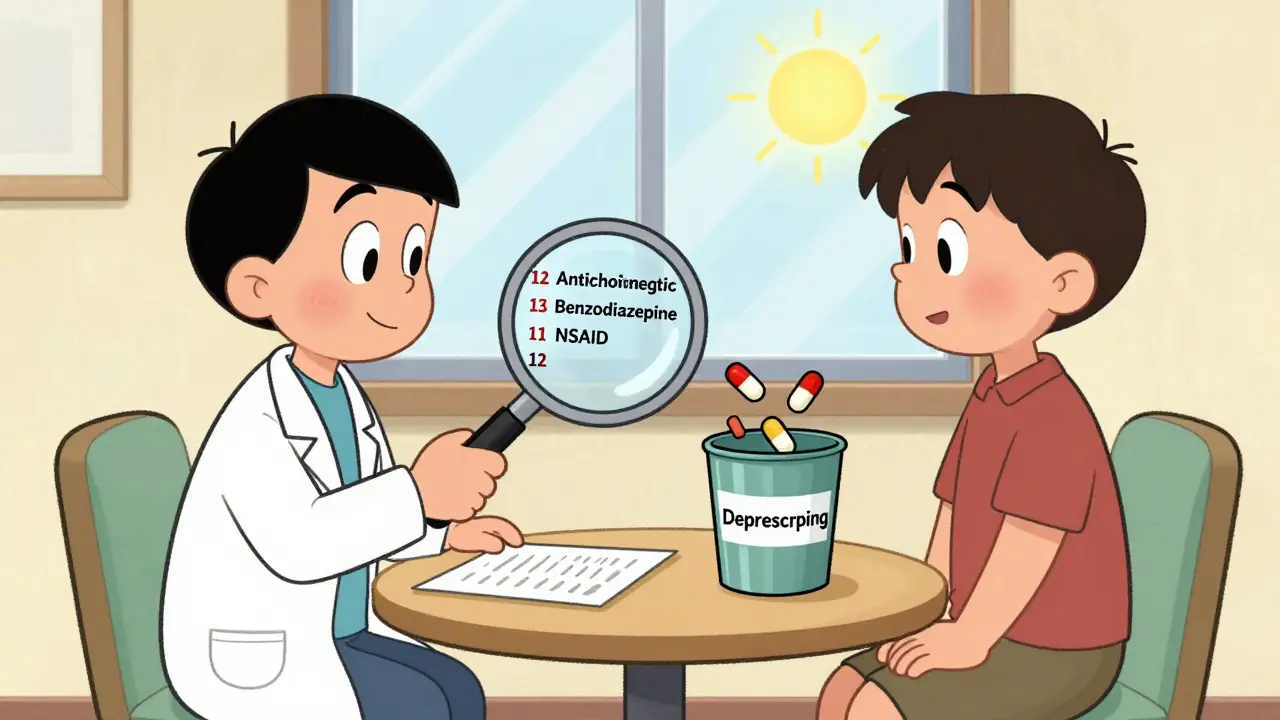
Deprescribing means reviewing every drug you take - not just prescriptions, but supplements, painkillers, and antacids - and asking: "Is this still necessary?"
It’s not easy. Patients often fear stopping a drug. "What if I get worse?" they ask. But here’s the truth: many side effects disappear within days or weeks of stopping the wrong pill.
One patient in Melbourne was taking 12 meds. After a six-month deprescribing plan, she stopped three - a sleep aid, a stomach pill, and an old blood pressure drug. Within two weeks, her dizziness vanished. She started walking again. Her monthly bill dropped from $480 to $210.
The process usually takes 3 to 6 months. It’s slow. It’s careful. It’s done with your doctor - not on your own.
How to Start the Conversation
If you’re on five or more meds, here’s what to do:
- Make a full list - every pill, every supplement, every cream or patch.
- Bring it to your GP or pharmacist. Ask: "Which of these are still necessary?"
- Ask specifically about anticholinergics, benzodiazepines, NSAIDs, and sleeping pills - these are the top three culprits for side effects in older adults.
- Ask if any drug is being used just to treat a side effect of another drug.
- Request a medication review at least once a year - especially if you’ve seen multiple specialists.
Don’t be afraid to say: "I think I’m taking too much. Can we simplify this?"
The Bigger Picture
This isn’t just a personal problem - it’s a system failure. In Australia, only 12% of medical schools teach students how to safely reduce medications. Most GPs say they don’t have enough time or tools to do it right. Medicare has started requiring reviews for people on eight or more drugs, but that’s still too late for many.
Technology is helping. A new tool called MedWise, approved by the FDA in 2022, helps doctors spot dangerous drug combinations before they’re prescribed. But tools won’t fix the problem unless we change how we think about pills.
Medications aren’t trophies. More isn’t better. Sometimes, less is lifesaving.
What You Can Do Today
Don’t wait for a crisis. Take action now:
- Keep a written or digital list of all your meds - including doses and why you take them.
- Use a pill organizer - but don’t let it replace checking with your doctor.
- Ask your pharmacist to review your list during your next refill.
- If you feel dizzy, tired, confused, or unsteady - ask if a medication could be the cause.
- Don’t stop a drug on your own. But do ask: "Can we try going off this one?"
Polypharmacy isn’t inevitable. It’s a choice - made by doctors, patients, and a system that rewards prescribing over pausing. But you have power. Your health isn’t measured by how many pills you take. It’s measured by how well you live.
Is taking five or more medications always dangerous?
No. Some people need five or more medications to manage serious conditions like heart failure, diabetes, or after a heart attack. When these drugs are carefully chosen, monitored, and work together to improve health, it’s called appropriate polypharmacy. The danger comes when medications are added without reviewing what’s already being taken - or when they’re prescribed to treat side effects of other drugs.
What are the most dangerous types of medications in polypharmacy?
Anticholinergics (used for allergies, overactive bladder, depression), benzodiazepines (sleep and anxiety meds like diazepam), and NSAIDs (like ibuprofen or naproxen) are the top three risky classes. These drugs are linked to confusion, falls, kidney damage, and bleeding. The American Geriatrics Society specifically warns against long-term use of these in older adults. Even OTC painkillers can be dangerous when taken daily with other meds.
Can I stop my medications on my own if I feel side effects?
Never stop a prescribed medication without talking to your doctor or pharmacist first. Some drugs, like blood pressure or antidepressant meds, can cause serious withdrawal symptoms if stopped suddenly. But you absolutely should speak up if you’re feeling dizzy, confused, or unusually tired. Ask: "Could this be from one of my pills?" and "Can we try reducing or stopping one?"
How long does deprescribing take?
Deprescribing isn’t fast. It usually takes 3 to 6 months. Some drugs can be stopped quickly, others need to be tapered slowly over weeks. The goal is safety - not speed. Your doctor will monitor how you feel after each reduction. Many people notice improvements in energy, balance, and mental clarity within just a few weeks of stopping an unnecessary drug.
Is there a tool to help track my medications?
Yes. The Australian Government’s My Health Record lets you upload your full medication list. You can also use free apps like Medisafe or MyTherapy to track doses, set reminders, and share your list with your doctor. But no app replaces a face-to-face review. Bring your list - digital or paper - to every appointment.
Why don’t doctors do more deprescribing?
Many doctors want to - but they’re not trained to. Only 12% of Australian medical schools include formal training on deprescribing. Time is also a barrier. A proper medication review takes 25 to 40 minutes - longer than most GP appointments. Plus, patients often expect a prescription. Saying "no" or suggesting a reduction can feel uncomfortable. But change is coming. Programs like Choosing Wisely are helping doctors ask better questions and reduce unnecessary prescribing.

Sandeep Jain
December 25, 2025i had my grandpa on like 14 pills a day and he just kept falling. one day he stopped taking the sleep med ‘cause he forgot and suddenly he was walking like a 40 year old. no joke. doctors just keep adding, never subtracting. why?
Brittany Fuhs
December 27, 2025This is precisely why America’s healthcare system is broken. In Germany, they have mandatory medication reviews every six months for seniors. Here? We let doctors prescribe like they’re running a pharmacy sale. It’s not just negligence-it’s cultural decay.
Fabio Raphael
December 27, 2025I’ve seen this with my mom. She was on 11 meds-blood pressure, cholesterol, anxiety, acid reflux, sleep, joint pain, vitamins, supplements, eye drops, a patch, and a cream. We sat down with her pharmacist and cut 4 of them. Within 10 days, she stopped zoning out during conversations. She started gardening again. It wasn’t magic. It was just… removing the noise.
Why don’t we treat meds like ingredients in a soup? Too many spices and you can’t taste the broth anymore.
Amy Lesleighter (Wales)
December 28, 2025more pills dont mean better care
its like filling a glass with water until it overflows
then blaming the glass for leaking
we need to stop thinking meds are the answer
and start asking what the problem really is
Becky Baker
December 29, 2025Why are we letting foreigners run our healthcare? In China, they don’t even let old people take more than three pills unless a committee approves it. We’re weak. We give out pills like candy. Fix the system or we’re all gonna be zombies on a pharmacy treadmill.
Sumler Luu
December 30, 2025My aunt took 15 pills. She didn’t tell anyone because she was scared they’d take away her independence. When we finally sat down with her doctor, we cut 5. She cried because she said she felt ‘lighter.’ Not healthier. Lighter. That’s the real cost.
It’s not just the drugs. It’s the shame.
sakshi nagpal
December 30, 2025in india, many elderly take ayurvedic supplements with their prescriptions and no one tracks it. the interactions are terrifying. my uncle was on warfarin and took turmeric daily-ended up in hospital with internal bleeding. doctors never ask about ‘natural’ remedies. they should.
we need a simple form at every pharmacy: ‘what else are you taking?’ just one question could save lives.
Nikki Brown
January 1, 2026Anyone who takes more than five pills without a PhD in pharmacology is a walking disaster. 😒 I’ve seen people on 10+ meds and they wonder why they’re exhausted? DUH. It’s not ‘polypharmacy’-it’s poor life choices. Stop being lazy. Eat better. Walk more. Stop self-medicating with antidepressants because you hate your job. 🙄