
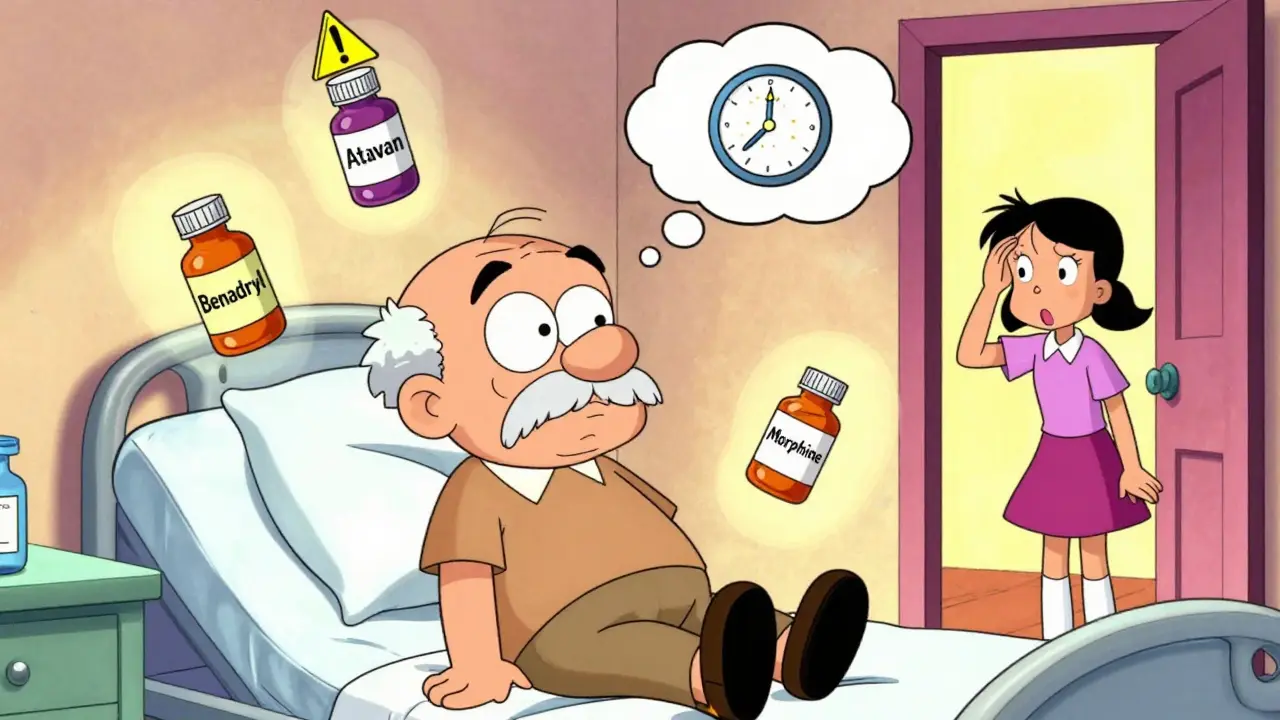
Every year, over 2.6 million older adults in the U.S. develop delirium in the hospital - and nearly half of those cases are caused by medications. It’s not dementia. It’s not just getting older. It’s sudden confusion, memory loss, or strange behavior that shows up in hours or days, often after a new pill is started. For many families, it’s a terrifying surprise: Grandpa was fine yesterday, and today he doesn’t recognize his own daughter. This isn’t normal aging. This is medication-induced delirium, and it’s one of the most preventable, yet overlooked, dangers in senior care.
What Exactly Is Medication-Induced Delirium?
Delirium is a sudden, fluctuating change in mental state. Think of it like a brain glitch - attention gets fuzzy, thinking slows down, and awareness of surroundings slips in and out. Unlike dementia, which progresses slowly over years, delirium hits fast. It can make someone agitated and restless, or quiet and withdrawn. The problem? Many doctors and even caregivers mistake it for depression, dementia, or just being "tired."
Medications are the #1 reversible cause. A 2023 study from the American Geriatrics Society found that 20% of hospitalized seniors over 65 develop delirium because of drugs. That number jumps to 80% in ICU patients. And here’s the kicker: once delirium sets in, hospital stays get longer by an average of eight days. Mortality rates double. Recovery takes months - and many never fully bounce back.
The Top Culprits: Which Medications Trigger Delirium?
Not all drugs are created equal. Some are far more dangerous for older brains. The biggest offenders fall into three categories:
- Anticholinergics - These block a brain chemical called acetylcholine, which is critical for memory and focus. Common ones include diphenhydramine (Benadryl), oxybutynin (for overactive bladder), and amitriptyline (an old antidepressant). Every extra anticholinergic drug a senior takes raises delirium risk. Studies show that taking three or more of these drugs increases risk by 4.7 times.
- Benzodiazepines - Lorazepam (Ativan), diazepam (Valium), and other sedatives are often given for anxiety or sleep. But they dramatically increase delirium odds. One study found patients on benzodiazepines had a 3.0 times higher risk of delirium. In the ICU, they extend delirium by over two days. The American Geriatrics Society says these should only be used for seizures, alcohol withdrawal, or end-of-life care.
- Opioids - Pain meds like morphine and meperidine are common after surgery. But meperidine is especially risky because its metabolite, normeperidine, overstimulates the brain. Hydromorphone, on the other hand, causes 27% less delirium at the same pain-relieving dose.
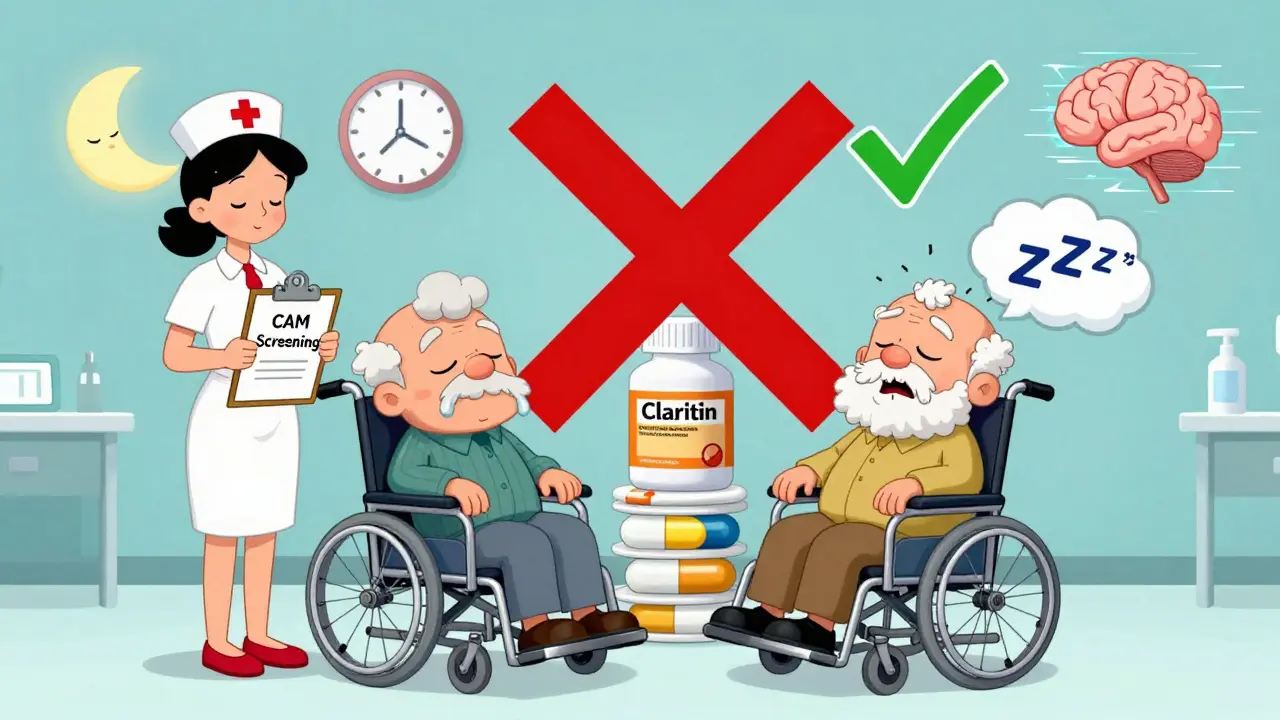
Even OTC meds matter. A 2020 study found that 89% of families noticed a sudden personality shift in their loved one within 48 hours of starting a high-risk medication - often something as simple as Benadryl for allergies or sleep. First-generation antihistamines like diphenhydramine are 1.8 times more likely to worsen delirium than second-generation ones like loratadine (Claritin).
Why Hypoactive Delirium Is the Silent Killer
Not everyone with delirium is yelling or pacing. In fact, 72% of cases in older adults are hypoactive - meaning they’re quiet, sleepy, or unresponsive. These patients stare blankly, don’t answer questions, or seem "just tired."
That’s the danger. Nurses and family members assume they’re recovering, resting, or just getting older. But hypoactive delirium is just as dangerous as the hyperactive kind - maybe more so, because it’s missed. Studies show 70% of hypoactive cases go undiagnosed. And when it’s missed, treatment is delayed. The longer delirium lasts, the worse the outcome. Patients with dementia who develop medication-induced delirium stay confused for an average of 8.2 days - nearly double the time of those without dementia.
Who’s Most at Risk?
Age isn’t the only factor. The older you are, the higher the risk. Seniors over 85 are 2.3 times more likely to develop medication-induced delirium than those aged 65-74. Other high-risk groups include:
- People with existing dementia or memory problems
- Those taking five or more medications (polypharmacy)
- Patients with kidney or liver disease - their bodies can’t clear drugs as well
- Those who’ve had delirium before
Genetics also play a role. New research from UC San Francisco shows that people with the APOE4 gene variant - which is linked to Alzheimer’s - have a 2.1 times higher risk of prolonged delirium. This isn’t routine testing yet, but it’s a sign that personalized medicine could change how we prescribe.
How to Prevent It - Step by Step
Here’s the good news: medication-induced delirium is one of the few hospital-acquired conditions we can actually stop. Prevention starts with three key actions:
- Review every medication - Before any new drug is prescribed, ask: "Is this really necessary?" Use the Anticholinergic Cognitive Burden (ACB) scale. A score of 3 or higher means high risk. The American Geriatrics Society’s Beers Criteria® lists 56 drugs to avoid in seniors, including diphenhydramine, oxybutynin, and even ciprofloxacin (an antibiotic with unexpected brain effects).
- Switch to safer alternatives - Replace Benadryl with loratadine. Swap morphine for hydromorphone. Use non-drug pain relief like ice, heat, or physical therapy. A 2019 meta-analysis showed multimodal pain control (acetaminophen + physical therapy) cuts opioid use by 37%, lowering delirium risk.
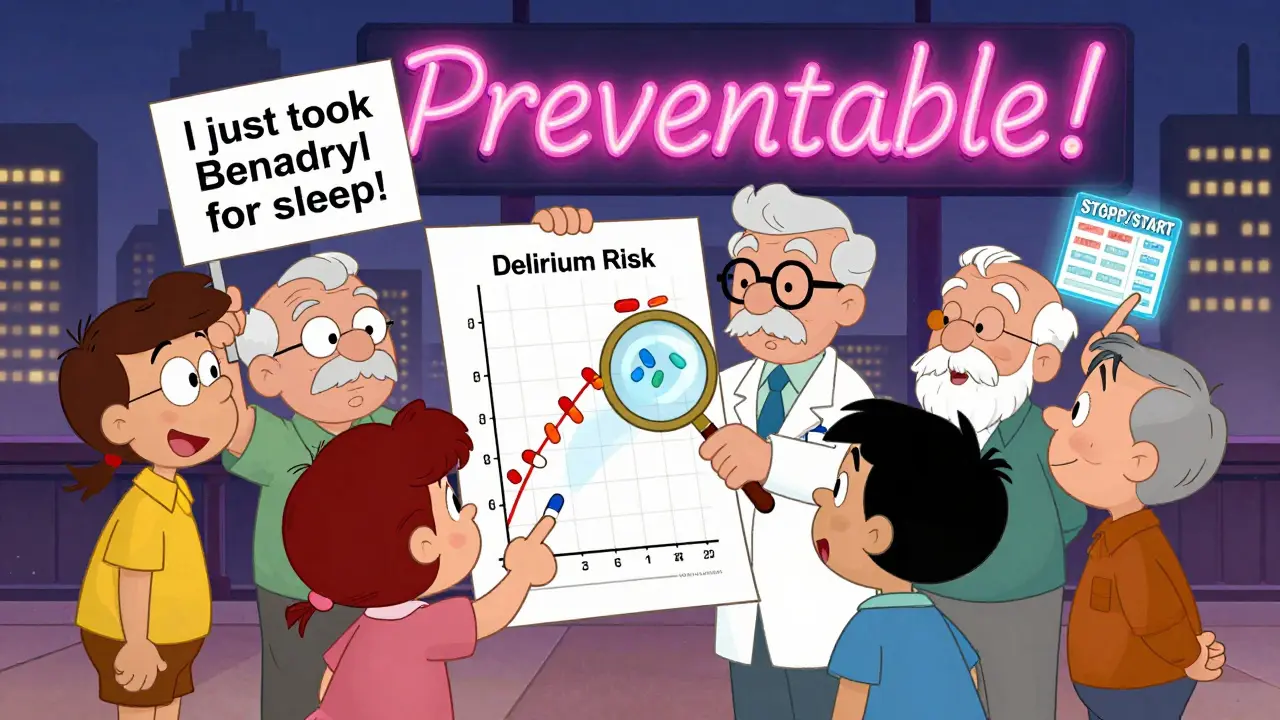
- Use the STOPP/START criteria - This is a tool doctors use to find inappropriate medications and spot missing ones. Hospitals using this method cut delirium rates by 26% in a 2018 study.
For patients already on high-risk drugs, don’t stop abruptly. Taper slowly over 7-14 days. Sudden withdrawal from benzodiazepines can trigger delirium tremens - a life-threatening condition.
What Hospitals Are Doing - And What They’re Not
The Hospital Elder Life Program (HELP), created by Dr. Sharon Inouye at Yale, cuts delirium by 40% using simple, non-drug strategies: keeping patients oriented, getting them out of bed, ensuring sleep, and avoiding sedatives. Yet, only 68% of U.S. hospitals have formal delirium protocols. Even fewer use the Confusion Assessment Method (CAM), the gold standard screening tool. Hospitals that do screen with CAM see 32% fewer cases.
But here’s the gap: only 35% of hospital staff can correctly identify hypoactive delirium. That’s why families need to be advocates. If your loved one suddenly seems off after a new medication - even if they’re quiet - speak up. Ask: "Could this be delirium? What drugs were recently started?"
The Hidden Cost - And Why This Matters
Medication-induced delirium isn’t just a medical issue - it’s a financial crisis. In the U.S., it adds $164 billion to healthcare costs every year. The Centers for Medicare & Medicaid Services (CMS) now classifies hospital-acquired delirium as a "never event" - meaning they won’t pay extra for complications it causes.
And with the U.S. senior population expected to grow from 56 million to 80 million by 2040, cases will surge by 2.3 times. The FDA just required stronger warnings on anticholinergic labels. The National Institute on Aging is funding real-time drug risk alerts in electronic health records. AI tools are being tested to predict delirium risk with 84% accuracy.
But until every hospital screens, every doctor questions, and every family speaks up, this preventable crisis will keep happening.
Can over-the-counter meds like Benadryl cause delirium in older adults?
Yes. First-generation antihistamines like diphenhydramine (Benadryl) have strong anticholinergic effects and are among the most common triggers of medication-induced delirium in seniors. Studies show they increase delirium severity by 1.8 times for every unit of anticholinergic burden. Safer alternatives like loratadine (Claritin) or cetirizine (Zyrtec) have minimal anticholinergic activity and should be used instead.
How long does it take for medication-induced delirium to show up after starting a drug?
It varies by drug. Benzodiazepines like lorazepam often cause symptoms within 24 to 72 hours - about 78% of cases appear this quickly. Anticholinergics like oxybutynin or amitriptyline may take longer, typically 3 to 7 days. This delay is why families often miss the connection: the change seems to happen "out of nowhere," but it’s tied to a recent medication change.
Is delirium the same as dementia?
No. Dementia is a slow, progressive decline in memory and thinking that happens over years. Delirium is sudden - it starts in hours or days and fluctuates throughout the day. Someone with dementia can still have delirium on top of it, and the combination is especially dangerous. Delirium is reversible if caught early; dementia is not.
Why is hypoactive delirium more dangerous than hyperactive?
Because it’s missed. Hyperactive delirium - with agitation, yelling, or restlessness - is obvious and gets attention. Hypoactive delirium, where the person is quiet, sleepy, or withdrawn, is often mistaken for depression, fatigue, or normal aging. Since it’s not recognized, treatment is delayed. This leads to longer hospital stays, worse recovery, and higher death rates. In fact, 72% of medication-induced cases in seniors are hypoactive.
What should I do if I suspect a loved one has medication-induced delirium?
First, check recent medication changes - especially within the last 72 hours. List every drug, including OTCs and supplements. Ask the medical team: "Could this be delirium? What’s the anticholinergic burden?" Request a review using the Beers Criteria or ACB scale. Push for non-drug alternatives. Don’t accept "it’s just aging." Delirium is a medical emergency, not a normal part of growing older.

Alex Brad
March 2, 2026Medication-induced delirium is way more common than people realize. I saw it happen to my dad after they gave him Benadryl for sleep. He went from sharp as a tack to confused and withdrawn in 48 hours. Never again.
Renee Jackson
March 3, 2026This is an exceptionally well-researched and vital piece of information. The data presented here should be mandatory reading for all healthcare professionals who care for older adults. The prevention strategies outlined are not just recommendations-they are ethical imperatives.
RacRac Rachel
March 4, 2026I’m so glad this is getting attention 🙏 I work in a nursing home and see this ALL the time. A simple switch from diphenhydramine to loratadine can make the difference between a confused, scared senior and someone who recognizes their grandkids. Small changes = huge impact 💯
Jane Ryan Ryder
March 5, 2026So we’re supposed to believe Big Pharma is poisoning our grandparents on purpose? 🤡 Next you’ll say aspirin causes dementia. Wake up.
Callum Duffy
March 5, 2026A sobering and meticulously detailed account. The statistical correlations are compelling, particularly regarding polypharmacy and the ACB scale. In the UK, we have similar concerns, though awareness remains patchy across primary care. This should inform national prescribing guidelines.
Chris Beckman
March 5, 2026I read this whole thing and honestly i think its just fearmongering. People get confused when they get sick. Its not always the meds. My uncle took benadryl for years and never had an issue. Stop scaring people.
Levi Viloria
March 7, 2026It’s fascinating how culture shapes medical perception. In some communities, elders are expected to be quiet and withdrawn-that’s just how they ‘age.’ But this piece challenges that narrative. Delirium isn’t dignity-it’s a treatable condition. We owe our elders better than silence.
Richard Elric5111
March 7, 2026The ontological rupture between cognitive decline and iatrogenic disturbance reveals a profound epistemological failure within contemporary geriatric medicine. We have pathologized the temporal discontinuity of consciousness as a pharmacological artifact, when in fact, it is the manifestation of a systemic disregard for the phenomenological integrity of the elderly subject.
Dean Jones
March 8, 2026I’ve spent over 20 years working in hospital pharmacy, and let me tell you, this problem is systemic and it’s been ignored for decades. We’re not talking about a few bad apples here-we’re talking about entire protocols built on outdated assumptions. I’ve seen patients on five anticholinergics because no one bothered to cross-reference their med list. I’ve watched families cry because they thought their loved one was ‘just getting old.’ The Beers Criteria has been around since 1997. Why aren’t we using it? Why aren’t EHRs auto-flagging these combinations? Why do we still let nurses give Benadryl like it’s candy? It’s not negligence-it’s institutional laziness. And it’s killing people. The 164 billion dollar cost? That’s not just financial. It’s moral. We have the tools. We have the data. We just lack the will. And until we change that, nothing will change.
Betsy Silverman
March 10, 2026Thank you for writing this. My mom had hypoactive delirium after her hip surgery. They said she was just tired. I knew something was off. Took me three days to get someone to listen. When they finally reviewed her meds, they realized she’d been on oxybutynin for years-never told anyone. Switched her to a patch. She came back to us within 72 hours. This isn’t theoretical. It’s personal.