
Medication Itch Risk Assessment Tool
This tool helps identify potential medication-related itching based on factors discussed in the article. Enter your medications and details below for personalized risk assessment.
Risk Assessment Results
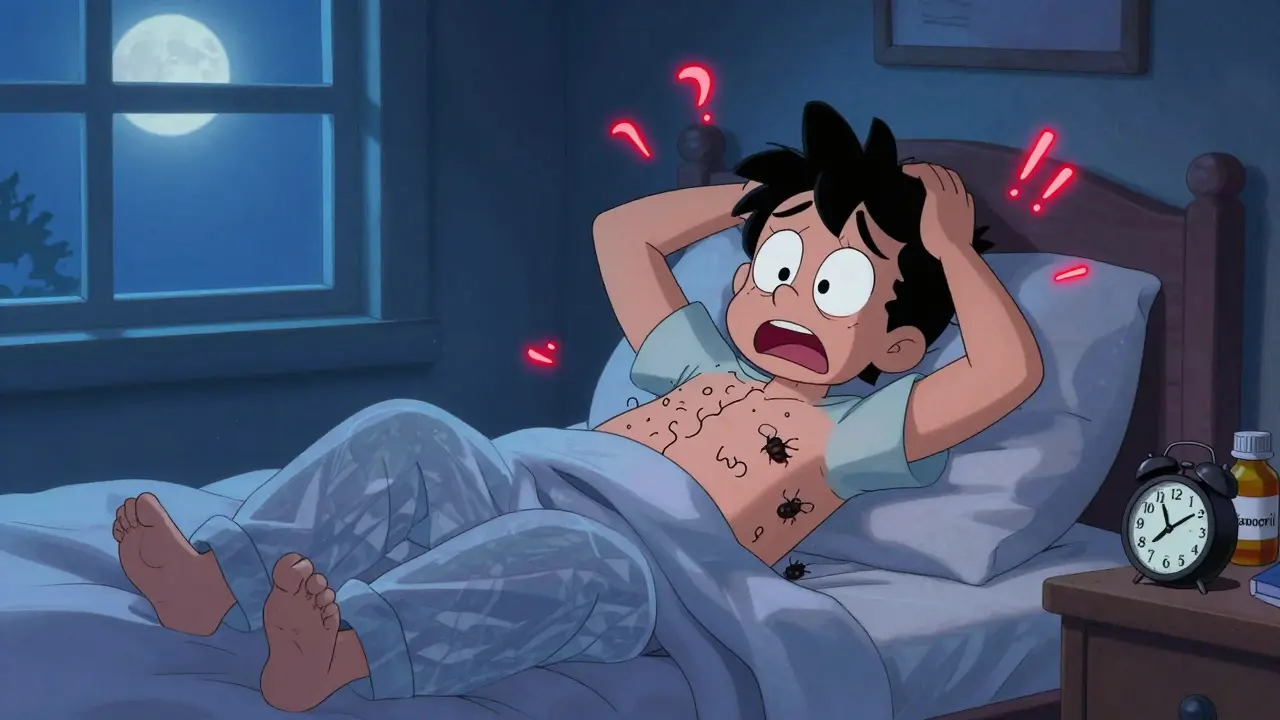
Itching isn’t always a rash or dry skin. Sometimes, it’s your medicine. If you’ve started a new pill, patch, or injection and suddenly can’t stop scratching-especially if nothing else has changed-you’re not imagining it. Drug-induced pruritus, or itching caused by medications, is more common than most people realize. It doesn’t always come with a visible rash. It can feel like bugs crawling under your skin, or a deep, unrelenting burn that gets worse at night. And while it might seem harmless, it can be so severe that it disrupts sleep, makes you anxious, or even leads to hospital visits.
What Medications Cause Itching?
Almost any drug can trigger itching, but some are far more likely than others. Antibiotics like penicillin and tetracycline are common culprits. So are blood pressure meds, especially ACE inhibitors and ARBs (like lisinopril or losartan). Statins for cholesterol-atorvastatin, rosuvastatin-are frequently reported. Even common painkillers like aspirin, ibuprofen, and morphine can cause it. Antidepressants, especially older tricyclics, and anti-seizure drugs like carbamazepine also show up often in reports.
One of the most surprising triggers? Antihistamines themselves. Yes, the very drugs meant to stop itching can cause it when you stop taking them. Between 2017 and 2023, the FDA recorded 209 cases of severe itching after people stopped taking cetirizine or levocetirizine. In 90% of those cases, the itching went away when they restarted the medication. That’s not a fluke-it’s a recognized reaction. And it’s not rare: 92% of people who had this reaction had been on the drug for more than three months, sometimes for years.
Why Does This Happen?
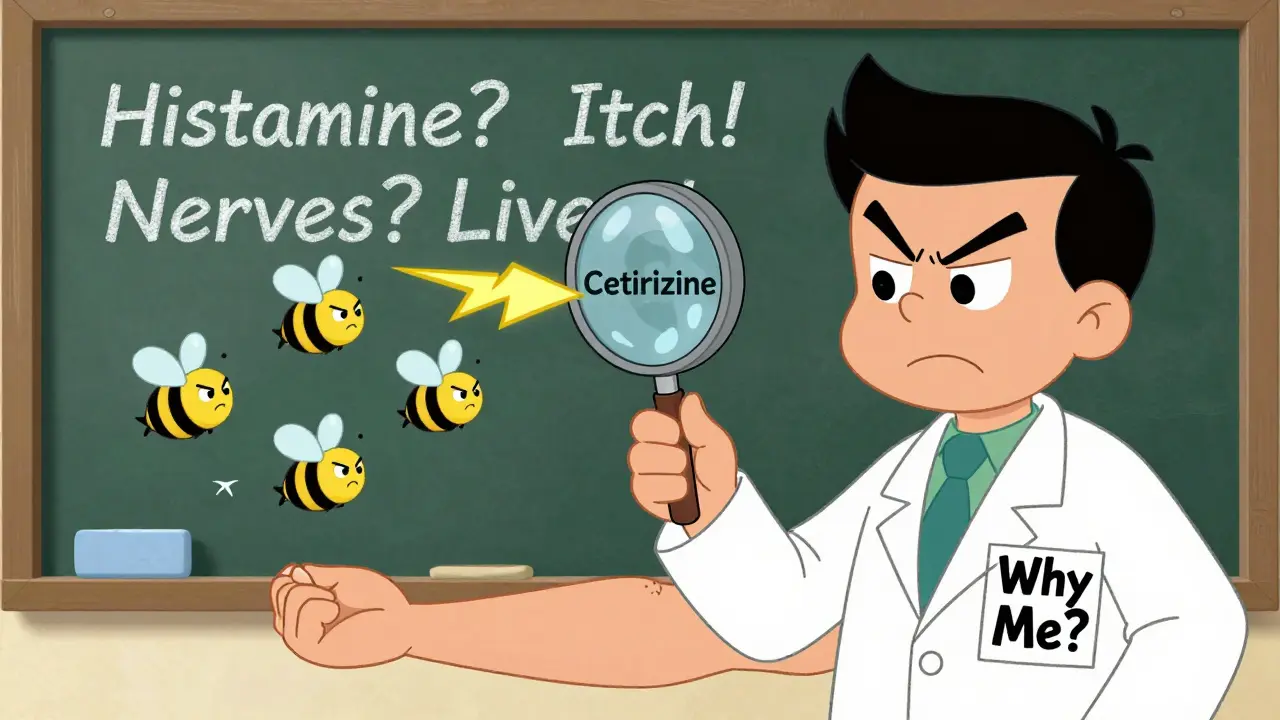
Not all itching is the same. Some drug-induced itching is caused by histamine release-the same chemical that triggers allergies. That’s why antihistamines like loratadine or diphenhydramine often help. But many cases aren’t histamine-related at all. Opioids like morphine activate receptors in the spinal cord and brain that directly trigger itch signals, even without histamine. Chloroquine, used for malaria, causes itching in up to 90% of Black African patients, likely due to genetic differences in how the skin responds. Hydroxyethyl starch, used in IV fluids during surgery, can cause itching that lasts up to 15 months.
Some drugs cause itching by affecting the liver. Statins and certain antibiotics can lead to mild cholestasis-where bile builds up in the liver and spills into the bloodstream. Bile acids irritate nerve endings in the skin, causing deep, persistent itch. Others dry out your skin, making it more sensitive. And then there are immune reactions: delayed hypersensitivity can cause itching days or weeks after starting a drug, even if you’ve taken it before without issue.
Who’s Most at Risk?
It’s not just about the drug-it’s about you. Studies show women are more likely to experience drug-induced itching than men. In one large Johns Hopkins study, 70% of patients with medication-related itching were female, compared to 58% of those without it. Black patients are also at higher risk. The same study found 40% of affected patients were Black, compared to just 23% in the general group. That’s significant. And it’s not just skin deep-it’s biological. Genetic differences in how your body processes drugs or how your nerves respond to chemicals play a big role.
Duration matters too. The longer you take a drug, the higher your risk. The FDA found that 92% of antihistamine withdrawal cases involved use longer than three months. That means someone taking cetirizine daily for a year or more might be fine-until they stop. Then, boom: itching starts within two days. It’s not an allergy. It’s a physiological adaptation. Your body gets used to the drug, and when it’s gone, the system overreacts.
How Is It Diagnosed?
There’s no blood test for drug-induced pruritus. Diagnosis is all about timing and elimination. Your doctor will ask: When did the itching start? What medications did you begin or change around that time? Did you stop anything recently? Did you try anything new-like a supplement or a different soap? They’ll also look for patterns. If the itching got worse after starting a new statin and improved after stopping it, that’s a strong clue.
For suspected antihistamine withdrawal, doctors may suggest restarting the drug briefly to see if symptoms return. If they do, and then go away again when you taper off slowly, that confirms the diagnosis. This isn’t something you should try on your own. But it’s a standard clinical tool. In one study, 71 out of 79 people who restarted cetirizine saw their itching vanish. Only 38% of those who tried tapering after restarting fully resolved symptoms-but that’s still better than nothing.
What Can You Do About It?
If your itching is mild and you’re not on a life-saving drug, stopping the medication might be the simplest fix. But that’s not always possible. If you’re on a blood pressure pill or an antidepressant, you can’t just quit. So what then?
Topical treatments help. Moisturizers with ceramides or colloidal oatmeal soothe dry, irritated skin. Capsaicin cream-yes, the stuff from chili peppers-can desensitize nerve endings over time. Low-strength steroid creams (like hydrocortisone) work for localized itching, but avoid long-term use on thin skin.
Oral options depend on the cause. If histamine is involved, non-drowsy antihistamines like cetirizine or fexofenadine can help. But if it’s not histamine-driven, they won’t touch it. For nerve-related itch, antidepressants like amitriptyline or doxepin are surprisingly effective. They don’t fix your mood-they block itch signals in the brain. Gabapentin, usually used for nerve pain, also works for stubborn drug-induced itching. In severe cases, doctors may use naltrexone (an opioid blocker) or even immunosuppressants.
For opioid-induced itching, adding an antihistamine like diphenhydramine often helps. But the best fix? Switching to a different opioid or using a different route of delivery. Spinal morphine causes way more itching than IV or oral forms.
What About Antihistamine Withdrawal?
This is the most misunderstood form of drug-induced pruritus. People think they’re allergic to antihistamines because they get itchy after stopping them. They’re not. They’ve developed a physical dependence. Your body adjusts to the constant presence of the drug. When it’s gone, your histamine system goes into overdrive. That’s why restarting the drug works so well.
The FDA now requires warning labels on cetirizine and levocetirizine packages. They say: "Severe itching may occur after stopping this medication, especially after long-term use. Symptoms may include disability, hospitalization, or suicidal thoughts." That’s serious. And it’s real. In the 209 cases reported, 48 people became disabled by the itching. Three were hospitalized. Two had thoughts of self-harm.
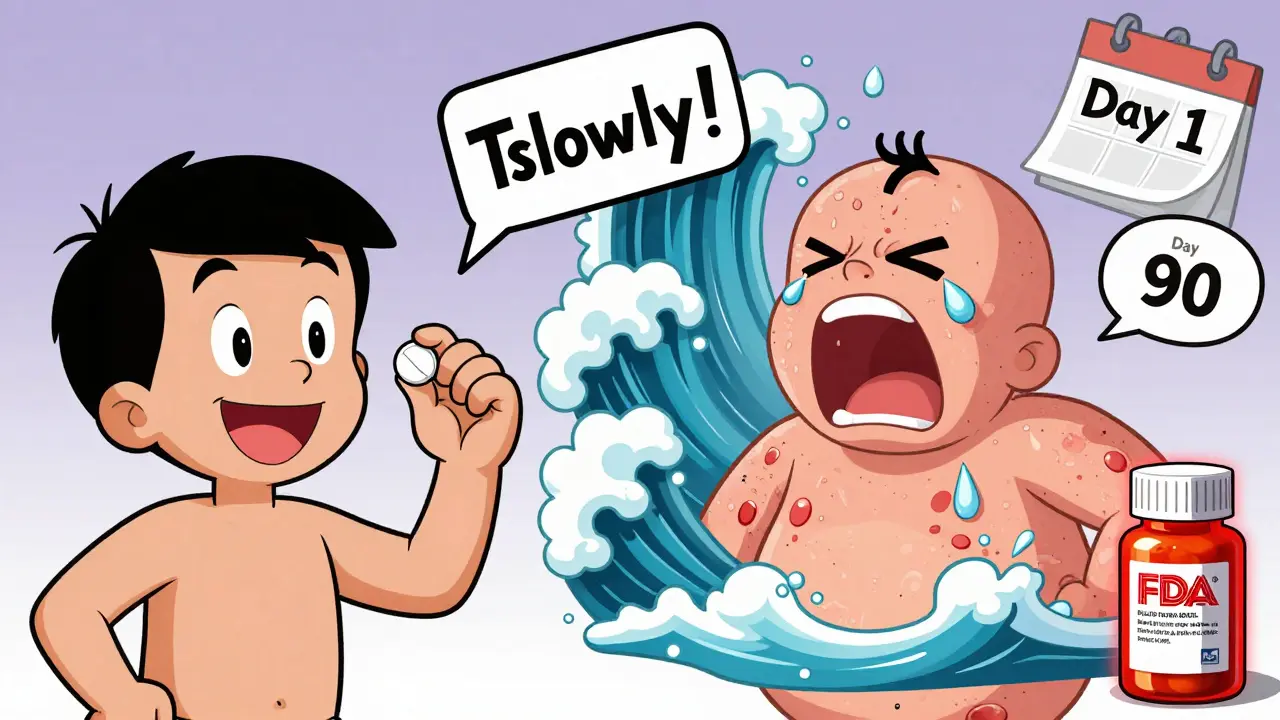
If you’ve been on cetirizine or levocetirizine for more than three months and want to stop, don’t quit cold turkey. Talk to your doctor. You might need to taper slowly over weeks-or even months. Some people restart the drug for a few days, then reduce the dose gradually. That’s how you avoid the rebound itch.
When to See a Doctor
Don’t wait. If itching is keeping you up at night, making you anxious, or causing you to scratch until your skin bleeds, it’s time to talk to a professional. Same if it started within days of starting a new drug-or within a week of stopping one. Bring a full list of everything you take: prescriptions, over-the-counter meds, vitamins, supplements, even herbal teas. Many people forget the little stuff, but that’s often the trigger.
If you’re on a chronic medication and itching starts, don’t assume it’s just dry skin. Rule out the drug first. Your doctor might suggest a drug holiday-stopping the suspected medication for a few weeks to see if the itching fades. If it does, they’ll look at alternatives. There’s almost always another option.
What You Can Do at Home
While you’re working with your doctor, here’s what helps:
- Keep skin moist: Apply fragrance-free moisturizer right after showering.
- Avoid hot showers: Warm water is better. Hot water strips natural oils.
- Use gentle soap: Skip antibacterial or deodorant soaps. Look for "sensitive skin" labels.
- Wear loose cotton clothes: Synthetic fabrics rub and irritate.
- Cool compresses: A damp cloth on itchy spots can break the itch-scratch cycle.
- Keep nails short: Less damage if you scratch in your sleep.
And don’t ignore the mental toll. Chronic itching can lead to anxiety and depression. If you’re feeling overwhelmed, talk to someone. You’re not alone.
The Bigger Picture
Drug-induced itching used to be ignored. Doctors thought it was just "annoying," not dangerous. But research is changing that. With better electronic health records and patient reporting systems, we’re finally seeing patterns. The FDA’s recent warning on antihistamines is a turning point. It means this isn’t just a side effect-it’s a safety issue.
As more people take medications long-term-for depression, cholesterol, high blood pressure-this problem will grow. We need better tools to identify it early. We need doctors who ask about itching, not just rashes. And we need patients who speak up. If your skin is screaming, listen. It might be your medicine talking.
Jenna Allison
January 25, 2026So I’ve been on lisinopril for 5 years and started itching like crazy last winter-no rash, just this deep, burning sensation that got worse at night. My dermatologist blew it off as dry skin until I mentioned the med. Turns out, ACE inhibitors are notorious for this. I switched to a calcium channel blocker and the itching vanished in 48 hours. If you’re on blood pressure meds and can’t stop scratching, don’t ignore it. It’s not ‘all in your head.’
Also, statins? Huge culprit. My mom stopped atorvastatin and her itch went away. She thought she was just getting older. Nope. Medicine.
And yeah, antihistamine withdrawal is real. I stopped cetirizine after 18 months and thought I was having an allergic reaction. Turned out I was just my body screaming for the drug back. Restarted it for a week, then tapered. Life changed.
Darren Links
January 25, 2026Of course it’s the meds. Everything’s the meds now. Next they’ll say your anxiety is caused by your toothpaste. This country’s gone full medicalized paranoia. You scratch? Must be the drug. You’re tired? Must be the statin. You feel sad? Probably the SSRIs. No one takes responsibility anymore. Just pop a pill, then blame the pill when life still sucks. Grow up.
Phil Maxwell
January 26, 2026Just wanted to add that I had this with gabapentin. Took it for nerve pain, stopped cold turkey because I thought I didn’t need it anymore. Three days later, my arms and legs felt like they were covered in ants crawling under my skin. Couldn’t sleep. Didn’t even know it was a thing until I read this post. Went back to the doc, did a slow taper over 6 weeks. It’s wild how your body adapts. I’m on it again now, but only 1/4 dose. Learned my lesson.
Also, cool compresses? Life saver. I keep a damp washcloth in the fridge. Works better than anything else for the nighttime itch.
Karen Conlin
January 27, 2026Hey everyone-this is so important. I’m a nurse and I’ve seen this happen over and over. People suffer for months because doctors don’t ask about itching. They look for rashes. They do blood tests. They don’t connect the dots. But guess what? You don’t need a test. You need to talk. Tell your provider EVERYTHING you’re taking-even that herbal tea you drink every night. Even that OTC allergy pill you’ve been on for years.
And if you’re thinking of stopping an antihistamine? DON’T. Just stop. Talk to someone. Taper. Even if it takes 3 months. Your skin will thank you. And if you’re Black or a woman? Your experience is valid. The data backs you up. Don’t let anyone tell you it’s ‘just stress.’
You’re not crazy. You’re not dramatic. You’re just paying attention. Keep speaking up.
Sawyer Vitela
January 29, 2026Antihistamine withdrawal? 209 cases in 6 years? That’s 35 per year. Out of 50 million users. That’s 0.0007%. You’re telling me this is a public health crisis? Wake up. The FDA’s just covering their ass because someone sued them. This isn’t science-it’s fearmongering. If you can’t handle stopping an antihistamine, maybe you shouldn’t have been taking it for years. Weak physiology.
venkatesh karumanchi
January 31, 2026From India, I’ve seen this with chloroquine-my uncle took it for malaria and scratched so bad he bled. Doctors here knew it was common in dark skin, but no one in the US talks about it. So glad this post mentions it. Also, my cousin had itching from tramadol. No one believed her until she stopped it. Now I tell everyone: if you itch after starting something new, pause. Don’t ignore it. It’s not just dry skin. 💪
Helen Leite
February 1, 2026ALERT 🚨 THIS IS A GOVERNMENT COVER-UP 🤫
They KNOW antihistamines cause itching because they’re secretly testing mind control chemicals in allergy meds. Why do you think the itching is worse at night? Because the satellites are activated! And the FDA’s warning? That’s just a distraction so we don’t notice the 5G towers are syncing with your skin nerves. I’ve seen it. My neighbor’s cat started scratching too. 🐱👁️🗨️
STOP TAKING PILLS. EAT CUCUMBERS. SLEEP ON COPPER BEDS. THEY’RE PROVEN TO BLOCK NEURO-ITCH WAVES. 🌿⚡
Elizabeth Cannon
February 3, 2026omg YES. i was on cetirizine for 2 years and stopped because i thought i was fine… then i couldnt sleep for 3 weeks. i thought i was losing my mind. my dr was like ‘maybe you’re stressed?’ NO. i went back on it for 3 days and it was like a switch flipped. i cried. i was so relieved.
also-capsaicin cream? i was skeptical but it actually works. like, weirdly. feels hot then… calm. like magic. dont let the haters tell you its not real. your body knows.