| Feature | Brand-Name Drug | Generic Drug |
|---|---|---|
| Active Ingredient | The primary chemical that treats the condition | Identical to the brand name |
| Approval Path | Full New Drug Application (NDA) | Abbreviated New Drug Application (ANDA) |
| Typical Cost | Higher (due to R&D and marketing) | Significantly lower (often 80-85% less) |
| Inactive Ingredients | Specific fillers and dyes | May differ (affects color/shape) |
What actually makes a drug "generic"?
To feel confident talking to your provider, you first need to know what you're actually asking for. A Generic Medication is a pharmaceutical product that contains the exact same active pharmaceutical ingredient (API) as the brand-name version. When a company wants to make a generic, they don't have to repeat the massive, expensive clinical trials the original creator did. Instead, they use a process called the Abbreviated New Drug Application (ANDA) . They just have to prove bioequivalence. In plain English, this means they prove the generic drug gets into your bloodstream at the same rate and in the same amount as the brand name. The FDA (U.S. Food and Drug Administration) holds these drugs to strict standards. They ensure the generic matches the brand in strength, dosage form, and how you take it. While the pill might be a different color or shape because of the fillers (inactive ingredients), the part that actually heals you is identical.Why the price difference is so huge
It's easy to assume that if a drug costs $15 instead of $600, something must be missing. But the cost difference isn't about the quality of the chemicals; it's about the cost of business. Brand-name companies spend billions on research, development, and massive advertising campaigns to get doctors to prescribe their product. Once the patent on a brand-name drug expires, other companies can step in. Because they didn't have to fund the original discovery or spend millions on commercials, they can sell the drug for a fraction of the price. Data from IQVIA shows that while brand-name drugs can average hundreds of dollars per prescription, generics often cost less than twenty dollars. This massive saving is why generics now make up about 90% of all prescriptions filled in the U.S.Overcoming the "it doesn't work" feeling
Have you ever switched to a generic and suddenly felt like your symptoms were coming back, even though the drug is identical? This is called the "nocebo effect." It's the opposite of the placebo effect-it's when your skepticism or negative expectations actually create real, physical symptoms. When we believe a cheaper drug is inferior, our brains can trick us into feeling less relief. However, clinical evidence consistently shuts this down. A study published in JAMA Internal Medicine analyzed 47 trials and found no meaningful difference in how well generic cardiovascular drugs worked compared to brands. The only real difference was the price, with patients saving thousands of dollars annually. Understanding that your brain might be playing tricks on you can help you stick with a generic that is scientifically proven to work.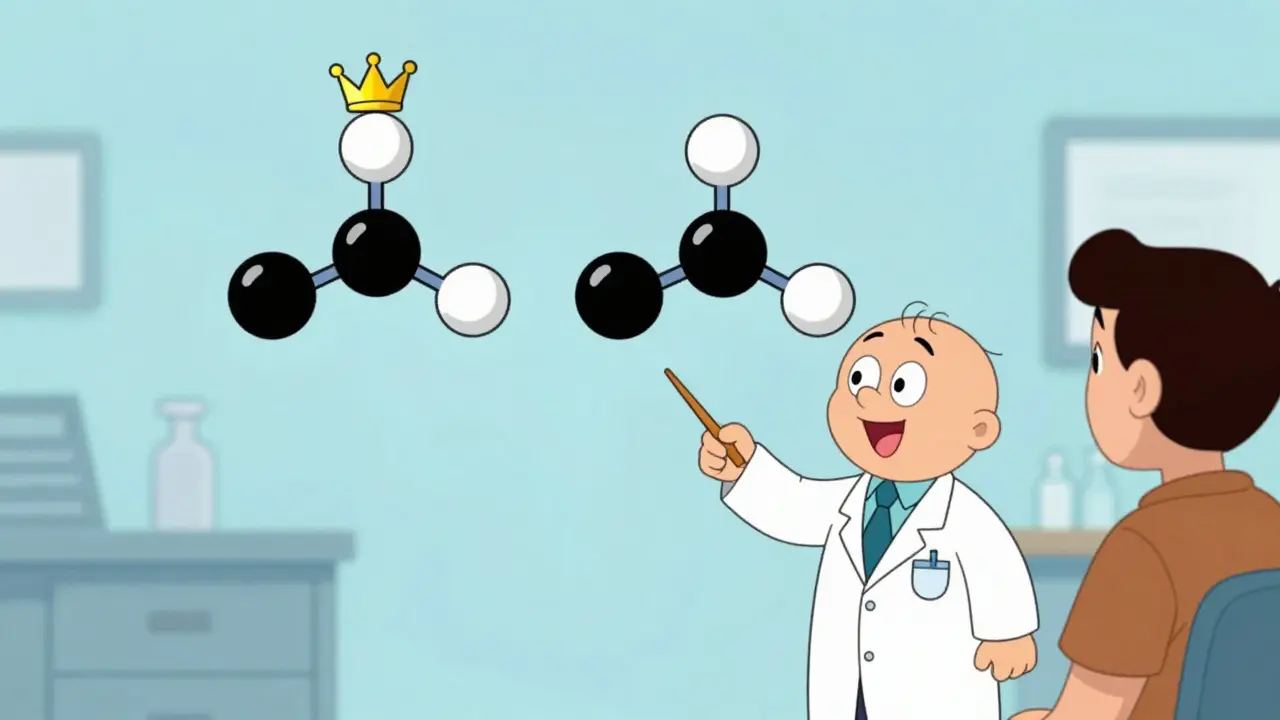
How to start the conversation with your doctor
Bringing up cost and generics can feel awkward, but your doctor wants you to actually take your medicine. If a drug is too expensive, you're more likely to skip doses. This is why being direct is the best approach. Try using these specific phrases during your next visit:- "I've seen that there is a generic version of this medication. Is that a safe option for my specific condition?"
- "I'm concerned about the out-of-pocket cost of this brand-name drug. Can we look at a generic alternative that is therapeutically equivalent?"
- "Are there any specific reasons why I would need the brand-name version instead of the generic?"
When to be cautious with generics
While 99.9% of generics are interchangeable, there are a few cases where you and your doctor should be more careful. These are typically called Narrow Therapeutic Index (NTI) drugs . These are medications where a tiny change in the dose or how the body absorbs the drug can lead to a big change in how it works or cause toxicity. For example, some people on thyroid medications like levothyroxine may find that switching between different generic manufacturers causes their levels to fluctuate. Similarly, complex delivery systems like inhalers can sometimes have slight differences in how the device releases the medicine, which might require a bit more practice. If you are taking a high-risk medication or a drug with a very narrow window of safety, tell your doctor: "I'm switching to a generic; should we monitor my blood levels more closely for a few weeks to make sure the transition is smooth?"
Your checklist for the pharmacy counter
Once the doctor gives the green light, the final step happens at the pharmacy. Pharmacists are experts in drug chemistry and can be a great second resource for your education. If the pharmacist suggests a generic substitution that your doctor didn't specifically mention, don't be afraid to ask a few questions before you pay.| What to Ask | What You're Checking For |
|---|---|
| "Is this a generic substitution or the brand name?" | Confirming exactly what is in the bottle. |
| "Does this generic have the same active ingredient and strength?" | Ensuring bioequivalence. |
| "Why does this pill look different than my previous one?" | Clarifying that inactive ingredients (colors/shapes) don't affect efficacy. |
| "Are there any different inactive ingredients I should know about?" | Checking for potential allergies to dyes or fillers. |
Looking forward: The future of affordable medicine
The landscape of generic medicine is changing fast. We are seeing the rise of Biosimilars , which are essentially the "generics" of complex biologic drugs (like those used for autoimmune diseases). These are much harder to make than simple chemical pills, but they are becoming more available, promising huge savings for people with chronic illnesses. Additionally, new policies are making these drugs even more accessible. For instance, some insurance programs are moving toward zero-cost sharing for generics, meaning you might not pay a dime for your medication if a generic exists. The goal is to move away from the "cheaper is worse" mentality and toward a system where the best science is available at the lowest price.Do generic drugs take longer to work than brand-name drugs?
No. Because the FDA requires generic drugs to be bioequivalent, they must reach the same concentration in your bloodstream at the same rate as the brand-name version. This means the onset of action and the overall effectiveness should be identical.
Can the inactive ingredients in a generic cause side effects?
In very rare cases, yes. While the active ingredient is the same, the fillers, binders, and dyes (inactive ingredients) can differ. If you have a known allergy to a specific dye or filler, you should inform your pharmacist so they can check the formulation of the generic version.
Why would my doctor ever insist on the brand-name version?
There are a few reasons. Some patients have sensitivities to inactive ingredients in generics. In other cases, for drugs with a very narrow therapeutic index (where a tiny dose difference matters), a doctor may want the absolute consistency of a single manufacturer to avoid any fluctuation in blood levels.
If a drug is generic, does it mean it's "off-patent"?
Yes. A drug typically becomes available as a generic after the patent protecting the original brand-name version expires. This allows other companies to manufacture the same chemical compound, which creates competition and drives the price down.
Are generic drugs made in other countries still safe?
Yes. Regardless of where a generic is manufactured, the FDA requires it to meet the same Current Good Manufacturing Practices (cGMP) as any drug sold in the U.S. The FDA conducts regular inspections of manufacturing facilities worldwide to ensure purity, strength, and stability.