
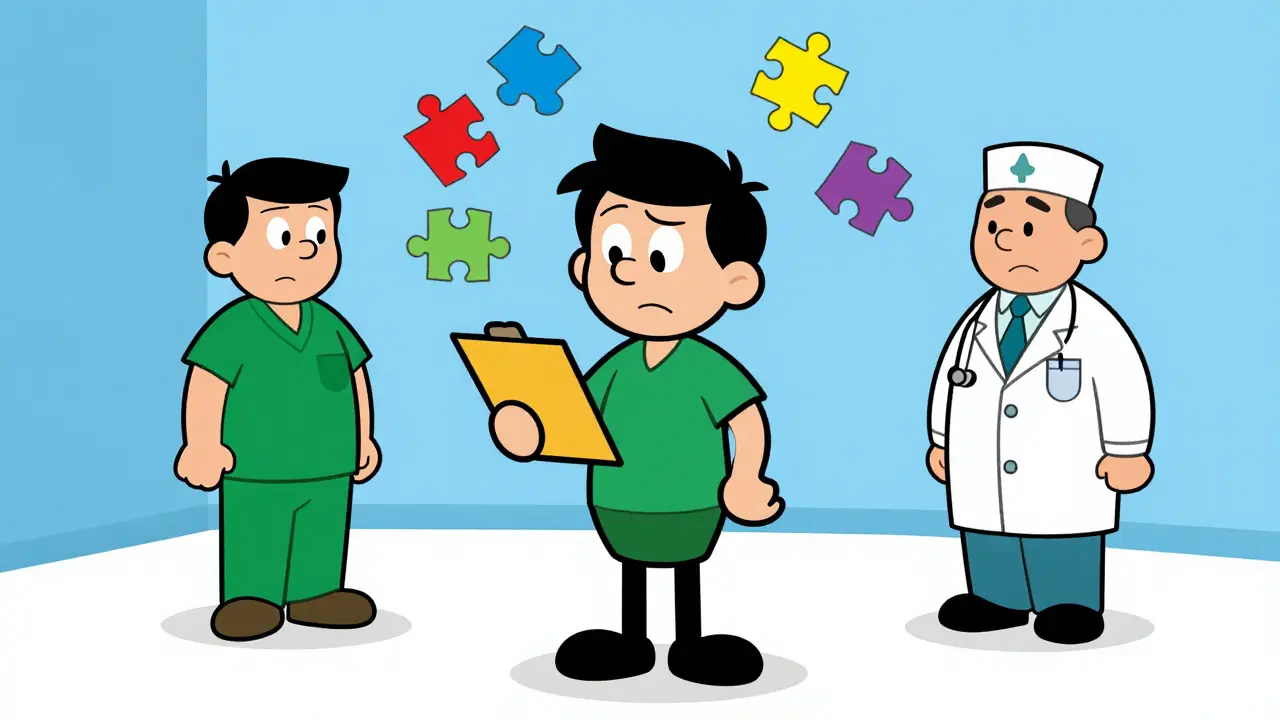
Imagine walking into your specialist's office, feeling confident because you've done your homework. You sit down, explain your symptoms, and leave with a new prescription. Weeks later, you fill that script, only to learn your primary doctor didn't know you were taking it. Worse, the two drugs interact dangerously. This isn't a rare nightmare; it is a daily reality for millions managing complex health needs.
We often think our doctors have instant access to everything happening inside our bodies. In an ideal world, every clinician sees the full picture through shared digital records. Reality, however, is messier. When you see multiple healthcare providers,professionals who diagnose, treat, and manage medical conditions for patients, gaps form. These gaps are where mistakes happen.
The Real Cost of Poor Communication
You might wonder why this matters so much. Is it really that big a deal if two doctors don't share notes? Consider the numbers. Research from the Institute of Medicine suggests medication-related errors contribute to approximately 7,000 deaths annually in the United States alone. That figure represents lives lost not necessarily due to disease progression, but due to breakdowns in how information travels between professionals.
A study documented in the National Library of Medicine introduced the Circle of Care Modeling (CCM) approach. It highlights five key activities: determine need, prescribe, dispense, administer, and monitor. Each step requires precise information transfer. When that transfer breaks, the system fails. According to the Agency for Healthcare Research and Quality (AHRQ), these errors affect 1.5 million people every year. Beyond the physical harm, the financial cost hits hard, costing about $3.5 billion in extra medical bills annually.
| Statistics on Medication Safety | |
|---|---|
| Annual Errors | 1.5 million cases |
| Potential Deaths | Approximately 7,000 |
| Financial Impact | $3.5 billion |
| Near-Misses Cause | 72% linked to communication failures |
Dr. Wendy Gifford, whose research team led studies in Ontario between 2011 and 2012, found something surprising. She identified 'Coordination of medication information' as a previously overlooked activity. It wasn't just about prescribing or administering; it was specifically about ensuring everyone knew what was happening. Her analysis showed that 72% of medication-related near-misses were directly attributable to communication failures between providers.
Crafting Your Personal Medication Command Center
If the digital systems aren't fully reliable, you need your own backup plan. Relying solely on the provider's computer memory puts you at risk. You should build a comprehensive list that travels with you everywhere. This isn't just a scrap of paper with drug names scrawled on it. It needs to be robust.
The CDC and clinical guidelines recommend four critical elements for every entry on your list:
- Name of the medication: Include brand and generic names.
- Dosage: Exactly how much you take per dose.
- Frequency: How often you take it (daily, weekly).
- Purpose: Which condition does this treat?
Why does this matter? Tulane University's Public Health experts noted that having this specific structure reduces misunderstanding. A 2023 study suggested that creating such lists consistently updated shows a 37% reduction in medication errors when patients bring this data to appointments. When you walk into an appointment, slide this list across the desk. Ask, "Is everything here still accurate?" If a new medicine is added, update it immediately in front of them.
Many patients feel overwhelmed managing these details. A survey of elderly patients found 58% felt swamped by the task. However, using a health journal helps. Track symptoms, mood, sleep, and appetite shifts. If you notice a new rash after starting a new pill, log it. This data empowers you to speak confidently during consultations. The goal is to shift from passive recipient to active partner.
Why Your Pharmacist is Your Secret Weapon
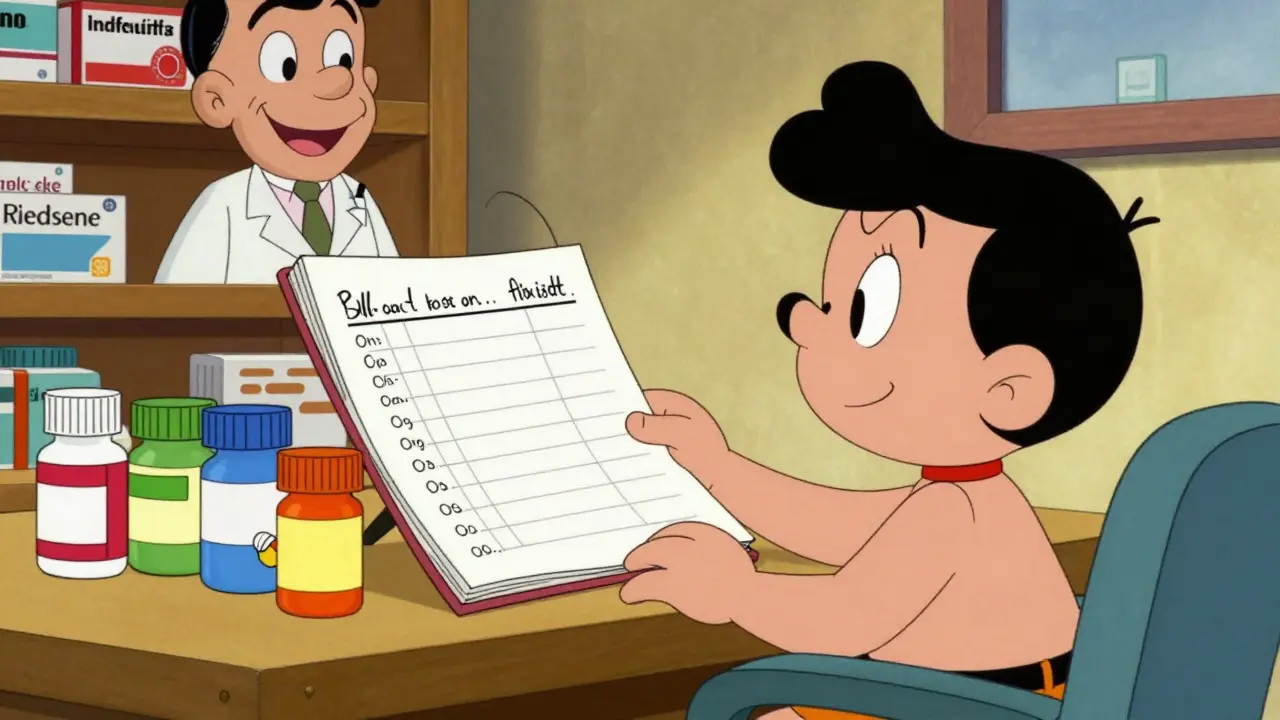
We often think of doctors as the bosses of our care. While doctors diagnose and prescribe, pharmacists,medical experts specializing in medication therapy and dispensing spend more time analyzing the actual drug list. They see the full scope of what you are swallowing, drinking, and inhaling.
Asteroid Health's analysis from 2023 provides compelling proof. Patients who actively involved clinical pharmacists in their management process saw a 32% increase in adherence rates. Furthermore, working with pharmacists resulted in 63% higher confidence regarding medication regimens. Why? Because pharmacists are trained to spot interactions that a busy cardiologist might miss because they are focused on heart health, not liver metabolism.
In integrated systems like Accountable Care Organizations (ACOs), outcomes improve further. Data from 2022 showed ACO patients experienced 27% fewer medication-related hospital readmissions compared to traditional models. This happens because greater communication occurs between primary care doctors and specialists, often facilitated by pharmacy teams reviewing charts before prescriptions even reach you.
If you see a specialist who doesn't talk to your GP, try looping in your pharmacist. They can verify if a new prescription conflicts with what your family doctor already prescribed. Think of them as the quality control layer in your care assembly line.
Mastering the Digital Gap
We love technology because it promises efficiency. Electronic Health Records (EHRs) were designed to let doctors share patient histories instantly. In theory, it works beautifully. In practice, interoperability remains a hurdle. A 2023 report found only 38% of providers can consistently access complete medication histories across different healthcare systems.
This is where the 'Circle of Care' concept is vital again. It places the patient at the center, with pathways flowing outward to family and providers. Since systems don't always talk to each other, you must act as the bridge. When switching doctors, do not assume records transferred. Always provide a copy of your summary.
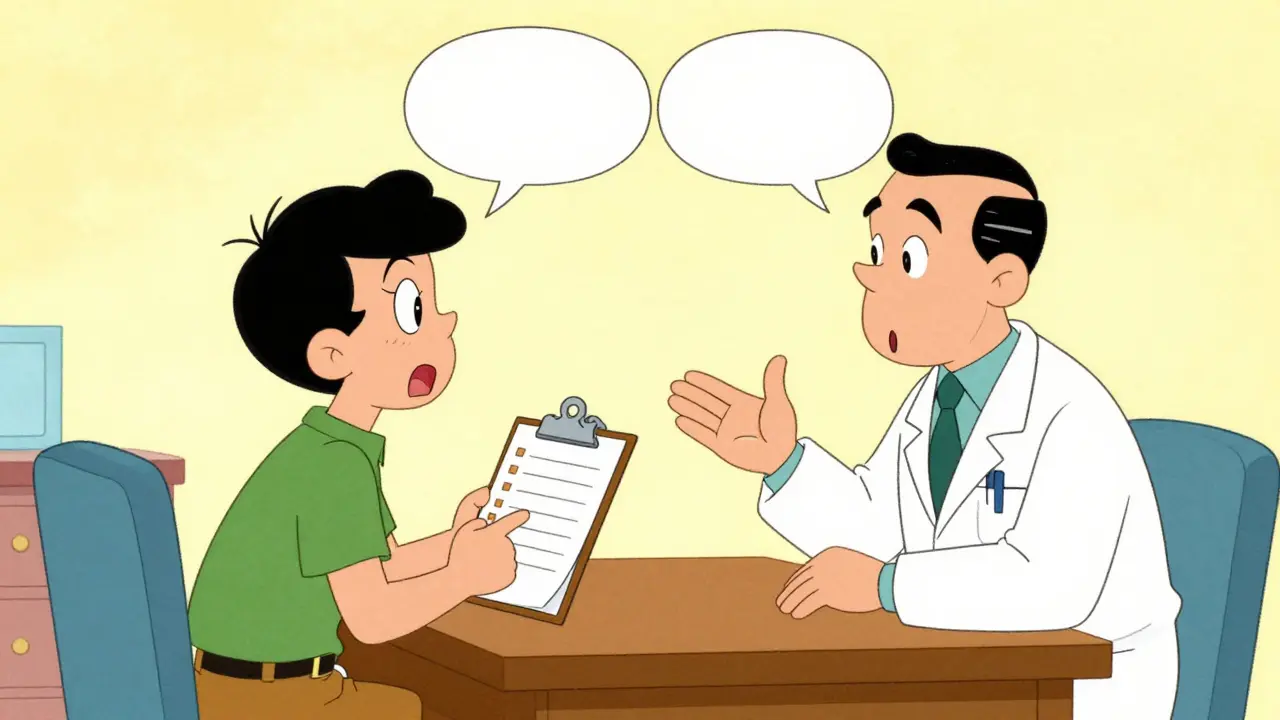
Another critical technique is the 'Teach-Back Method.' Recommended by clinical guidelines, this involves explaining medication instructions back to the provider in your own words. It sounds simple, but AHRQ validation studies show it reduces misunderstanding by 45%. Instead of nodding and saying "I understand," tell them, "So I take this pill twice a day with food." If they correct you, you caught a potential error before it left the room.
Talking Script: How to Advocate Without Apologizing
Patients often hesitate to question authority. You shouldn't have to. Prepare specific phrases for your next visit. Here is a practical guide:
- Start with: "My pharmacist mentioned checking X, has this been reviewed?"
- Ask: "Will this new medication interact with my blood pressure pills?"
- Confirm: "Who is responsible for monitoring side effects-my GP or this specialist?"
- Verify: "Can we update my official record right now so others see this change?"
Dr. Michael Steinman, lead author of a major NIH deprescribing study, emphasized that coordination is essential. He noted that 83% of patients incorrectly assumed their providers communicated regularly about changes. Don't be in that 83%. Assume silence until confirmation.
When things go wrong, remember that you have rights. If you experience a harmful event, document it. Understanding the timeline of events is crucial for any review processes available through your region's health ombudsman or safety commission. Knowledge is your strongest protection.
What should I do if my doctors disagree on medication?
If there is a conflict, pause and consult your primary care physician or pharmacist immediately. Do not start or stop medications based on contradictory orders until a clear plan is agreed upon. Ask both parties to communicate directly via fax or secure message to resolve the discrepancy safely.
How often should I update my medication list?
Update your personal list immediately after every single appointment where changes occur. Even if you feel fine, carry the updated version to all future visits. Review it with your doctor at least once every six months to ensure accuracy.
Are electronic records enough to track my meds?
Not always. While Electronic Health Records (EHRs) help, a 2023 study showed only 38% of providers access complete histories across systems. A physical copy maintained by you serves as a necessary backup when digital bridges fail.
Who is the best person to oversee my overall medication plan?
Your primary care provider is usually the best point of contact for the big picture. However, involving a pharmacist provides specialized oversight on interactions and adherence, adding an extra layer of safety for complex regimens.
What is the teach-back method?
It is a communication tool where you repeat instructions back to your provider in your own words. This confirms mutual understanding. Studies show this practice reduces misunderstanding rates by 45% and prevents administration errors.


Austin Oguche
March 29, 2026This situation highlights the real friction points in our health infrastructure. Many of us feel lost navigating multiple specialists without proper coordination. You really need to own your data and carry physical copies everywhere. Technology fails too often to rely solely on shared digital records. The cost of errors is simply too high to ignore these gaps. Patients become their own quality assurance team by necessity. Carrying that list ensures everyone sees the same information sheet. It prevents dangerous interactions before they become hospital visits. Communication breakdowns cause preventable harm every single day. We must advocate for our own safety in every clinical encounter.
Sarah Klingenberg
March 29, 2026I totally agree with taking ownership like that. It feels empowering to know what you are taking. 😊 My mom carries a folder for all her meds too. Pharmacists are such great resources for double checking lists. 💊 Don't forget to ask the pharmacist to review interactions. They see the full picture of your prescriptions easily. 🙌 Keep up the great work sharing this info!
walker texaxsranger
March 30, 2026People trust systems blindly until the failure hits home hard. Electronic Health Records are a marketing lie designed to collect data. Privacy breaches hide behind claims of patient safety protocols. The pharmaceutical industry profits from confusion and complexity inherently. Doctors prescribe off-label without telling patients about risks involved. Coordination is a myth pushed by insurance companies to bill more services. Real safety comes from refusing unnecessary medication entirely. Natural alternatives bypass the systemic failures of modern medicine networks. Big Pharma wants you dependent on a regimen that costs millions annually. Interoperability is just a buzzword for selling your health history to third parties. The Circle of Care model serves the providers not the actual patient outcomes. Government statistics are manipulated to maintain the current flawed status quo. You cannot fix a broken system with a personal notebook approach alone. True health requires rejecting the dependency on chemical intervention strategies completely.
Monique Ball
March 30, 2026While skepticism is healthy, dismissing the entire system ignores valid solutions available today. Research consistently supports the benefits of coordinated care models in reducing mortality rates! You mentioned privacy concerns which are valid yet encryption standards improve constantly. Pharmaceutical oversight does exist through rigorous FDA approval processes for new drugs. Ignoring prescribed medication can lead to severe health deterioration faster than side effects. The Teach-Back Method specifically reduces misunderstanding by almost fifty percent significantly. Pharmacists spend thousands of hours studying pharmacology interactions deeply! They are trained to catch errors that busy physicians might miss entirely. Documentation helps legal protection if adverse events occur during treatment plans. Updating records keeps the primary care physician informed about changes quickly. A written list provides a tangible backup when technology fails unexpectedly. Communication failures do cost lives but proactive management mitigates those risks effectively. Patient engagement increases adherence rates by significant margins according to studies. We should encourage participation rather than total rejection of medical advice systems. Collaboration creates safer environments for managing complex chronic conditions safely. Please consider the positive impact of teamwork over isolationist approaches always.
Tony Yorke
March 31, 2026You got this! Stay strong with your health journey.
Rohan Kumar
April 1, 2026Lol "Stay Strong" really? Like that fixes the systemic rot? 🙄 Everyone pretending paperwork solves corruption in healthcare. 💀 The system is designed to fail you anyway. Just don't eat anything suspicious next time. 🤡
Jordan Marx
April 2, 2026The intersection of behavioral psychology and clinical workflow dynamics is fascinating here. Proactive patient engagement shifts the locus of control appropriately. Digital interoperability remains the bottleneck for scalable solutions currently. Implementing standardized lexicon protocols could reduce semantic errors substantially. Healthcare providers need better incentives for cross-specialty communication clearly. Administrative barriers prevent seamless data transfer between competing electronic platforms. Financial penalties for errors drive policy but do not fix culture issues. Empowering patients with portable medical summaries creates redundancy safeguards effectively.
tyler lamarre
April 4, 2026Your understanding of policy seems quite superficial given the complexity involved. Most laypeople cannot grasp the intricacies of regulatory compliance frameworks. Professional oversight exists precisely because average citizens lack clinical expertise. Demanding doctors communicate perfectly is unrealistic for busy practitioners. Your suggestions are naive compared to the realities of hospital administration. Do not expect miracles from a piece of paper. Experts manage these workflows daily without constant interference from amateurs. Reliance on self-tracking suggests a failure in professional duty already. Stick to listening and obeying prescribed regimens instead of suggesting reforms.
Monique Louise Hill
April 5, 2026Actually it is irresponsible to trust digital records fully with your life. 🚫 You have a moral obligation to track your own intake meticulously. Neglecting personal verification is negligence towards your own wellbeing honestly. 🧐 Specialists often drop the ball on communication responsibilities. Taking charge isn't optional anymore given current risk levels. You must demand accuracy from your care team constantly. 💅 Ignorance regarding interactions is unacceptable in modern society. Safety begins with personal accountability and detailed logs.
kendra 0712
April 5, 2026That is absolutely correct!! Personal responsibility saves lives definitely!!! We must stay vigilant against errors constantly!!!! The system relies on us being active partners indeed!!!! It is crucial for preventing harmful mistakes!!!! Thank you for speaking up so clearly!!!!
Shawn Sauve
April 6, 2026I appreciate the reminder about updating lists regularly. It is easy to forget details during stressful appointments. Keeping a dedicated log helps immensely with tracking symptoms. Thank you for sharing these practical tips clearly.
Paul Vanderheiden
April 8, 2026Exactly right there is hope if we stay organized together. Small steps like carrying a list make big differences. Don't let the stress overwhelm you just take it one step at a time. You are doing great by learning about your medications. Trust yourself to ask the right questions confidently. Support is always available if you feel unsure. Keep moving forward with your health goals steadily.
Debra Brigman
April 9, 2026The tapestry of medical care is woven from many fragile threads. Silence in the room speaks louder than any prescription pad ever could. We dance around the truth of our bodies hoping for grace. Knowledge is the only shield against the chaos of clinical missteps. Each pill tells a story of intent and consequence alike. Understanding that narrative empowers us beyond the white coats.
Richard Kubíček
April 9, 2026You paint a beautiful picture of the patient experience there. Philosophy grounds us in the reality of why care matters. It is a shared journey of trust and knowledge after all. Every interaction shapes the path toward healing effectively. We should honor the wisdom found in clear communication practices. Gratitude for those who share their insights openly. Together we build a safer community for health matters.